


The Top Reasons Real Estate Is a Good Investment
If you’re thinking about investing in real estate, you’re about to embark on one of the best investment journeys of your lifetime. Here are the top reasons you should consider it, even if you’ve never invested in real estate before.
You Can Leverage Your Investment
There aren’t too many other investments that allow you to invest in assets worth much more than you have to invest. For example, if you have $10,000 to invest in the stock market, you can usually buy just $10,000 worth of stock. The exception is if you invest on margin (borrow), but you must be an accredited investor with a high net worth to make that happen.
With real estate, you can put down a fraction of the home’s cost and invest in it. For example, let’s say you found a home for $100,000; if you put down $10,000, chances are you could find a loan to finance the rest as long as you have good credit and stable income.
With that, it means you invest just 10% of the asset’s value and own it. Then, over the years, as you pay the mortgage down, you’ll hold more of the investment, increasing your rate of return not only by paying the mortgage down but also with the natural appreciation of real estate experiences.
You Can Force Appreciation
Unlike stocks or bonds, you can force the real estate to appreciate. It sounds weird, but it’s possible.
First, know that real estate appreciates naturally. On average, real estate appreciates 3% – 5% a year without you doing anything except maintaining the home. But, you can increase the rate of appreciation by making renovations or repairs.
Not all renovations increase a home’s value, so if you’re making renovations to increase its value, work with a licensed appraiser or real estate agent to find out the best (most valuable) renovations you should make.
You won’t get a dollar-for-dollar return on your investments, but some renovations can pay you back as much as 80% – 90% of the money invested.
The renovations don’t have to be major either. Of course, adding a room or finishing the basement will add more value than simple cosmetic renovations, but even minor kitchen and bathroom renovations can drastically affect a home’s worth.
You’ll Get Tax Benefits
Like any business owner, real estate investors can take advantage of many tax write-offs. But, while it’s an investment, when you own a home and rent it out, you run a business – you are the landlord.
As the business owner, you can often write off the following expenses:
- The mortgage interest paid on the loan
- Origination points paid on the loan
- Maintenance expenses
- Depreciation (spread out over 27.5 years)
- Real estate taxes, homeowner’s insurance, and HOA dues
Always talk to your tax advisor before assuming you can write expenses off, but know that investing in real estate is a benefit. When you invest in stocks or bonds, you can only write off any capital losses if you sell the asset for less than you paid for it.
You Can Earn Regular Cash Flow
If you buy and hold real estate, you can earn monthly cash flow renting it out, and this increases the profits from owning real estate since you aren’t relying only on the appreciation but the monthly rental income.
It may seem overwhelming to buy investment real estate and find quality tenants and manage the property, but there are many available resources to help you.
Roofstock Marketplace is a great resource. They not only list available investment homes for sale, but many of them have tenants with leases in place already. So when you buy the home, you instantly become a landlord. Roofstock also offers plenty of due diligence, researching you, so all you have to do is buy the property you think is best.
Of course, there’s always the risk of tenants defaulting or vacating the home early, but there’s a risk with every investment. Without risk, there can’t be a reward.
You May Feel Financially Secure
There’s not much to feel secure about when you invest in the market. But, as 2020 showed, it can change in the blink of an eye. One minute you have a significant investment, and the next, you’ve lost everything.
When you invest in real estate long-term, you know you have an appreciating asset. It may go through hills and valleys, losing some value along the way, but housing usually bounces back if you hold onto it long enough.
Many people invest in real estate to supplement their retirement income. Whether you own the property while you’re retired, earning the monthly rental cash flow to supplement your income, or you sell a property you’ve owned for many years once you’re in retirement and make a profit, you’ll increase your retirement income.
Some people feel more secure knowing their money is invested in a safe investment (real estate) rather than leaving it liquid in a cash account or investing it in the stock market.
There Are Many Ways to Invest in Real Estate
If buying real estate and renting it out is too stressful for you, there are many other ways to invest in real estate, including:
- Buy an undervalued property, fix it up and flip it (fix and flip)
- Be a wholesaler working as the middle man between motivated sellers and a network of buyers.
- Use house hacking, which means you buy a 1 – 4 unit property, live in one unit, and rent out the others using the rental cash flow to cover your mortgage.
- Invest in a Real Estate Investment Trust
You Can Pass Real Estate Down to Your Heirs
If you want to leave a legacy behind but don’t think going cash is a good idea, passing real estate down can be even better.
Not only will you give your heirs an income-producing asset, but it’s also an appreciating asset. So they can either keep the property and let the legacy continue or sell it and earn profits.
You Can Use the Equity to Increase Your Real Estate Portfolio
A favorite way to use an investment property’s equity is to grow your real estate portfolio. For example, let’s say you have $50,000 equity in a home. You can refinance the mortgage on it, take out the $50,000, and use it as a down payment on your next property.
Depending on the value of your properties, you may even be able to pay cash for future properties, increasing your portfolio and the equity in it even faster.
Some Highlights
-
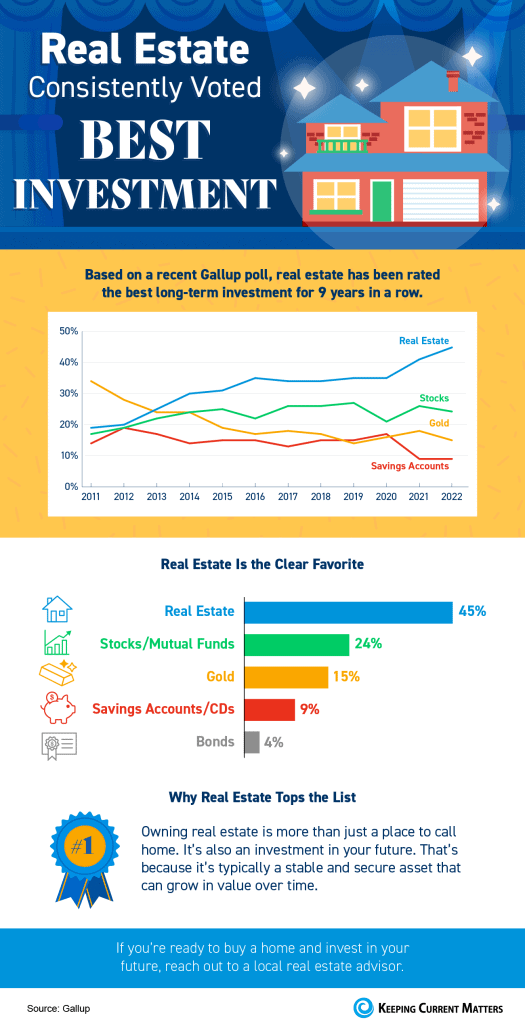
Based on a recent Gallup poll, real estate has been rated the best long-term investment for nine years in a row.
-
Owning real estate is more than just a place to call home. It’s also an investment in your future. That’s because it’s typically a stable and secure asset that can grow in value over time.
-
If you’re ready to buy a home and invest in your future, reach out to a local real estate advisor.