
Ask four people how the housing market is doing, and you may get four completely different answers.
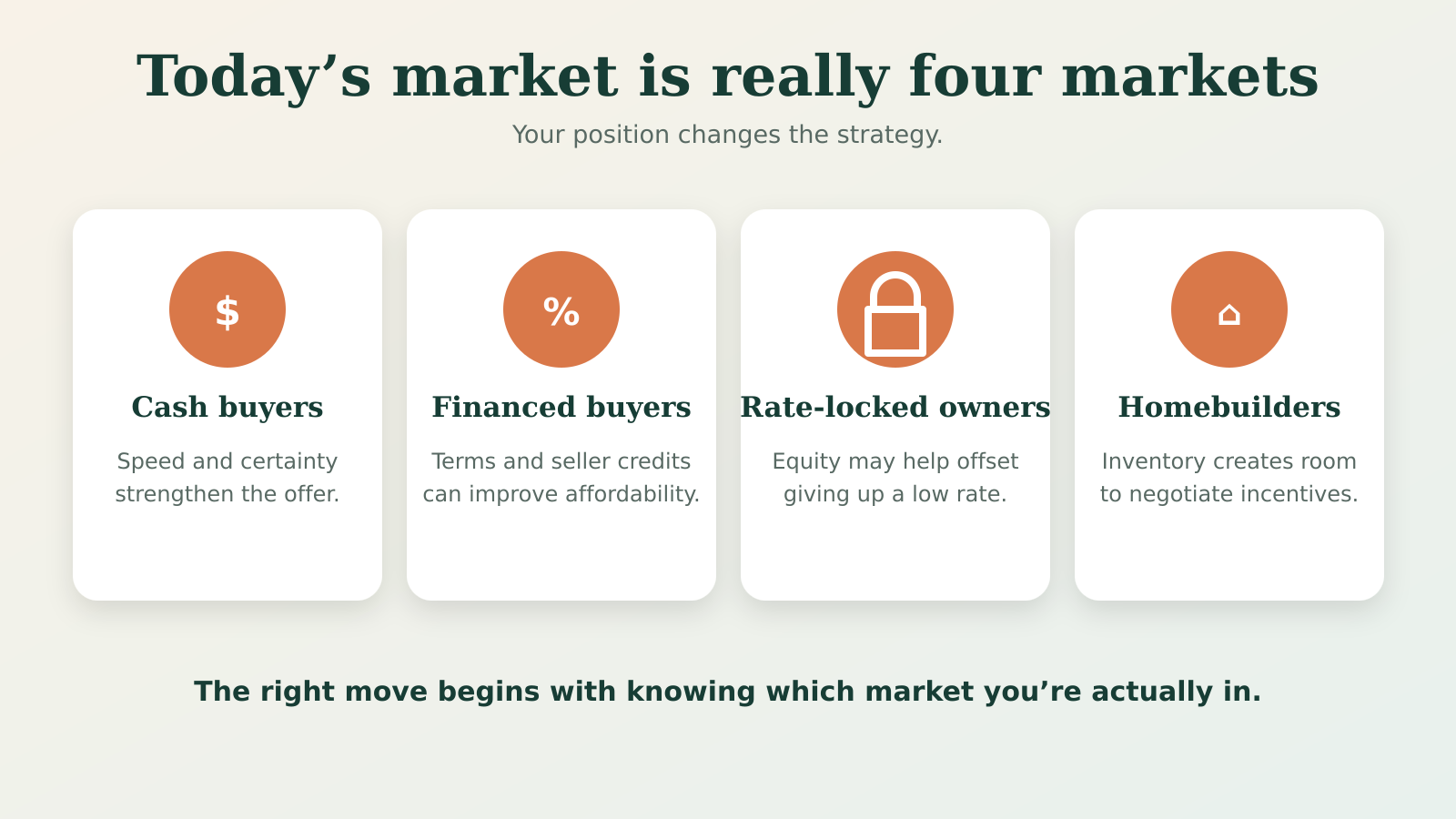
That’s because today’s market isn’t operating the same way for everyone. Cash buyers, buyers using a mortgage, homeowners holding onto low rates, and builders with inventory are each playing by a different set of rules.
Understanding which group you fall into can change how you approach your next move.
The best strategy depends on which part of the housing market you’re actually in.
Cash Buyers Have a Clear Advantage
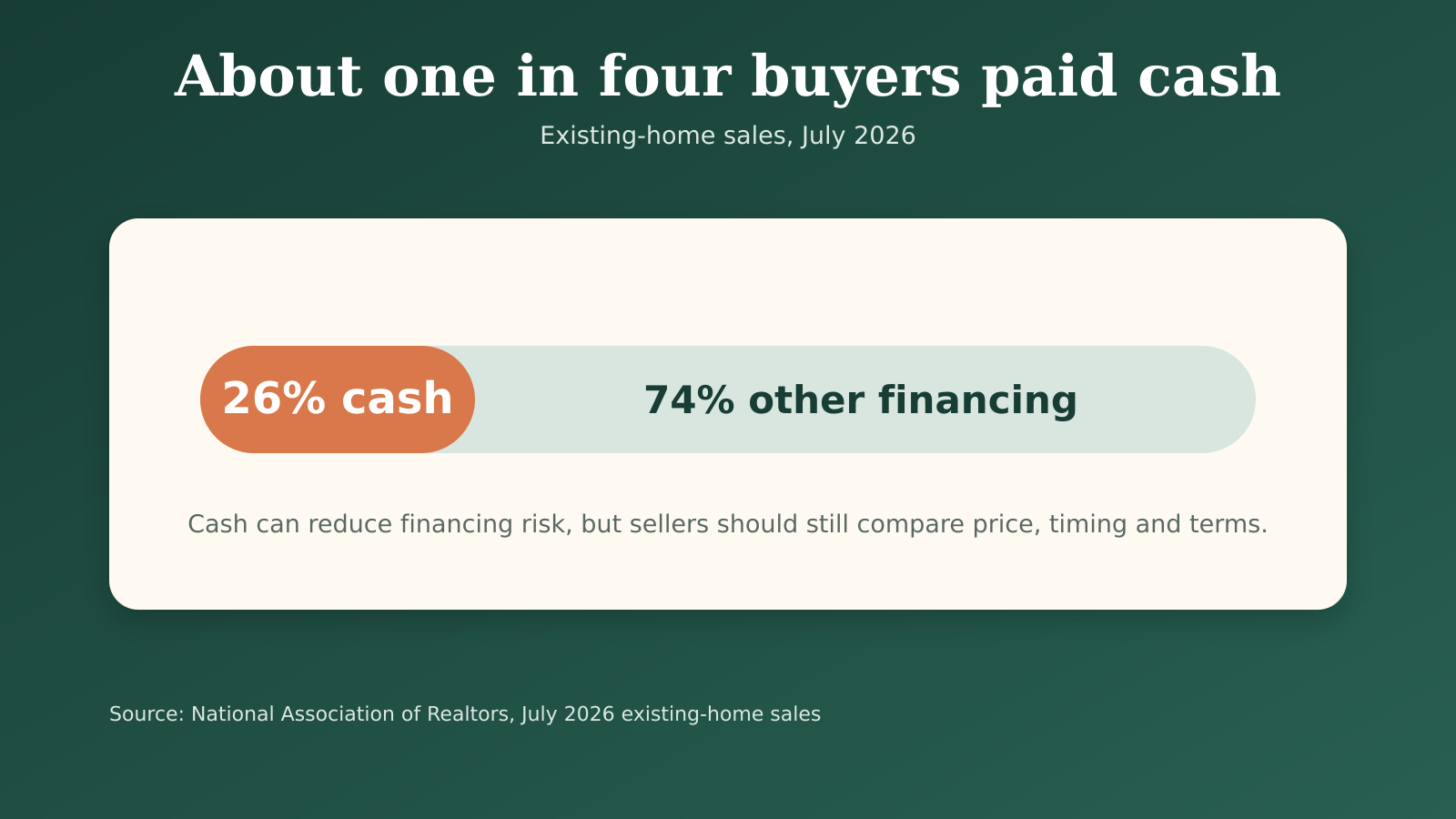
Cash continues to play a major role in today’s market. According to the National Association of Realtors, 26% of existing-home sales in July were completed without financing. That’s roughly one out of every four purchases.
Cash purchases are especially common at the highest and lowest ends of the price range. Realtor.com reports that more than two-thirds of homes selling below $100,000 were purchased with cash. Cash was also used for more than 40% of purchases above $1 million.
Cash reduces financing risk, but sellers should still compare the complete offer.
If You’re Buying
A cash offer can give you a cleaner contract, a quicker closing, and more negotiating strength. But don’t assume you need to waive inspections or overpay. Cash is already valuable to a seller.
If You’re Selling
A cash offer can reduce the risk of appraisal or financing problems. That doesn’t automatically make it the best offer. Compare the price, closing date, inspection terms, and likelihood that the buyer will actually perform.
Financed Buyers Still Have Options
Most buyers still need a mortgage, and today’s rates continue to put pressure on monthly payments.
That doesn’t mean you should automatically put your plans on hold. Instead of trying to predict the exact week rates will fall, focus on making the numbers work with the market you have today.
Depending on the property and competition, you may be able to negotiate:
-
A closing-cost credit
-
A temporary or permanent mortgage-rate buydown
-
Repairs or inspection credits
-
A flexible closing date
-
A price adjustment
A seller credit toward your closing costs or rate may provide more immediate value than a modest price reduction. Your lender can compare the options and show you how each one affects your payment and cash needed at closing.
If You’re Buying
Start with a monthly payment you can comfortably afford. Then build your offer around the terms that help you reach it.
If You’re Selling
Expect buyers to ask for help. Pricing your home with some negotiating room may be smarter than starting too high and making repeated price reductions.
Low-Rate Homeowners Feel Stuck
Many homeowners refinanced or purchased when mortgage rates were historically low. According to Federal Housing Finance Agency data, roughly two out of three homeowners with a mortgage have a rate below 5%.
Walking away from a low rate isn’t an easy decision. But your interest rate isn’t the only number that matters.
If you’ve owned your home for several years, you may have built enough equity to make a larger down payment on your next property. That could lower the amount you need to finance and make the monthly-payment difference more manageable than you expected.
If You’re Thinking About Moving
Before ruling it out, look at:
-
Your estimated sale proceeds
-
The down payment available for your next home
-
Your complete projected payment
-
Property taxes and insurance
-
Maintenance and repair costs
-
Whether your current lifestyle still fits the house
Here in Chicagoland, property taxes can change the monthly-payment calculation considerably. You need to compare the entire move, not just your current rate with a new one.
If you have an FHA or VA mortgage, it may also be worth asking your lender whether the loan could be assumed by a qualified buyer.
Builders Have Homes To Sell
New construction is another market entirely.
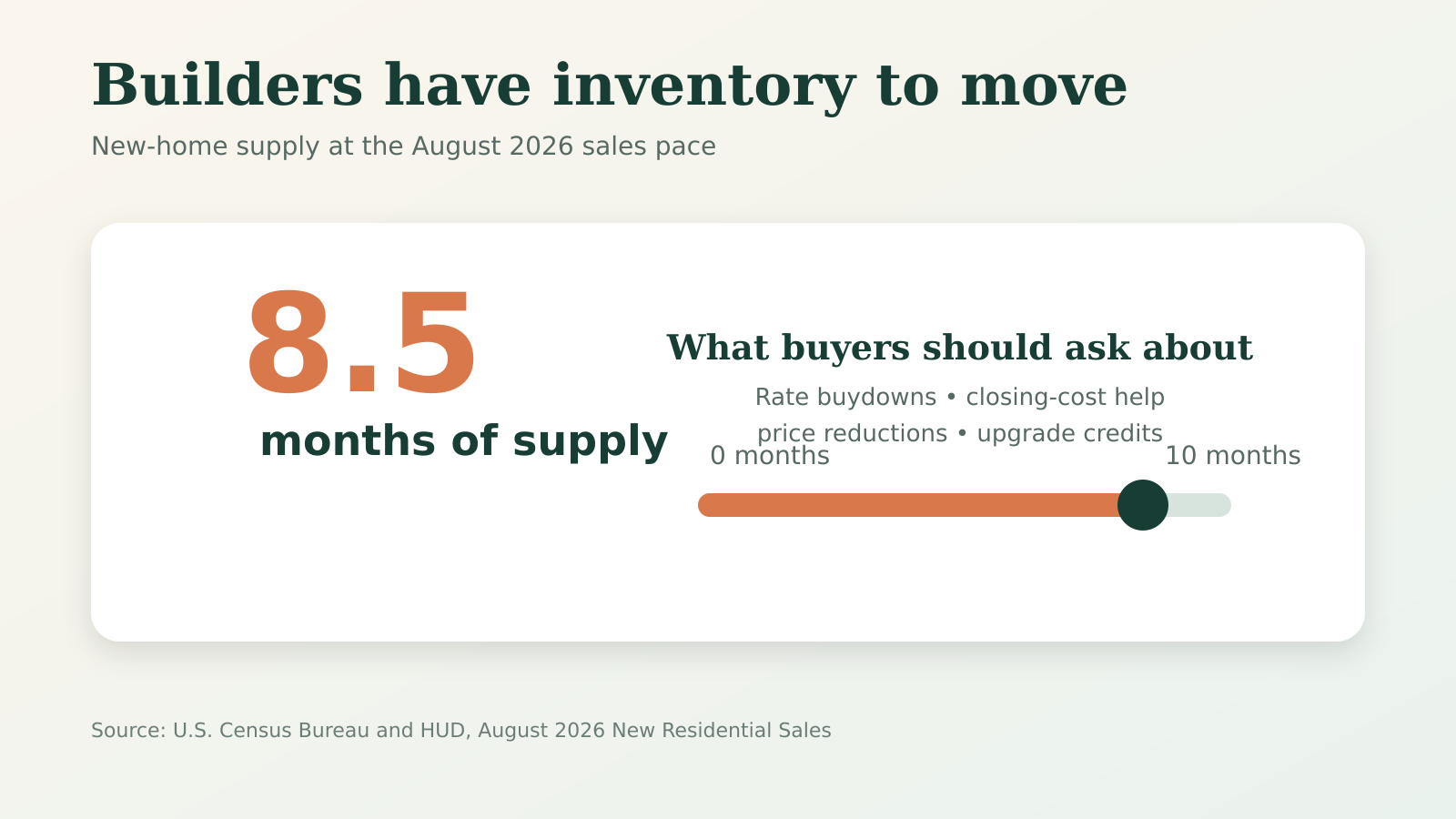
The Census Bureau reported 483,000 new homes for sale nationally at the end of August. At the current sales pace, that represents an 8.5-month supply.
That level of inventory can motivate builders to offer incentives to get completed homes sold.
Builder inventory may create opportunities to negotiate financing incentives and closing-cost assistance.
Possible incentives include:
-
Mortgage-rate buydowns
-
Closing-cost assistance
-
Price reductions
-
Design or upgrade credits
-
Discounts on completed inventory homes
If You’re Buying New Construction
Compare the full package—not merely the advertised rate or base price. Find out whether the rate is temporary, which lender you must use, and how upgrades, taxes, association fees, and closing costs affect your total expense.
Bring your own real estate agent before your first visit. The builder’s sales representative works for the builder. Your agent should be there to represent you.
If You’re Selling an Existing Home
Emphasize what your home offers that new construction may not:
-
An established neighborhood
-
Mature landscaping
-
Included window treatments or appliances
-
Completed outdoor spaces
-
A finished basement
-
No construction delay
-
The ability to move in sooner
Those details can help your home compete against builder incentives.
What This Means in Chicagoland
The housing market can look completely different from one town—or price range—to another.
A cash buyer in St. Charles may need a different strategy than a first-time buyer in South Elgin. A homeowner downsizing in Geneva has different options than someone considering a new build in western Kane County.
That’s why broad national headlines rarely tell you what you should do. Your financing, equity, location, price point, and timing all matter.
Bottom Line
There isn’t one housing market right now. There are cash buyers, financed buyers, rate-locked homeowners, and builders—and each group has different advantages and challenges.
Before you make a decision, figure out which market you’re in. Then build a strategy around your actual numbers and what’s happening in the specific Chicagoland communities you’re considering.