


Ask a few people how the housing market is doing, and you’ll probably get different answers.
That’s because today’s market is moving at different speeds depending on the home’s price range, condition, location, and competition. Knowing where your property fits can affect both your pricing strategy and how quickly it sells.
Higher-Priced Home Sales Are Gaining Momentum
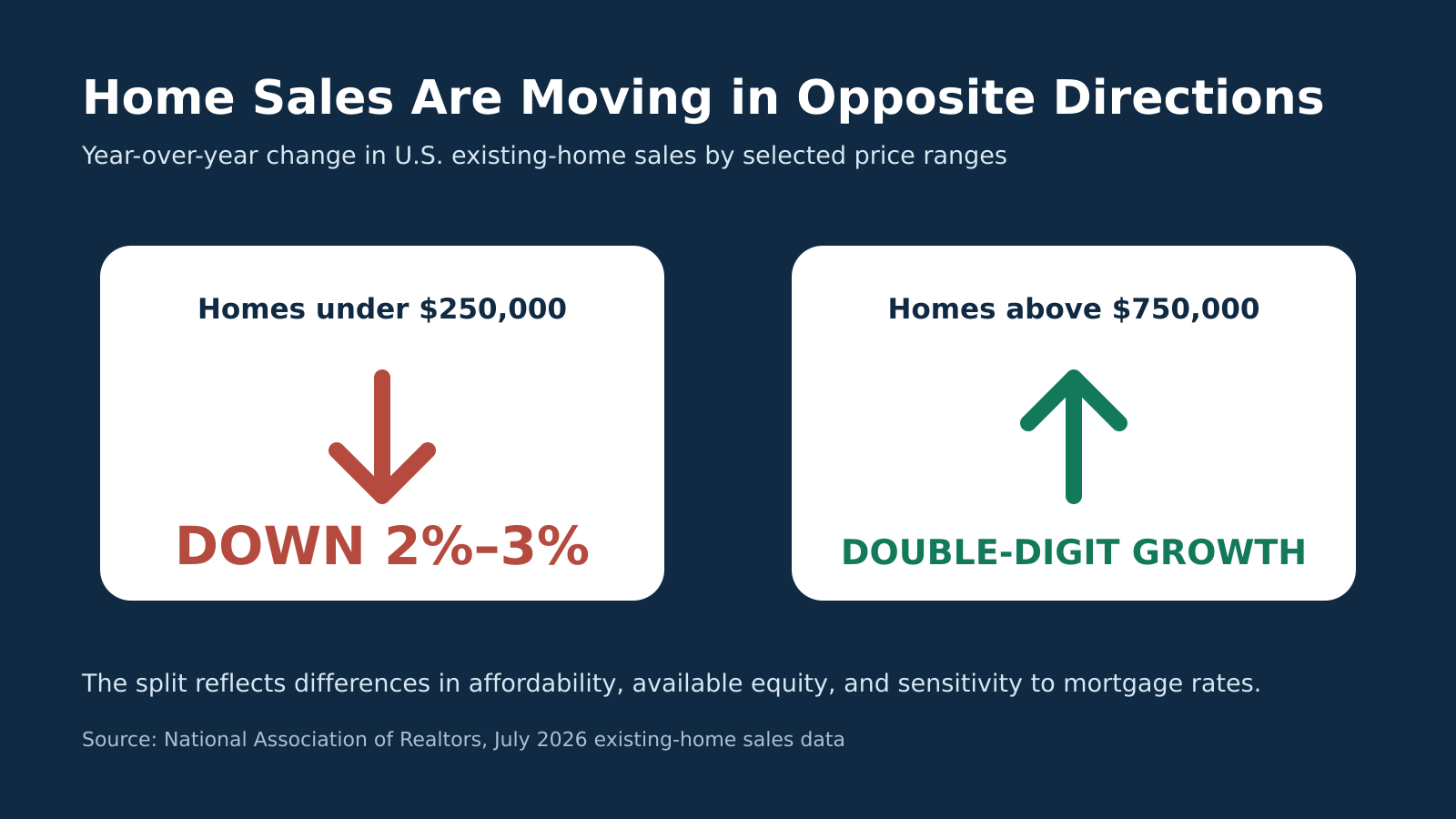
Recent National Association of Realtors data shows a clear divide.
Sales of homes priced below $250,000 declined approximately 2% to 3% compared with last year. Meanwhile, sales above $750,000 experienced double-digit growth.
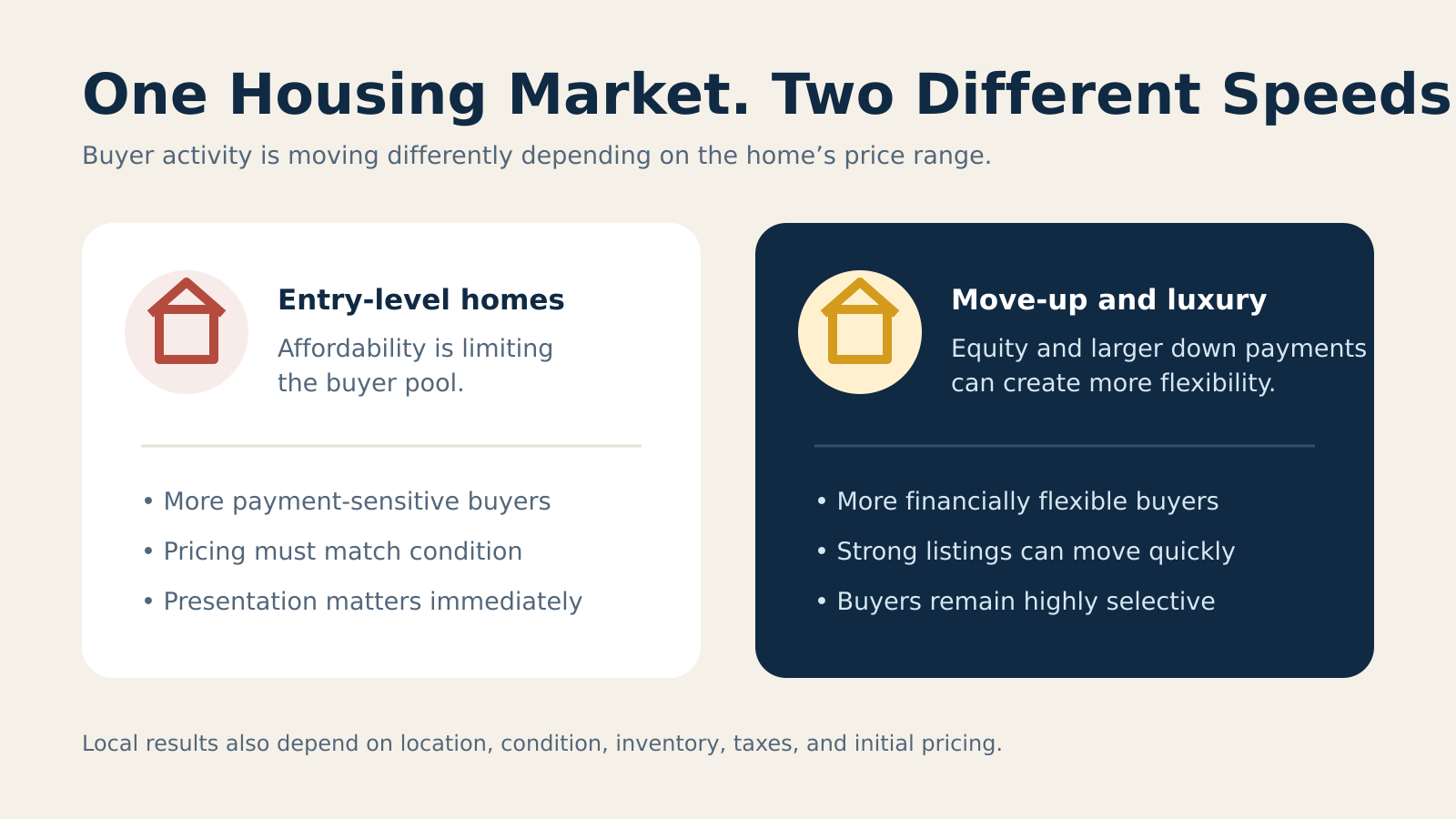
Higher mortgage rates have reduced the number of entry-level buyers who can comfortably afford a home. Buyers at higher price points may have more flexibility because they can use larger down payments, cash, or equity from their current homes.
Lower-priced homes are still selling, but pricing and presentation have become even more important. Buyers are comparing the asking price, condition, taxes, insurance, and possible repair costs.
Why Some Homes Sell Quickly
Luxury and move-up homes once took considerably longer to sell than starter homes. That gap has narrowed.
Qualified buyers are moving quickly when an attractive, well-priced property becomes available. However, a higher price point doesn’t guarantee a fast sale. Buyers still pay close attention to condition, updates, location, taxes, and overall value.
The listings that perform best usually combine the right price, strong presentation, and marketing aimed at buyers shopping in that specific range.
.png)
What This Means for Sellers
If you’re selling an entry-level home, don’t panic. Affordable homes are still needed throughout Chicagoland. Taking care of visible maintenance, using professional photography, and pricing accurately can help your property stand out.
If you’re selling a move-up or luxury home, the market may be stronger than you expect. But buyers in these ranges are selective, so the marketing and presentation need to match the property.
Real Estate Is Still Local
National statistics provide context, but they can’t predict how a particular home will perform in St. Charles, Geneva, Batavia, South Elgin, or another community.
Even within Kane County and DuPage County, demand can change based on neighborhood, school district, property type, taxes, updates, and available competition.
Bottom Line
The housing market isn’t moving at one speed. Entry-level, move-up, and luxury homes are experiencing different levels of demand.
If you’re considering selling in Kane County, DuPage County, or the Fox Valley, I can show you where your home fits and help you build a pricing and marketing strategy around what buyers are actually doing.