
When was the last time someone gave you an honest, professional opinion of what your house is worth?
I’m not talking about an automated online estimate. I mean a value based on your home’s condition, improvements, location, neighborhood, and the homes buyers are actually purchasing around you.
For many homeowners, it’s been years.
If you’ve thought about moving but today’s home prices and mortgage rates have caused you to put those plans on hold, it may be time to revisit the numbers. You could be in a much stronger position than you realize.
Your Home May Be Worth More Than You Think
Home values have changed considerably over the past five to ten years. At the same time, every mortgage payment you’ve made has likely reduced what you owe.
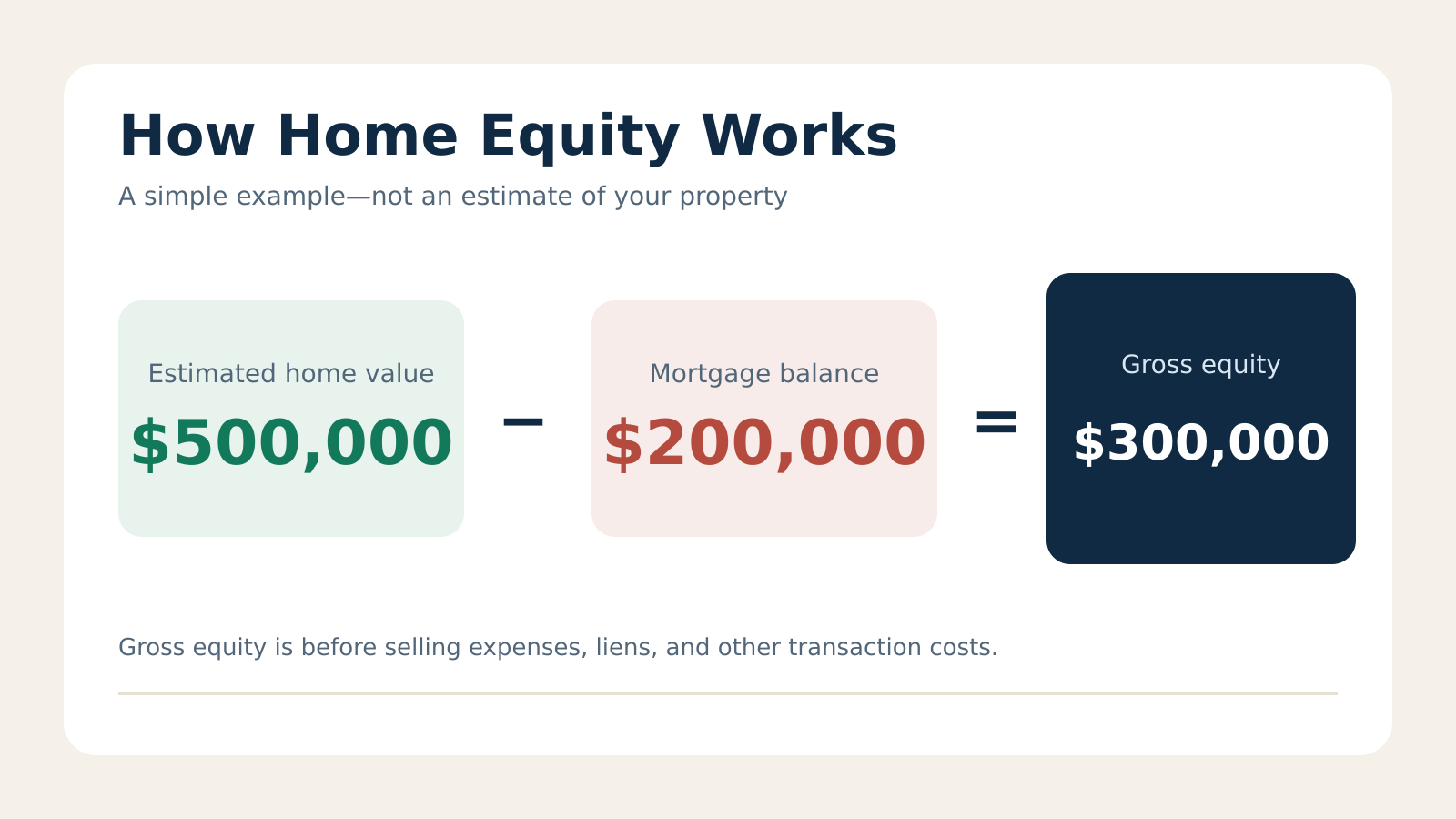
The difference between your home’s current value and your remaining mortgage balance is your equity.
For example, if your house could sell for $500,000 and you owe $200,000, you have approximately $300,000 in gross equity before selling expenses.
According to Cotality’s latest homeowner-equity report, the average homeowner with a mortgage has approximately $310,500 in equity.
That doesn’t mean every homeowner has that exact amount. Your equity depends on when you purchased, what you paid, your remaining mortgage balance, the improvements you’ve made, and what buyers would pay for the property today.
But it does show why it’s worth finding out your actual number.

Your Equity Could Change the Math
I completely understand why homeowners with low mortgage rates are reluctant to move. Giving up a 3% or 4% rate for a higher one is a legitimate concern.
But the interest rate isn’t the only number that matters.
If you’ve built substantial equity, you wouldn’t be starting your next purchase from scratch. That money could become the down payment on your next home and reduce how much you need to finance.
A higher rate on a smaller loan may be more manageable than you expect.
Before deciding that moving isn’t affordable, it makes sense to look at the entire picture:
- What could your current home realistically sell for?
- How much do you still owe?
- What would you likely net after selling expenses?
- How much could you put down on your next property?
- What would the new monthly payment actually be?
Until you know those numbers, it’s difficult to know whether staying or moving is the better decision.
What Could You Do with Your Equity?

Your equity can create several options, depending on your plans and financial situation.
Put More Down on Your Next Home
A larger down payment means borrowing less. That can lower your monthly principal and interest payment and may eliminate private mortgage insurance.
It could also allow you to consider a home that fits your needs without financing the entire difference between the two properties.
Buy Your Next Home with Cash
This isn’t realistic for everyone, but it happens more often than many people realize—especially when someone is downsizing or moving to a less expensive area.
Cash buyers accounted for 26% of existing-home purchases in July 2026, according to the National Association of Realtors. Equity from a previous home is one reason repeat buyers may be able to purchase without financing.
Make Your Current Home Work Better
Maybe you like your neighborhood, school district, and location but your house no longer works for your lifestyle.
In that case, renovating may make more sense than moving. Depending on your finances, equity may give you access to funds for a remodeled kitchen, first-floor bedroom, home office, finished basement, or another improvement.
Borrowing against your home carries costs and risks, so this is something to discuss with a qualified lender or financial professional before making a decision.
Create Flexibility for Your Next Chapter
Equity may also make downsizing, relocating, retiring, or purchasing a multigenerational home more realistic.
It won’t make every market challenge disappear, but it can give you options you may not have realized were available.
An Online Estimate Isn’t the Whole Story
Automated valuation websites can be a useful starting point, but they haven’t walked through your house.
They may not know that you replaced the roof, remodeled the kitchen, finished the basement, added a bathroom, or maintained your property better than nearby homes. They also may not account for differences between neighborhoods, school districts, lot locations, or even two sides of the same street.
A professional home-equity assessment looks beyond a computer-generated number. It considers your home’s features and condition along with recent sales, current competition, buyer activity, and local market trends.
That gives you a more realistic range—not a promise or an inflated number designed to win your business.
What This Means for Chicagoland Homeowners
Home values can vary widely throughout Kane County, DuPage County, and the Fox Valley.
The market for a home in St. Charles may be different from Geneva, Batavia, South Elgin, Elgin, or West Chicago. Value can also change considerably based on the neighborhood, school district, price range, updates, and property type.
That’s why your neighbor’s sale doesn’t automatically determine what your house is worth.
Your home deserves its own evaluation.
Bottom Line
If it has been a few years since you’ve had a professional look at your home’s value, now may be a good time to update it.
You don’t have to be ready to sell, and there shouldn’t be any pressure attached to the conversation. Sometimes, knowing what your home is worth simply helps you understand your choices.
I can prepare a complimentary Home Equity Assessment showing what your property may sell for, how much equity you may have, and what that could mean for your next move.
You may discover that the move you assumed wasn’t possible deserves a second look.