
You’ve probably heard that the Federal Reserve raised rates again. And if you’re thinking about buying or selling a home, your first question may be: What does that mean for mortgage rates?
Here’s the short answer: the Fed can influence mortgage rates, but it doesn’t actually set them.
That distinction matters—especially when headlines make it sound like every Fed decision automatically changes the rate you’ll receive from a lender.
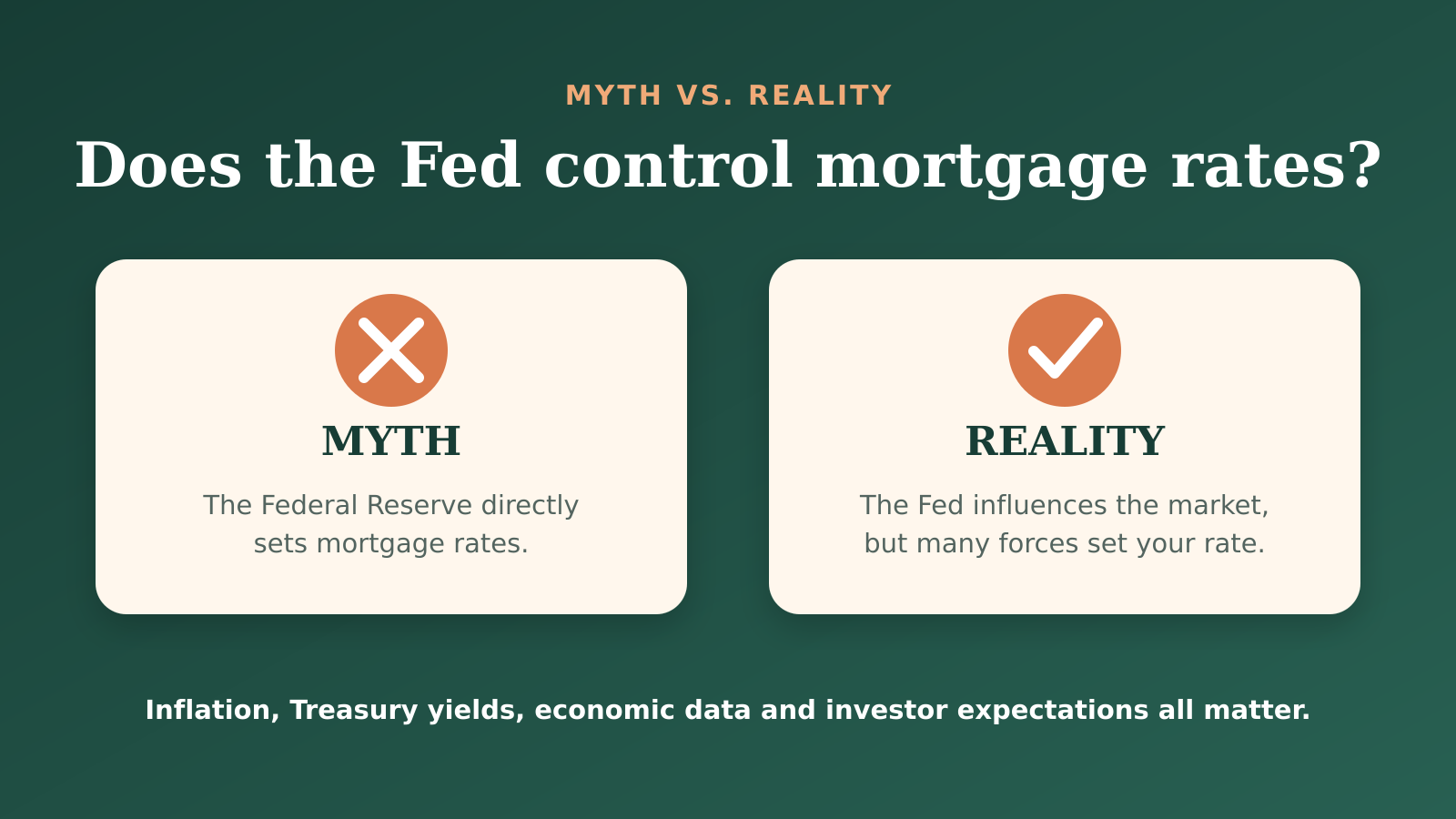
The Fed influences financial markets, but it does not directly set consumer mortgage rates.
What the Fed Actually Controls
The Federal Reserve sets a short-term benchmark known as the federal funds rate. This is the rate banks use when lending money to one another overnight.
At its September meeting, the Fed raised its target range by a quarter of a percentage point to 3.75%–4.00%. The Fed said inflation remained elevated and that the increase was intended to support a return to its 2% inflation goal.
That decision can affect credit cards, home-equity lines, auto loans, business loans, and other forms of short-term borrowing.
A 30-year mortgage works differently.
Mortgage rates are influenced more directly by longer-term financial markets, particularly the 10-year Treasury yield. That yield responds to inflation, economic growth, employment data, energy prices, geopolitical events, and what investors expect the Fed to do next.
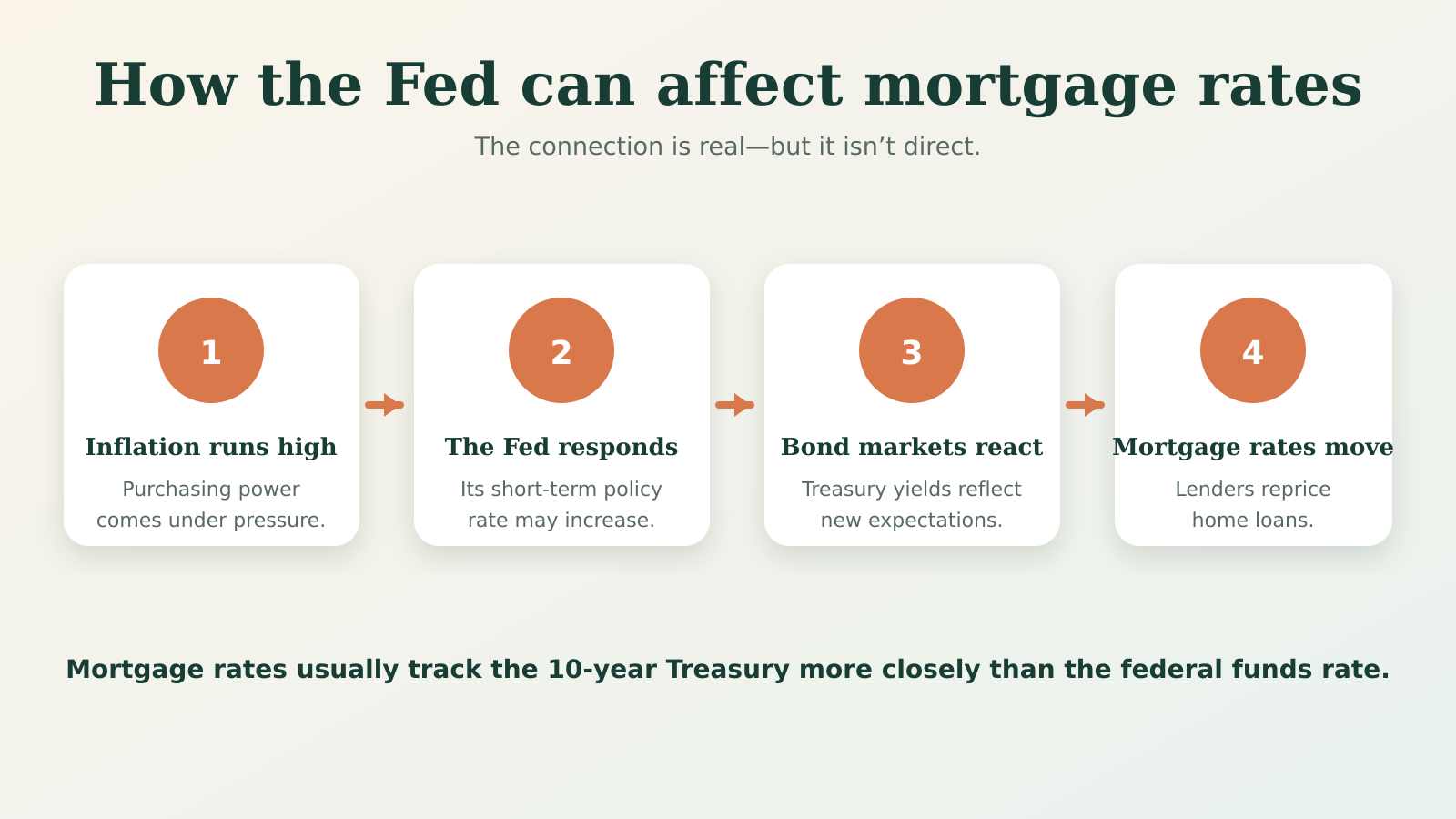
The connection between the Fed and mortgage rates is real, but it isn’t a direct one.
Why Mortgage Rates Can Rise After a Fed Decision
When inflation remains stubborn, investors may expect borrowing costs to stay higher for longer. That can push Treasury yields upward, and mortgage rates often move in the same direction.
The Fed’s September meeting minutes noted that persistent inflation, geopolitical tensions, and higher energy prices had already affected Treasury yields and market expectations.
That helps explain why mortgage rates can move before the Fed even announces a decision. Financial markets are constantly trying to anticipate what will happen next.
As of October 1, Freddie Mac reported that the average 30-year fixed mortgage rate had reached 7.28%, up from 7.03% the previous week.
That doesn’t mean every borrower will receive 7.28%. Your credit, down payment, loan type, property, lender, points, and other details all affect the rate you qualify for.
Inflation Is the Number To Watch
The Fed’s bigger goal is to bring inflation back toward 2%.
There was some encouraging news in the August inflation report. The Personal Consumption Expenditures price index increased 3.4% compared with the previous year. Core PCE, which removes the more volatile food and energy categories, increased 3.0%.
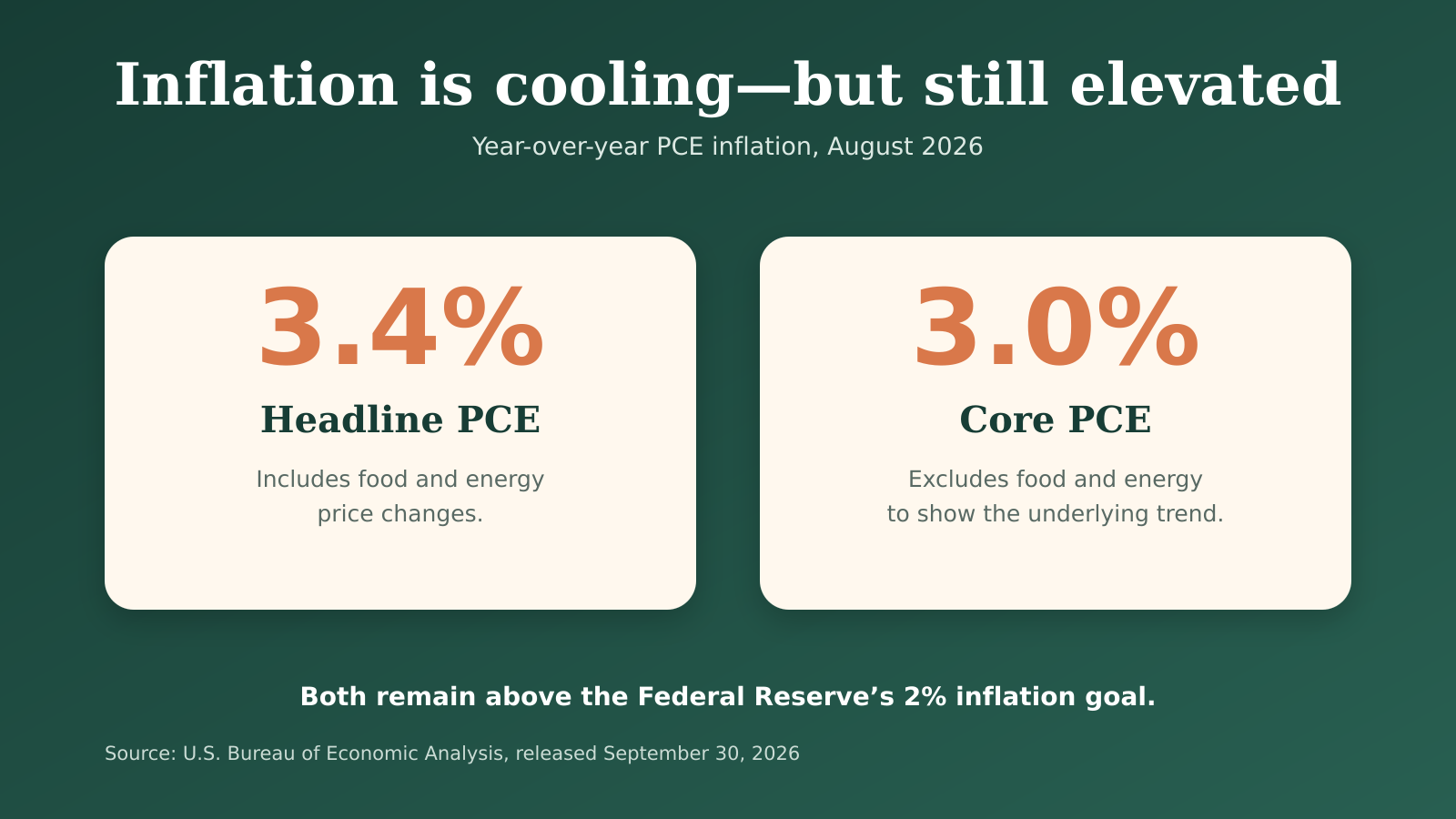
Inflation has improved from earlier highs, but it remains above the Federal Reserve’s 2% goal.
This is why predicting mortgage rates is so difficult. Inflation may improve, but one strong economic report, change in energy prices, or international development can quickly change investor expectations.
Market predictions about the Fed’s next move can also change from one day to the next. I wouldn’t build a homebuying or selling plan around a probability chart that may look completely different next week.
Should Buyers Wait for Lower Mortgage Rates?
Maybe—but waiting comes with tradeoffs.
If rates eventually decline, more buyers may return to the market. That could mean additional competition and upward pressure on home prices, especially in communities where inventory is already tight.
Instead of trying to guess the perfect week to buy, start with the payment you can comfortably afford today.
A good lender can help you compare:
-
Conventional, FHA, VA, and USDA financing
-
Different down-payment amounts
-
Temporary and permanent rate buydowns
-
Discount points
-
Seller-paid closing costs
-
Fixed-rate and adjustable-rate options
-
The effect of Illinois property taxes on your complete payment
Getting fully pre-approved also gives you a more realistic budget than an online mortgage calculator.
Once you’re under contract, ask your lender whether locking your rate makes sense. A rate lock may protect you if rates increase before closing, although the terms and length of the lock matter.
What Higher Rates Mean for Sellers
Higher mortgage rates reduce buying power. A buyer who could comfortably afford your home at one rate may need a lower price or some help with closing costs when rates rise.
That makes realistic pricing especially important.
If your home is priced too high from the beginning, buyers may skip it instead of making an offer. You could end up reducing the price later after losing valuable market time.
Depending on your goals and the property, a seller credit or mortgage-rate buydown may be more attractive to a buyer than an equivalent price reduction. The right approach depends on your proceeds, the buyer’s financing, and what similar homes are doing in your local market.
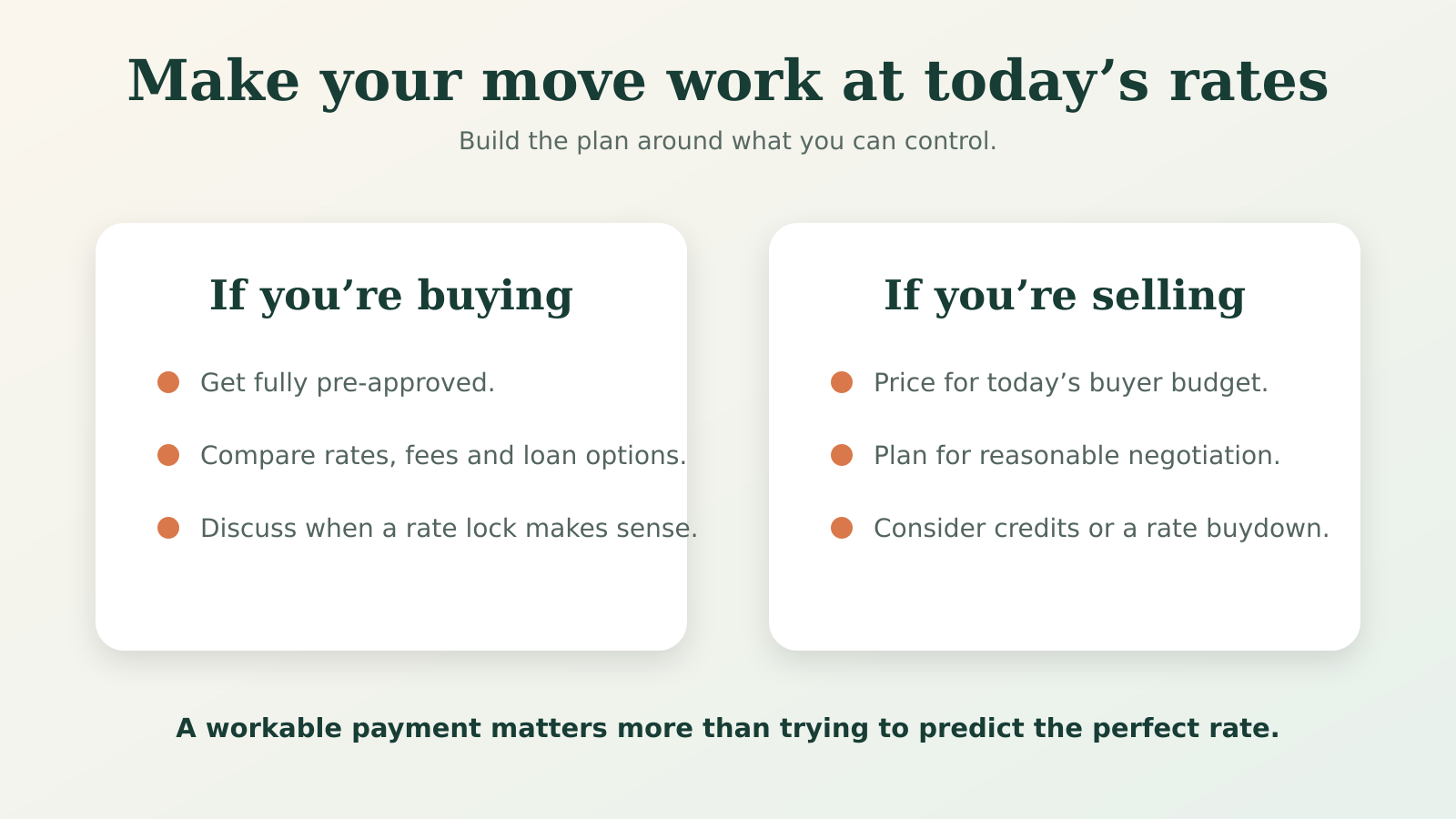
A successful move starts with a plan built around today’s market—not a prediction about tomorrow’s rates.
What This Means in Chicagoland
Conditions aren’t identical across Kane County, DuPage County, and the Fox Valley.
Some well-priced homes still attract quick offers. Others sit longer and give buyers room to request repairs, closing-cost assistance, or a rate buydown.
Property taxes also play a major role here. A lower-priced home with higher taxes may have a larger monthly payment than a more expensive home in another community. That’s why buyers need to compare the complete payment—not simply the mortgage rate or listing price.
Sellers need the same local perspective. The strategy that works for a move-in-ready home in St. Charles may not work for a property in another town, price range, or condition.
Bottom Line
The Federal Reserve does not directly set mortgage rates. Its decisions influence the economy and financial markets, but inflation, Treasury yields, economic reports, and investor expectations all help determine where mortgage rates go.
You can’t control those forces. You can control your financing preparation, price range, negotiation strategy, and timing.
If you’re considering a move in Kane County, DuPage County, or the Fox Valley, let’s look at the real numbers and build a plan that works in today’s market—without betting everything on a rate forecast.