
Waiting for Mortgage Rates To Drop? Here’s What Buyers Should Know
I talk with a lot of potential buyers who are putting their plans on hold for the same reason: they’re waiting for mortgage rates to come down.
I completely understand. Even a modest decline can improve your monthly payment and buying power. But if you’re waiting for rates to fall dramatically before making a move, it’s important to understand why that may not happen anytime soon.
One of the biggest reasons comes down to something most buyers have probably never heard of: the mortgage-rate spread.
Mortgage Rates and the 10-Year Treasury
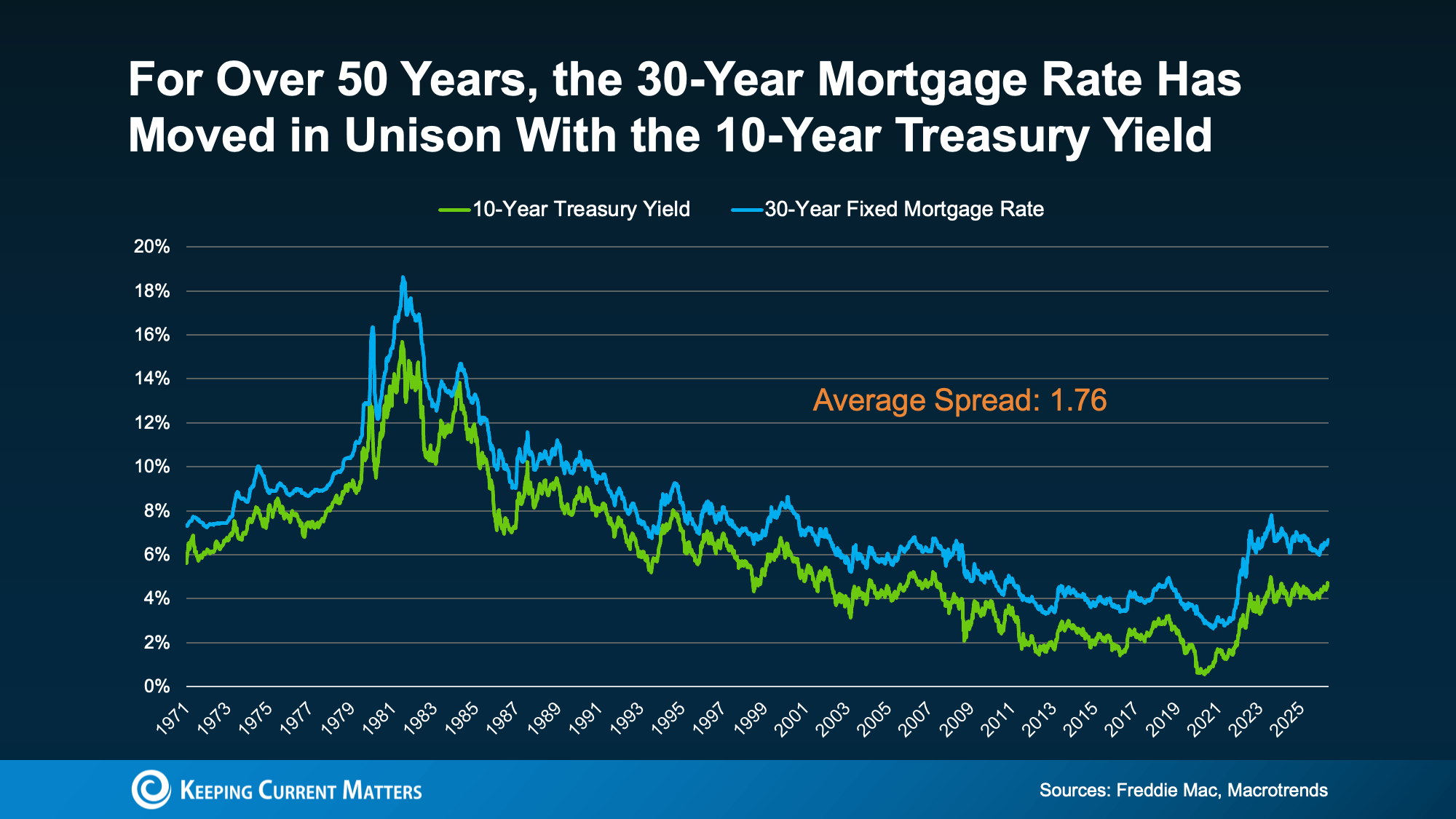
Mortgage rates don’t move independently. They generally follow the yield on the 10-year U.S. Treasury, which rises and falls based on inflation, economic conditions, investor expectations, and other market forces.
They don’t move in perfect sync every day, but they’ve followed the same general direction for decades.
The difference between the 10-year Treasury yield and the typical 30-year mortgage rate is called the spread.
Historically, that spread has generally been around 1.6 to 1.8 percentage points. When it grows wider, mortgage rates can climb even if Treasury yields don’t move much. When it narrows, mortgage rates can improve without a dramatic change in the broader economy.
Why the Spread Matters Right Now
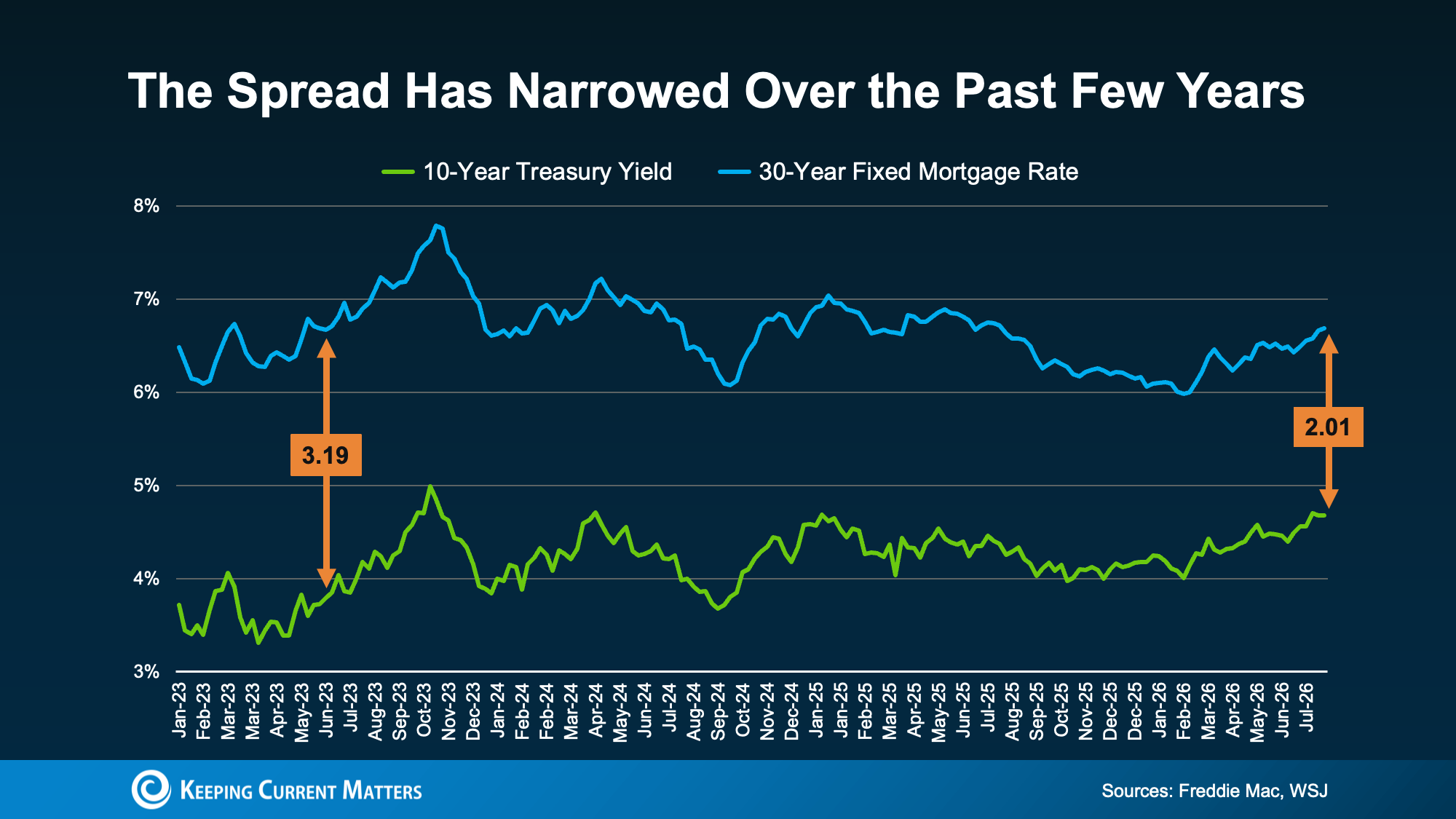
During the uncertainty of 2023, the spread widened to unusually high levels. That helped push mortgage rates much higher than the 10-year Treasury yield alone would have suggested.
The encouraging news is that the spread has narrowed substantially since then. Recent market analysis placed it near 2%, much closer to its historical range. That improvement has helped keep mortgage rates from moving back toward the 7%–8% levels buyers experienced previously. HousingWire’s mortgage-spread analysis illustrates how meaningful that difference has been.
For perspective, Freddie Mac reported the average 30-year fixed mortgage rate at 6.58% in late July 2026. Its weekly survey is based on actual loan applications submitted through lenders across the country. Freddie Mac mortgage-rate data
The Good News—and the Trade-Off
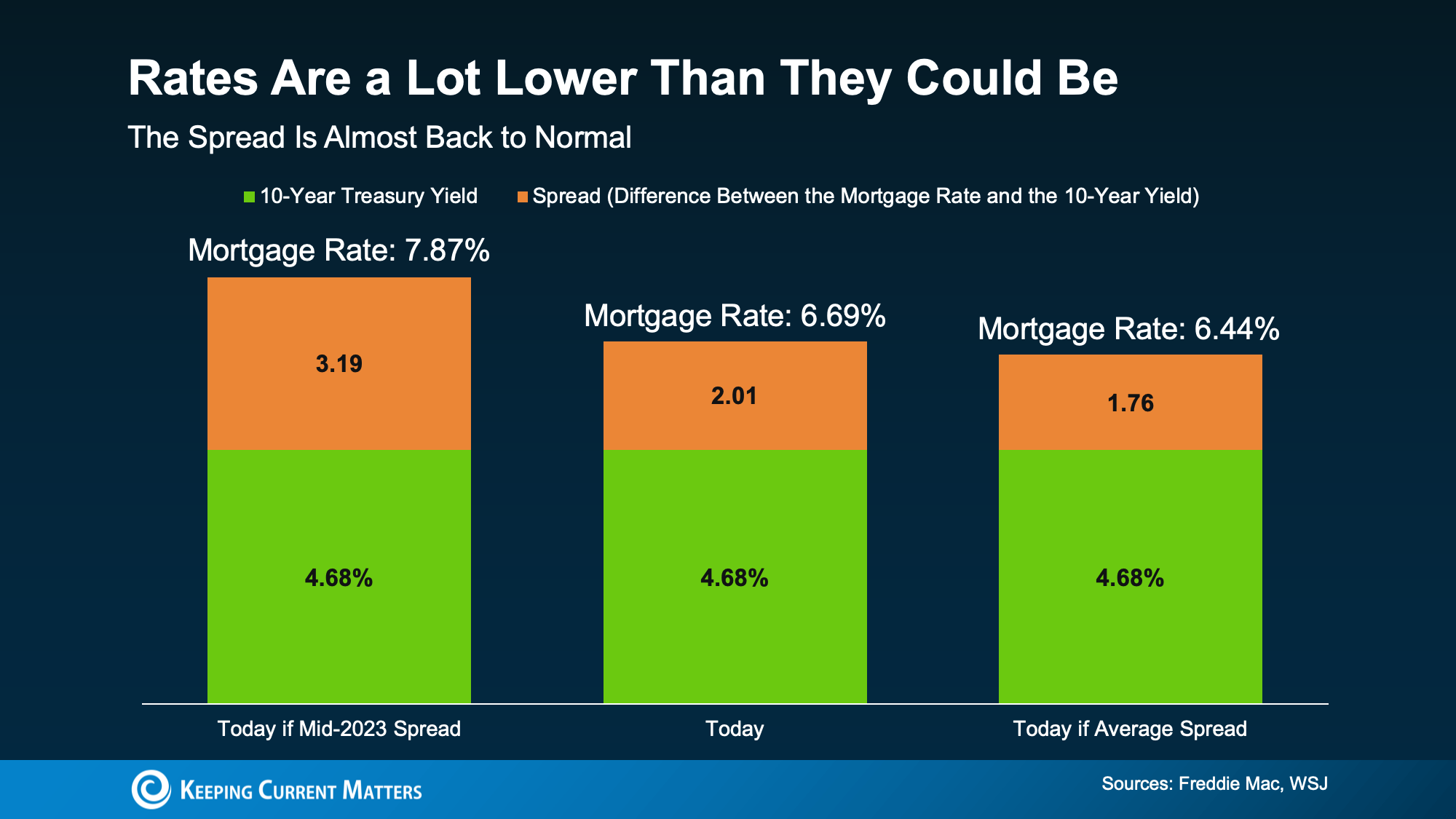
The narrowing spread is one reason mortgage rates aren’t higher than they are today. That’s the good news.
The trade-off is that much of the improvement we could reasonably expect from the spread returning to normal may have already occurred. For rates to fall substantially from here, we would likely need the 10-year Treasury yield to decline as well.
That could happen if inflation cools, the economy slows, or investors become more cautious. But no one can reliably predict when that will happen or how far rates will fall.
That’s why I don’t recommend building an entire homebuying plan around a rate forecast.
Focus on the Numbers You Can Control
Instead of waiting for the perfect interest rate, start by looking at the complete picture:
- What monthly payment fits comfortably within your budget?
- How much cash will you need for the down payment and closing costs?
- Are sellers offering closing-cost credits or other concessions?
- Could a temporary or permanent rate buydown make sense?
- Would refinancing later be worthwhile if rates eventually decline?
- What homes are currently available in your preferred area and price range?
The interest rate is important, but it’s only one part of the decision. The price you pay, seller concessions, property taxes, insurance, competition, and your personal timeline can matter just as much.
What This Means for Chicagoland Buyers
Conditions vary considerably between communities in Kane County, DuPage County, and throughout the Fox Valley. Some homes still attract immediate competition, while others give buyers more time and negotiating room.
Waiting for a lower rate could save money if rates fall—but it could also mean facing higher prices or more competition later. The better strategy is to understand what you can afford today and decide whether the available homes and terms make sense for you.
Bottom Line
Mortgage rates may ease, but buyers shouldn’t assume a dramatic decline is just around the corner. The improving mortgage-rate spread has already helped keep rates lower than they otherwise might have been.
If you’re considering buying, talk with a knowledgeable local lender about your payment options. Then let’s look at what’s available in Kane County, DuPage County, or the Fox Valley and determine whether moving now—or waiting—makes the most sense for you.