You’ve probably seen the headlines saying, “foreclosures are on the rise,” and maybe your mind jumped straight to 2008. That’s understandable. A lot of people remember that crash and all the foreclosures that happened during that window, and they’re hoping something like that never happens again.
But this isn’t a repeat of what happened back then. Here’s the context to prove it.
Foreclosures Are Rising, But They’re Still Historically Low
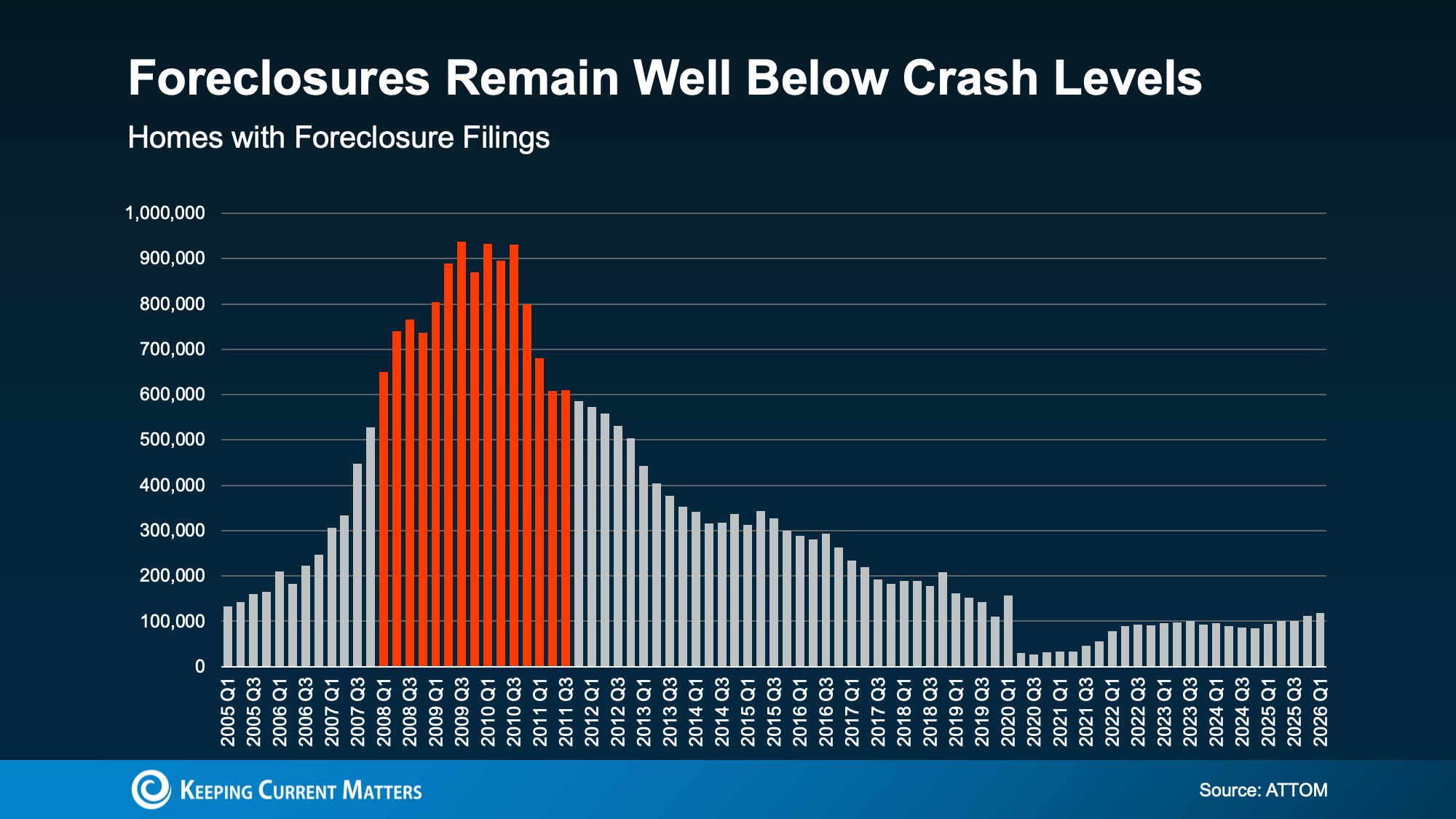
Yes, foreclosure filings are up 26% from a year ago, according to ATTOM. And they’ve been rising for 5 straight quarters. That’s a real trend worth paying attention to. But the full picture isn’t scary like the headlines suggest.
The reality is the increase we’re seeing is a sign of the market normalizing.
Here’s an important thing to know about this chart. The extremely low numbers you see in 2020 and 2021 don’t represent what’s “normal.” That’s when the government put a moratorium on foreclosures to help homeowners get through the pandemic. Those years were an exception, not the baseline.
Instead, compare where we are today to 2017, 2018, and 2019 – the last years the market was running normally. Today’s numbers are still lower. So, we’re not even back to what’s typical, yet. That means this can’t be a crash. (see graph below):
While today’s numbers are getting closer to pre-pandemic levels, they’re still below historical norms. And just look at what was happening around 2008. Even with the recent increase, we’re nowhere near those levels. This is a market returning to normal, not heading toward a crisis.
Why Today’s Equity Picture Changes Everything
Most of those filings won’t even end in a completed foreclosure. That’s because today’s homeowners have something most people in 2008 simply didn’t have. And that’s equity.
The average homeowner today is sitting on roughly $295,000 in home equity right now, according to Cotality. Back in 2008, many people owed more than their homes were worth. Selling wasn’t an option. And foreclosure was often the only door available.
Today, that’s not the case. If you have enough equity to cover what you owe and the cost of selling, you could sell your home, pay off your debt, protect your credit, and potentially walk away with money in your pocket.
That’s a completely different situation than what homeowners faced during the last crash, and it’s a big reason we’re unlikely to see foreclosures spiral the way they did back then.
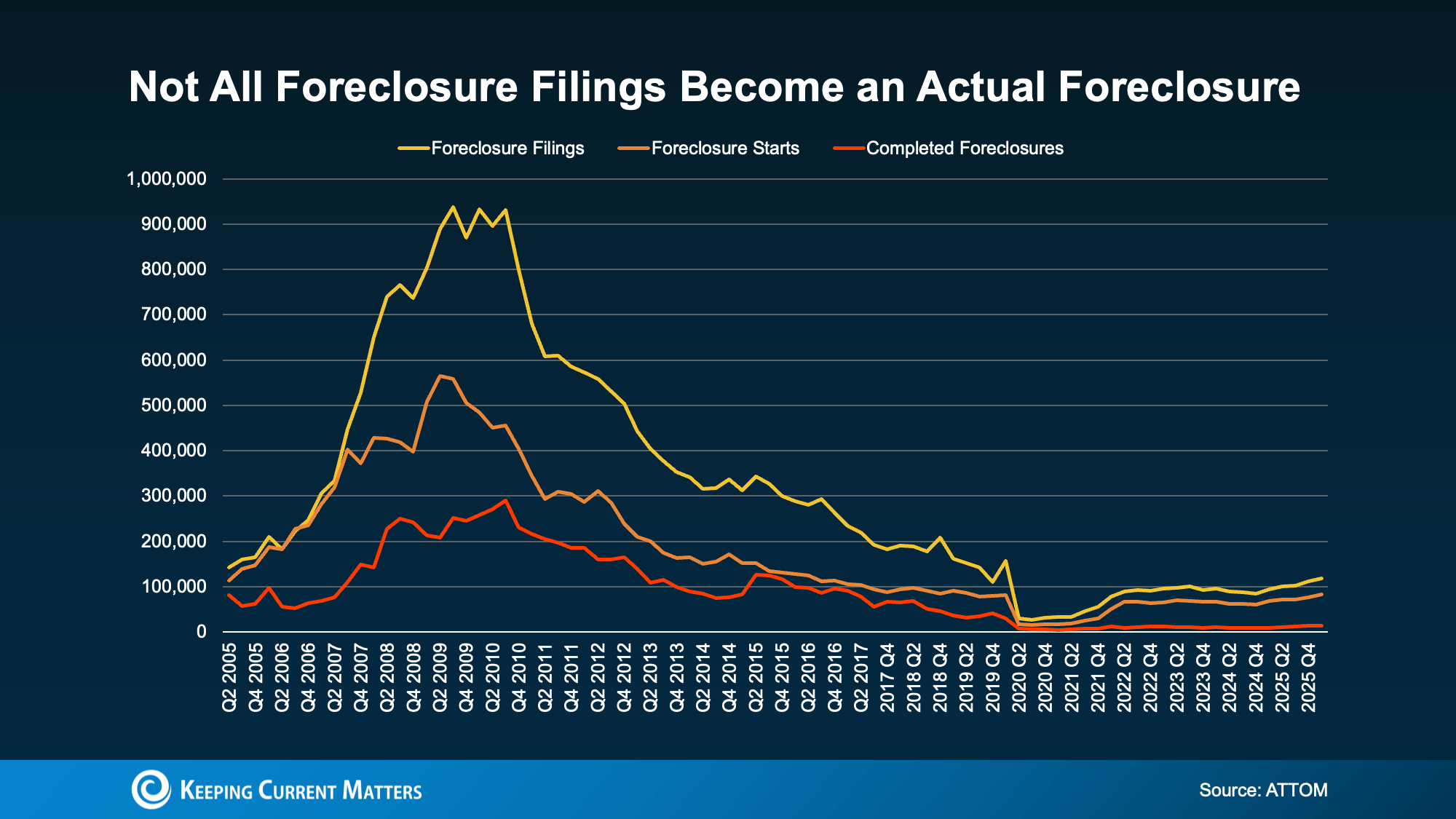
Check out the graph below. It shows foreclosure data from ATTOM going back to 2005. Here’s how to read it:
The yellow line tracks all foreclosure filings.
The orange line tracks foreclosure starts, meaning the process has officially begun.
And the red line at the bottom tracks completed foreclosures (the ones where a homeowner actually lost their home).
See how the red line stays well below the other two? That gap tells the real story. A lot of homeowners who enter the foreclosure process never end up losing their home because they find another way forward first.
Today’s equity is a big reason for that. So, even the filings we are seeing now won’t all end in foreclosure.
If You’re Struggling, You Have More Options Than You Think
Maybe you’re behind on payments. Maybe you’re stressed about what comes next. That’s an incredibly hard place to be, but it’s important to know that missing a payment or two doesn’t automatically mean you’ll lose your home.
Banks would much rather work with you than foreclose. It’s a complicated, costly process for them, too. They’re often willing to set up a repayment plan, offer forbearance (a temporary pause or reduction in your payments), or modify your loan to make things more manageable long-term.
Just know the sooner you reach out to your lender, the more options you’ll have. In some states (ones that don’t require the foreclosure process to go through a court) things can move faster than people expect. Getting ahead of it early gives you and your lender the most room to find a solution.
And if selling makes more sense for your situation, a real estate agent can help you understand what your home is worth and whether that’s a path worth exploring.
Bottom Line
Foreclosure filings may be rising, but they're still low. And the equity most homeowners are sitting on today is a key reason this looks nothing like 2008.
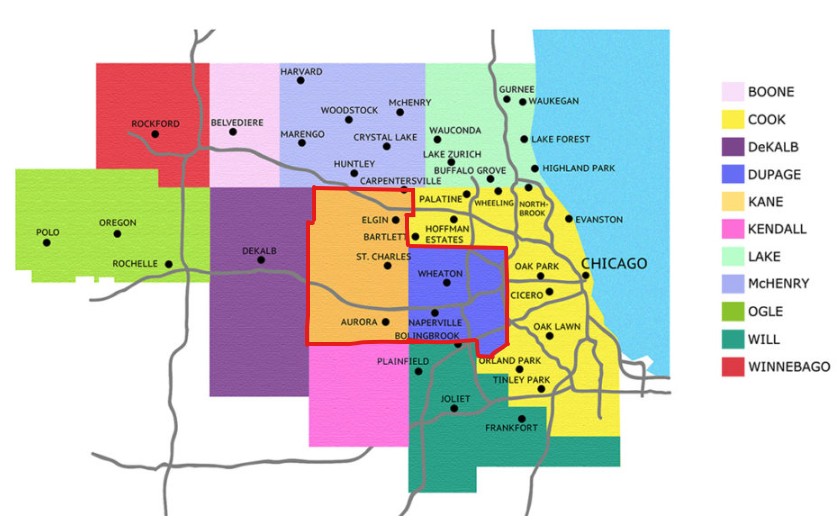
The housing market across Kane County and DuPage County continues to outperform much of the national conversation surrounding real estate. While higher interest rates have slowed the pace compared to the frenzy of 2021 and 2022, buyer demand throughout the western suburbs remains steady due to limited inventory and continued population movement into suburban communities. Areas such as St. Charles, Geneva, Batavia, Naperville, Wheaton, and Glen Ellyn continue attracting buyers looking for strong schools, larger homes, and access to major transportation corridors. Updated homes that are priced appropriately are still moving quickly, particularly in affordable and mid-range price points where competition remains strongest.
One of the biggest factors shaping today’s market is the ongoing shortage of available homes. Many homeowners locked in historically low mortgage rates several years ago and simply do not want to trade those payments for today’s higher borrowing costs. As a result, inventory across both Kane and DuPage counties remains below normal levels. That lack of supply continues supporting home values, even as buyers become more selective. In DuPage County, strong demand continues in communities with walkable downtowns and commuter access, while Kane County continues benefiting from buyers searching for more space, newer homes, and better overall value further west.
Today’s market feels far more balanced than it did during the peak pandemic years, but well-prepared homes are still standing out. Buyers have regained the ability to negotiate inspections, closing costs, and repair requests in some situations, especially on homes that are overpriced or need updates. At the same time, sellers who properly prepare, stage, and price their homes are still achieving strong results. The overall market has not crashed — it has normalized. Both Kane and DuPage counties continue showing long-term stability because demand still exceeds the number of homes available in many neighborhoods.
Bottom Line:
Real estate throughout Kane and DuPage counties remains competitive, especially for clean, updated homes in desirable locations. Buyers have more leverage than they did a few years ago, but limited inventory continues keeping pressure on prices. Whether buying or selling, local market knowledge, realistic pricing, and preparation remain the keys to success in today’s market.
Chicago bucked the national trend of slowing home-price growth in February, leading the United States as the metro with the fastest pace of price appreciation, S&P Dow Jones Indices said.
While the S&P Cotality Case-Shiller U.S. National Home Price NSA Index rose 0.7% year over year in February, compared to a 0.8% gain in January, Chicago led all markets in the 20-City Composite Index with a 5% year-over-year increase. On a monthly basis, the Windy City was up 1.04%.
Over half of the 20 metros experienced year-over-year price declines, meaning the price-growth slowdown has expanded beyond its Sun Belt origins.
S&P Dow Jones noted that inflation outpaced national home-price appreciation for the ninth month in a row, with the Consumer Price Index running 1.7 percentage points above the 0.7% annual gain.
“With consumer inflation at 2.4%, U.S. home values have lost ground in real terms for nine consecutive months,” said Nicholas Godec, head of fixed income tradables and commodities at S&P Dow Jones Indices.
“The geographic mix has shifted meaningfully,” Godec added. “Mountain West (Denver -2.2%) and Pacific Northwest (Seattle -2.0%) markets now sit alongside Sun Belt decliners Tampa (-2.1%), Phoenix (-1.8%) and Dallas (-1.7%). Los Angeles (-0.8%) and Washington, D.C., (-0.1%) joined the list of decliners, while Tampa’s decline narrowed for a fourth consecutive month, and Denver displaced it as the weakest market in the index.”
You’ve probably asked yourself lately: Is it even worth trying to buy a home right now? It’s a question a lot of people are asking.
With today’s home prices and mortgage rates, renting can feel like the easier path. In some cases, it might even seem like the only realistic option right now. And if that’s where you are, there’s nothing wrong with that.
But if you’re weighing the decision, there’s one part of the conversation that doesn’t get talked about enough.
What Renting Really Gets You (And What It Doesn’t)
Depending on your situation, renting does have some advantages:
Lower upfront costs.
Less responsibility.
More flexibility to move when you want.
But even with those benefits, a Bank of America survey found 70% of aspiring homeowners worry about what long-term renting means for their future. And that concern comes down to one thing: you’re not building anything for your future. As Yahoo Finance explains:
“Paying rent doesn’t build equity. You get a place to live, but no ownership stake, no price appreciation, and no asset to leverage for future borrowing or investment.”
So, while renting may feel easier, the flexibility you get comes at a cost.
How Homeownership Builds Your Wealth Over Time
On the other hand, owning a home is one of the most consistent ways people build wealth over time. Why? When you’re a homeowner, you gain something called equity. That’s the difference between what your home is worth and what you owe.
That equity grows with every monthly payment you make. It also gets a boost as home values go up through the years – and it adds up quicker than you may think.
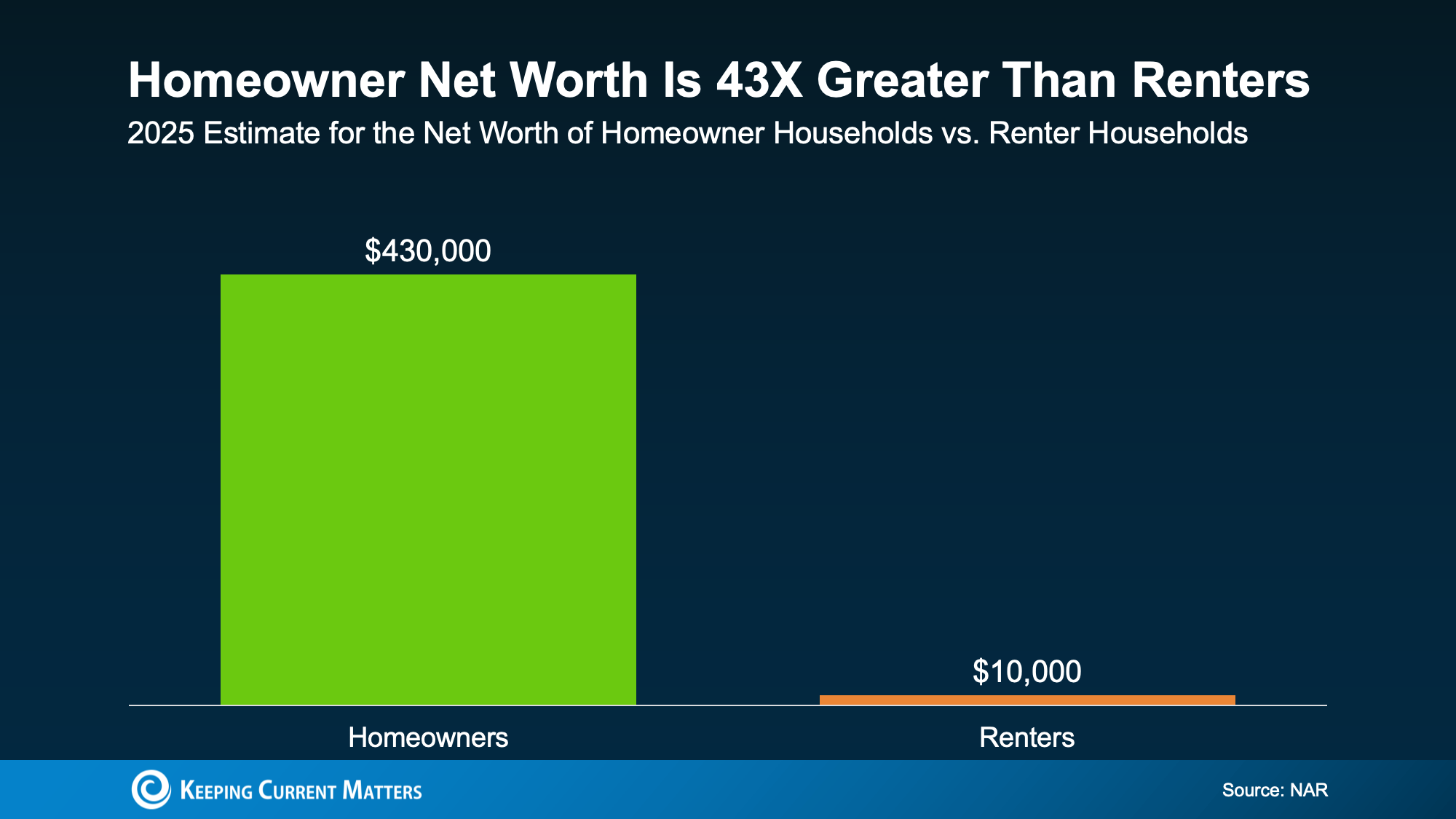
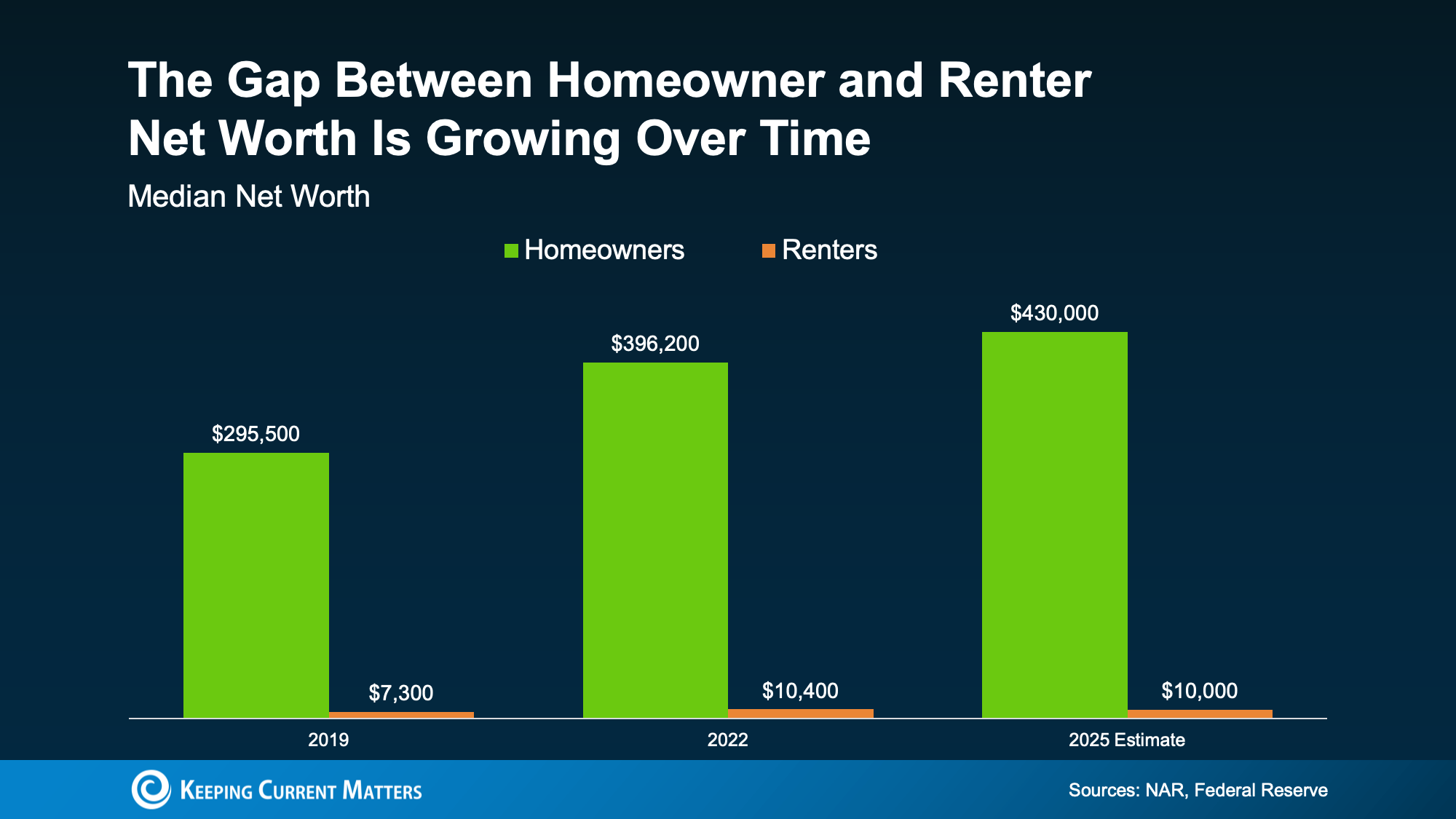
Today, the National Association of Realtors (NAR) says theaverage homeowner’s net worth is43X greater than that of a renter:
The dollars in the visual don’t lie. On average, here’s how net worth compares:
Homeowners: $430k
Renters: $10k
And it’s not because homeowners make wildly different decisions day to day. It’s because over time, one path builds something, and the other doesn’t.
So sure, buying comes with some upfront costs and more responsibility. But it’s basically a savings account you can live in.
The Gap Is Growing Over Time
And here’s something else interesting. That net worth gap between renters and homeowners has been widening over time, not shrinking.
If you look back at the reports on net worth through the years, you can see the gap is growing as homeowners gain wealth and renters stay stuck in the rental trap (see graph below):
Even in 2025, when home prices were moderating, homeowners still gained even more ground. And that tells you something important:
When you can afford it and you’re ready for the responsibility, history shows buying is usually worth it in the long run. Because either way, you’re paying for someone’s mortgage and building someone’s net worth.
When you rent, it’s your landlord’s mortgage – not yours. But when you buy? Your monthly payments help build equity.
The question is: whose do you want to pay? Yours or theirs?
So, Should You Buy a Home Now?
The short answer is, it depends on your situation.
While the long-term benefits of buying are clear, that doesn’t mean the timing is right for everyone right now. And that’s okay. You should only buy a home once you’re ready and the numbers work for you.
But whether you’re looking to buy now or planning for the future, the first step is the same. You should have a quick conversation with a local real estate agent about your goals, timeline, and budget.
They can help you run the numbers and see what’s realistic. You may find buying is closer than you thought. And if not, you’ll at least know exactly what it will take to get there.
Because the sooner you have a plan, the sooner you can decide when it makes sense, instead of wondering if it ever will.
Bottom Line
Renting may feel more do-able today. But over time,it could cost you.
If you want to ditch renting and start building something for your future, it starts with a simple conversation. Connect with a real estate agent to talk about your specific goals, and explore your options – so you’re ready when the time is right for you.
If you’re getting a tax refund this year, here’s something worth thinking about. That money could actually help you get closer to buying a home.
It may not be something you’ve factored into your plan yet, but it can give your savings a nice boost right when you need it most. And whether your refund is a few thousand dollars or more, there are some smart ways to put that money to work as you get ready to buy.
Your Refund May Be Even Bigger This Year
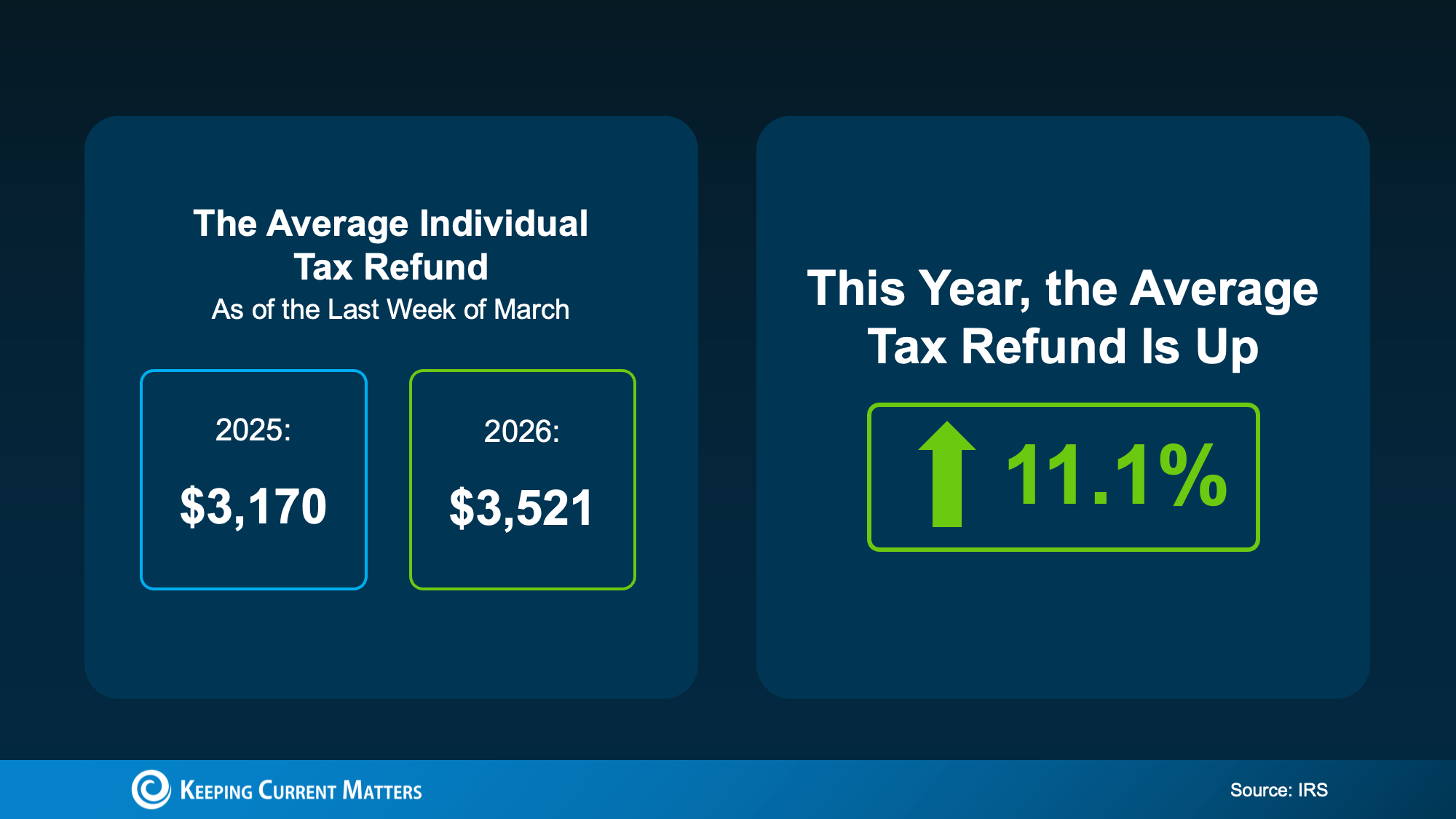
Let’s start with the good news. People are getting even more money back in their refunds than they did last year. The visual below uses data from the Internal Revenue Service (IRS) to show the average individual’s refund is 11.1% higher this year:
Of course, your exact refund will vary. But any extra money you get is a good thing, especially when affordability is still tight.
How You Can Use Your Tax Refund
So, how can you put that money to work? Here are a few smart ways to use your refund when buying a home, according to Freddie Mac:
Put it toward your down payment. Data shows saving for a down payment is one of the biggest hurdles for first-time homebuyers. Using your refund can help you build that up faster. And the good news? You may not need to put as much down as you think.
Use it for your closing costs. Closing costs usually range from about 2% to 5% of the home’s purchase price. Using your refund here can make things feel a lot more manageable on closing day.
Lower your mortgage rate. You may have the option to buy down your mortgage rate. That means paying a little more upfront to get a lower monthly payment. If you’re looking for ways to make the numbers work a little better, this is something that could be worth asking about.
You Don’t Have To Figure This Out Alone
If you have a tax refund coming, it’s a great time to take another look at your homebuying savings. Maybe you’re almost at your goal and you can buy sooner than you expected.
A trusted real estate agent and lender can help you map out what you need, what your options are, and how to make the most of what you already have, including your tax refund.
Bottom Line
If buying a home is on your radar this year, don’t overlook your tax refund. It could be the extra push that helps you go from almost there to actually ready.
Want to see how far your savings could take you right now? Talk with a local real estate agent and build a plan that fits your situation.
Spend about 5 minutes online searching for news about the housing market, and odds are you’ll see something pop up about home prices. You may even stumble onto social media influencers saying we’re headed for a crash. Let’s get you the context you need.
The truth is prices are going to vary depending on where you live. But they’re not crashing.
Here’s what you need to know.
The Local Perspective: Home Price Trends by Area
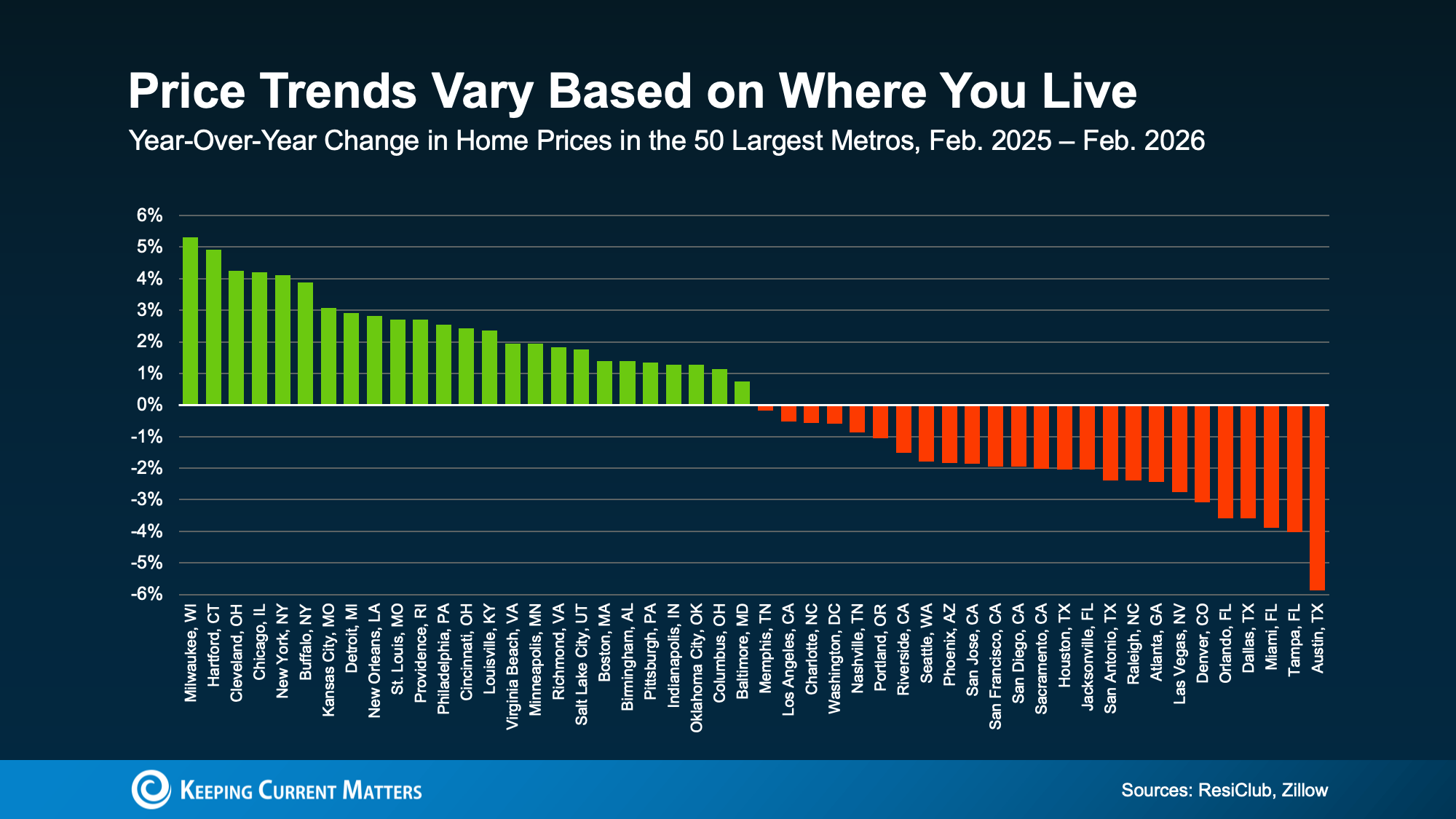
The biggest thing feeding into the confusion online is how different home price trends are by area right now. Take a look at this data from ResiClub and Zillow (see graph below).
About half of the largest metros are seeing prices go up.
The other half are seeing some declines.
Unfortunately, the online chatter only focuses on the markets where prices are down – and that makes it sound like something bigger is happening.
But, as you can see in this graph, that’s only one side of the story.The full picture is different.
The National Perspective: Moderate Price Growth
As a country, when you average it all together to get a true baseline, one thing becomes clear, home prices are still net positive at the national level.
According to the Redfin, national home prices were up about 1% year-over-year in February. So, what we’re seeing right now isn’t a collapse. It’s a market that’s normalizing after a period of unusually fast growth. And that impacts some local markets more than others – particularly those where prices rose too far, too fast during the pandemic.
A true crash, like what happened in 2008, would mean prices dropping sharply across the entire country. That’s just not what the data shows today. And it’s not where things are going either.
Experts Agree This Isn’t 2008
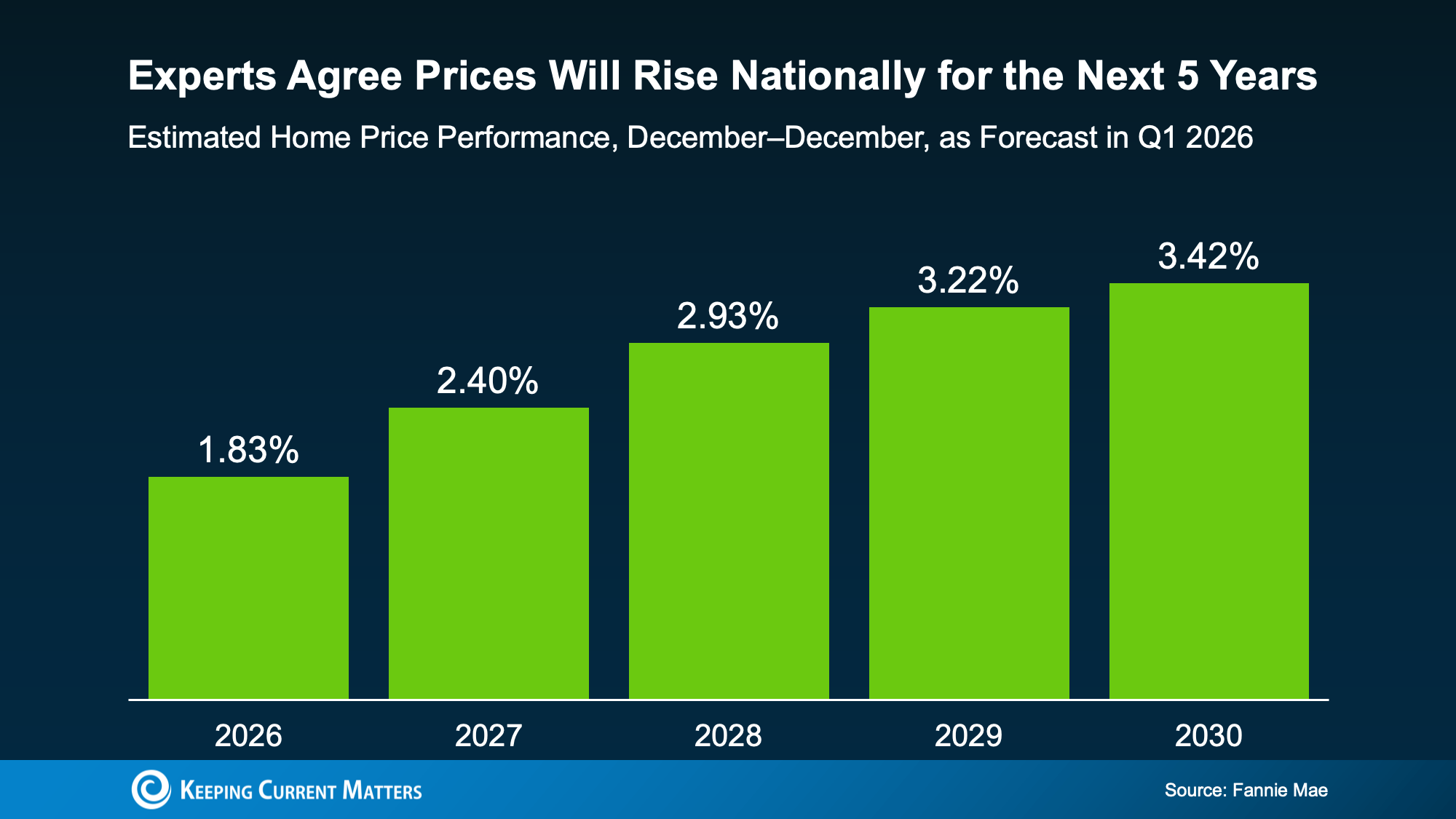
In fact, Fannie Mae surveyed over 100 housing market experts to ask their opinions on where prices are headed from here. And the experts agree, nationally, prices are expected to keep rising over the next five years:
That rise will be moderate, particularly this year, but the trend is clear. Nationally, prices are forecast to grow every year now through at least 2030 – and that’s normal. Daryl Fairweather, Chief Economist, at Redfin explains:
“House prices aren’t going to fall on a national scale any time soon—and that’s actually a good thing. It’s normal for house prices to rise gradually over time . . .”
That’s why even in the select areas where prices have dropped slightly this year, the decline is expected to be temporary. According to that same quarterly Fannie Mae survey mentioned above, 85% of the experts say the markets that are seeing mild declines right now will return to positive price growth before the end of 2027.
The main takeaway? This isn’t a crash. And prices aren’t expected to fall nationally. If anything, the few areas experiencing declines are expected to rebound in the next year or so.
Bottom Line
It’s easy to get caught up in headlines that make it sound like something big is about to happen. But don’t be fooled. The housing market isn’t crashing. It’s just shifting.
The key is understanding what’s actually happening in your market, so you can make the right move for you. Connect with a real estate agent if you want the local perspective.
While the Spring season consistently offers up some of the best conditions for home sellers, Realtor.comsays there’s one window where the stars really seem to align year after year. And it’s coming up fast.
Based on their analysis of historical trends, the ideal week to put your house on the market this year is: April 12–18.
And here’s why this window stands out as being particularly seller-friendly:
Buyers Are More Active. According to the research coming out of Realtor.com, homes listed during this week typically get about 16.7% more views than in a normal week. And in a market where buyers have options, getting that extra attention can set the tone for your entire sale.
Sales Happen Faster. Realtor.com also explains the added demand from buyers sets you up for a faster process. While homes have been taking longer to sell lately, homes up for sale this week were on the market for 17% less time than usual. And that’s a difference you’ll be able to feel.
A Better Price for Your House. Since the number of homes for sale has grown, it’s normal for buyers to ask for credits, repairs, and price adjustments today. But, during this early Spring window, about 18.9% fewer homes do a price cut. That gives you a better chance of getting your full asking price.
More Profit in Your Pocket. According to the study, well-prepped homes listed this week can command a price that’s about $5,300 more than the average week (and $26,000 more than homes at the start of the year).
And what seller doesn’t want more eyes on their house, getting an offer in hand sooner (rather than later), and their best shot at selling for top dollar?
What You Need To Do To Get Ready
If you’re already thinking about selling and you want to take advantage of this sweet spot, your next step is shockingly simple. Just talk to a local agent.
Their expertise on your area is going to be key over the next few weeks. Because these trends are going to vary by state, city, and even neighborhood. And your agent will use that insider knowledge to help you figure out what you need to do now to get your house ready. Including:
What you’ll want to spruce up before listing
How to prioritize any repairs (and contractors that can help)
Quick wins that’ll have a big impact
What buyers care most about today
For some sellers, that’s a few easy fixes they can knock out in the next couple of weeks. A fresh coat of paint. Some new mulch. Or some light Spring cleaning.
For others, it’s worth taking another month or so to make some minor updates before listing. And that’s okay. Because while this mid-April window may give sellers an advantage, it’s not your only opportunity to sell.
Zillow says the best time to list is in May. And that means the golden window for sellers isn’t closing after this one week. It’s open all season long.
Bottom Line
Getting your house on the market in mid-April may give you an extra edge, but the bigger opportunity is the Spring season as a whole. The real question is:
Do you know what you need to do before you can list?
Because it’s officially go-time for any seller planning a Spring move.
If you want your house to hit the market this week (or even this season), talk to a local agent about what it’ll take to get it ready.
Residential markets in DuPage and Kane counties are showing a clear pickup in competitive activity. It’s not a full return to past frenzy levels, but listings that are positioned correctly are once again drawing multiple offers—largely because inventory remains tight and buyers are acting with discipline.
Inventory Shortage Fueling Competition
Both counties still face a limited supply of homes, especially in the $300,000–$600,000 range where first-time buyers and move-up purchasers are most engaged. Listing volume continues to trail historical averages, narrowing choices and triggering localized bidding situations.
Sellers who introduce well-prepared properties to the market are seeing:
Reduced time on market High showing traffic within the first 7–10 days Greater chances of receiving multiple offers
Pricing Strategy is the Key Driver
The return of multiple-offer scenarios isn’t happening across the board—it depends heavily on getting the price right.
Homes listed at or just under market value are:
Pulling in a wider pool of buyers Creating a sense of urgency Frequently selling above the asking price
On the other hand, homes priced too aggressively or used to “test” the market are lingering longer, needing reductions, and losing negotiating power.
Right now, pricing isn’t about leaving space for negotiation. It’s about precision—matching current comps and what buyers are willing to pay today.
Buyer Behavior: Careful but Ready
Today’s buyers are more cautious, largely due to interest rates, yet they remain active and prepared to move quickly when the right property appears.
Key buyer trends:
Strong preference for updated, move-in-ready homes Reluctance toward properties needing major renovations Readiness to compete when the value feels justified
Financing contingencies are still common, but stronger offers—such as higher earnest money deposits and more flexible terms—are showing up more often in competitive situations.
Condition of the Property Carries More Weight
Homes that are staged, updated, and marketed professionally are outperforming others. Even small upgrades—fresh paint, improved lighting, basic landscaping, and decluttering—are translating directly into higher sale prices and better offer quality.
Properties that aren’t properly prepared aren’t seeing the same level of demand, even with limited inventory.
Local Market Variations
Although both counties share similar overall trends, conditions can differ significantly at the micro-market level:
In places like Naperville and Wheaton, demand remains especially strong due to schools, amenities, and commuter convenience. More affordable pockets in Aurora and Elgin are gaining traction with buyers focused on value.
Grasping these hyper-local differences is essential when pricing a listing or guiding buyers.
Outlook
The DuPage and Kane county markets are settling into a more balanced—yet still seller-leaning—phase. Multiple offers aren’t guaranteed, but they’re becoming more frequent when three elements come together:
Accurate pricing Strong presentation Well-timed market entry
Sellers who execute on all three are starting to regain leverage. Buyers, meanwhile, need to act decisively when they find a property that fits.
This isn’t a market driven by speculation. It’s driven by strategy.
You may be prepping to put your house on the market or simply want to enjoy your home more. Whatever your goal, home improvement pros and DIYers tout a fresh coat of paint as a favorite oow-cost home upgrade that can make a huge impact. But what else can you do to accessorize and decorate? Sometimes the little things can make a bigger difference than you’d think.
Professionals share the following easy and low-cost home upgrades to add a designer’s touch all around the house. These projects may even help increase your home’s perceived value.
For the Bathroom
1. Frame It
Estimated cost: starting around $100
That edgeless, builder-grade mirror hanging above the bathroom vanity may be prime for an update. Jessica Love, an interior designer with Urbane Design in Austin, Texas, suggests using DIY frame kits, like the ones from MirrorMate. Measure the mirror and choose from numerous frame styles and materials, like wooden walnut or shiny brass. The frame kit includes clips and metal strips to attach to the existing mirror. A once-forgettable mirror instantly looks customized and styled to the space, Love says.
2. Infuse Some Green
Estimated cost: $5 and up
Simply adding greenery can liven up bathroom spaces and soften harsh lines from all the heavy fixtures, designers say. Try a statement plant on the floor, like the vertical sword-shaped leaves of a snake plant or the feathery foliage from a bird’s nest fern. Or you could incorporate smaller plants, like a mini aloe in a white ceramic planter or an iron fern in a rounded marble vase.
Many renovators say they’re incorporating greenery to update their bathrooms for aesthetics, air purification, and odor-fighting abilities, according to the 2022 U.S. Houzz Bathroom Trends Study, a survey of 2,500-plus remodeling homeowners. Tight on space? Love suggests topping a shelf or vanity counter with an air-purifying indoor plant on a natural tray (for texture) along with a favorite candle.
3. Modernize Hardware
Estimated cost: hardware starting at about $2 apiece for cabinet pulls, faucets for $200 or less
Just swapping out the faucets and drawer pulls is a small home upgrade that can refresh an outdated bathroom. Try trendy gold or black cabinet pulls or a modern boxy-style faucet. “Mixed metals are trending right now,” Love says. “We’re seeing black with brass and brass with chrome.” Love’s favorite resource for inspiration is Build.com, which features a variety of manufacturers and styles.
4. Soften the Lights
Estimated cost: about $100 or less apiece ($93 to $173 per fixture for installation by an electrician)
Wall sconces can warm up the bathroom lighting, says interior designer Jessica Nelson of Jessica Nelson Design in Seattle. She suggests wall sconces hung on each side of the vanity mirror in a black, brass, or chrome finish. The bulb color’s temperature is important, Nelson adds. “My sweet spot is between 2700K [Kelvin] and 3000K. I do not recommend going any cooler than that,” she says. “2700K is a crisp but warm white, and 3000K is my personal favorite. It’s a really soft warm light.”
For the Bedroom
5. Add Molding to the Walls
Estimated cost: about $200, including a designer’s input
Installing molding on the walls behind the bed is an impressive home upgrade. Krisztina Bell, founder of No Vacancy Home Staging and Virtually Staging Properties in the Atlanta area, recently used black molding zigzagged across a wall to dress up a white, blank slate behind the bed frame. She says designers and woodworking artists are readily available on sites like Etsy.com (search under “professionally designed custom dimensional accent wall”). They will custom design a 3D digital model of the molding to fit your wall and provide an instruction packet, shopping list, and cutting and installation instructions so you can DIY.
6. Decorate With Mirrors
Estimated cost: Around $250
“I love adding a statement wall mirror to a bedroom,” says Channa Alvarez, interior designer and production designer at Living Spaces, a national furniture retailer in La Mirada, Calif. She suggests hanging a new mirror above a nightstand, dresser, chest, or bed. Try a mirror in an unusual shape, like a diamond, hexagon, or square silhouette. “If you’re itching for a redesign but don’t want to spend so much, a mirror is the perfect buy. It’s simple, affordable, and light-enhancing.”
For the Living Room
7. Texturize and Accessorize
Estimated cost: $50 to $150 to update a few accessories
“A room can appear one-dimensional when it’s missing texture,” says interior designer Lance Thomas of Thomas Guy Interiors in Lake Charles, La. Designers may add texture by incorporating dressers with fluted designs, chunky knit throws, velvet ottomans, or leather accent chairs. You can adapt that idea by scoping out items from other rooms in your house that you can mix in the living room to add texture and depth. Or shop secondhand stores for small items you can refinish, repurpose, or re-cover. For example, re-covered accent pillows are an affordable way to add texture to your furniture.
“Perhaps the best thing about accent pillows is they’re an easy seasonal item, making your living room feel different without costing as much as a new furniture buy,” Alvarez adds. “Throw pillows are a great and inexpensive way to incorporate new trends or add color to your living room.” Also, functional accents — like a set of three seagrass baskets — can be great for a corner or near a fireplace, Alvarez says. Then, “place throw blankets in them to give the room a cozy, inviting feel.”
8. Wallpaper the Shelves
Estimated cost: about $50 to $60 for a small roll
For homeowners who may be too timid to jump on the wallpaper comeback trend, try it in small doses and with less commitment (especially when using a removable peel-and-stick type). Interior designer Mel Bean of Mel Bean Interiors in Tulsa, Okla., suggests adding wallpaper to the inside back of a bookcase or other shelving unit to dress it up. Recently, she used a jagged, striped gray-and-cream-colored wallpaper behind each shelf on an all-white built-in to add texture, color, and a more custom look.
For the Kitchen
9. Bring in Some Bling
Estimated cost: starting at $2 apiece for cabinet hardware, $60 to $150 for pendant lighting (extra $40 to $120 per fixture for installation by an electrician)
Don’t let an all-white kitchen become boring, Bell says. “Add industrial or contemporary black hardware and lighting to make a kitchen look more chic. Gold is trendy; or chrome, nickel, brushed silver, and stainless steel hardware and lighting are always safe bets,” she adds. Bell likes sites such as Overstock.com, Wayfair.com, or Amazon.com for affordable, stylish mid-century mod, industrial, or futuristic pendant lighting options.
For example, she used shiny gold canned pendants in an otherwise all-white kitchen to highlight the island. “Even just changing out one main fixture or series of pendants above a kitchen island can change the whole look of a room instantly without having to renovate the entire kitchen,” she says.
10. Dress Up the Pantry
Estimated cost: starting at $1 each for baskets and glass jars
Pantries have emerged as a kitchen favorite, so they’re a good choice for a home upgrade. They’re rated as essential or desirable by at least 80% of home shoppers, according to the National Association of Home Builders “What Home Buyers Really Want” consumer survey. Retailers such as the Container Store, Ikea, and Dollar General offer baskets and glass jars in all shapes and sizes.
“Invest in a label maker and go to town organizing your pantry so everything matches and looks almost decorative or too pretty to take snacks from,” Bell says. “This helps create visual order in the space too.” For example, stow pasta in a glass container, put the packaged bread and other products in shelf-sized baskets, and color coordinate the canned goods.
For Outdoors
11. Accentuate With Flower Boxes
Estimated cost: $150
Boxes filled with flowers along the bottom ledge of your outside windows can enhance your home’s architecture and colors. “Flower boxes have this cozy and charming feel,” says Jackie Mosher, co-founder of Dzinly, a company in Royal Oak, Mich., that helps homeowners and real estate professionals digitally design exteriors. “They can add interest, dimension, and some personality.” Fill them all year-round. Mosher suggests using three different types of flowers (for example, greenery, a taller plant in the center, and a colorful accent flower).
The size, proportion, and positioning of flower boxes are important; don’t overdo it, she adds. Not every window needs one. Maybe it’s just the large picture window or the windows on a second story. To test placement, Mosher suggests duct taping cardboard cutouts to the windows to view the possibilities before drilling any holes.
12. Swap Out Lighting Fixtures
Estimated cost: $200 to $250
Bring in a statement light above the front door for a functional and dramatic home upgrade. A hanging pendant or chandelier on the front porch isn’t just for extra illumination. It can enhance curb appeal, Mosher says. She suggests a fixture that’s about one-third or one-fourth the size of the front door (including the trim) and having it hang about 66 inches from the ground. “So many times, we hang them too high,” she says. “Let your front porch light be the loudest. The lights on the exterior should be your jewelry — your ‘wow.’”
If there’s no place for a pendant, upgrade the lights to the side of the door, such as with boxed lanterns in a black or antique bronze, she suggests. Her favorite site for inspiration: Bevolo.com, which recommends fixtures based on house style (modern, traditional, coastal, etc.).
13. Oversize the House Numbers
Estimated cost: $150 to $200
The home’s address numbers may seem insignificant for the outside design, but Mosher calls them one of her favorite inexpensive home upgrades. Large format, sleek black address numbers can add a modern vibe to a home, she says. “House numbers are like adding a statement watch to your outfit. It pulls it all together.”
The numbers can be in all-black or in colors, like even pink or teal, depending on the home’s style, she says. The placement varies too, from the side of the front door to above the garage or anywhere along the front. “These can become a focal point and add some flair,” she says. Mosher’s favorite site for inspiration for house numbers: Modernhousenumbers.com.
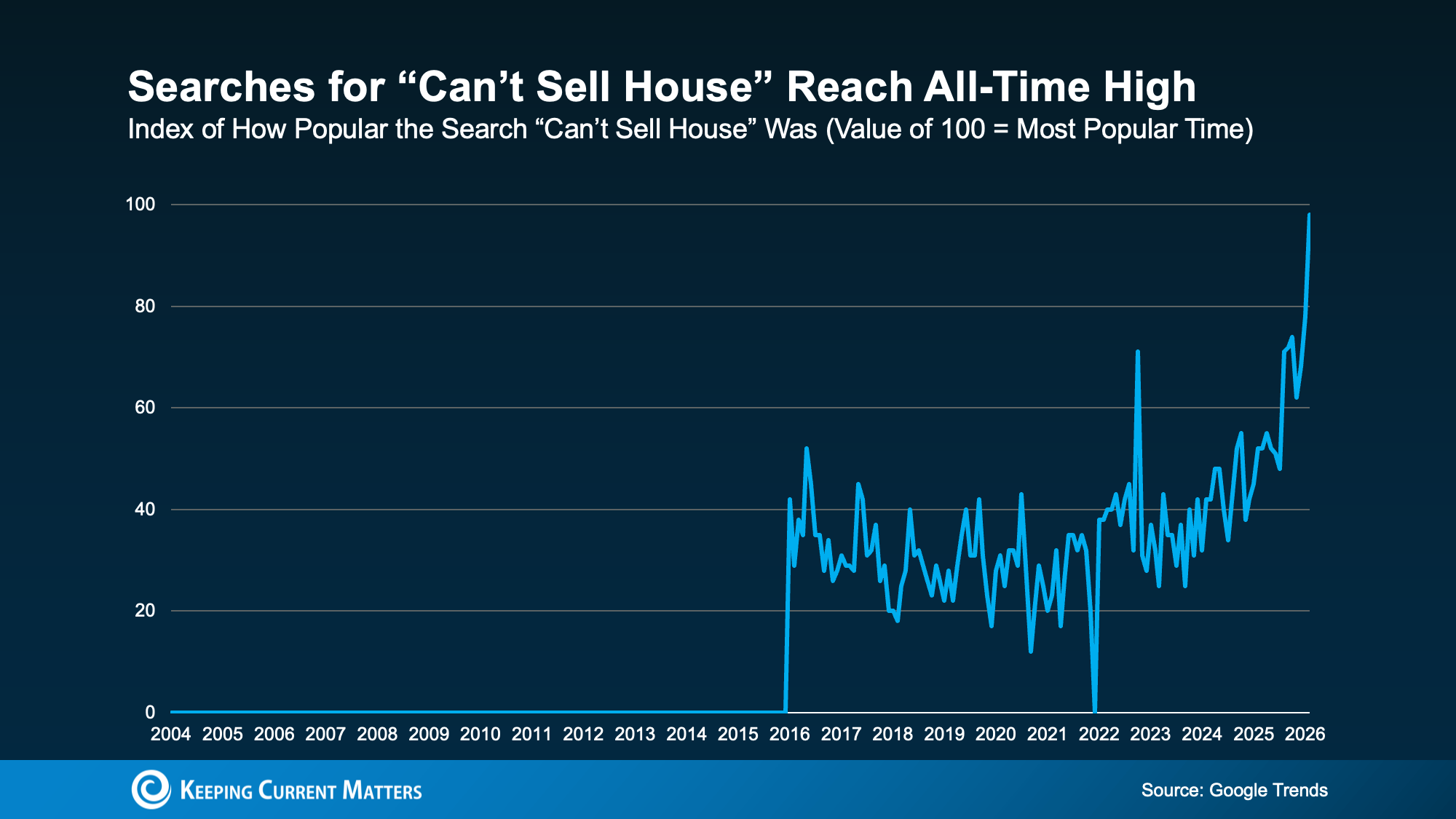
Online searches for “can’t sell house” just hit an all-time high according to Google Trends. So, if your house has been sitting on the market without any bites, you’re not the only one. But it’s also not the end of the road.
Homes are selling every day, so you can turn this around. You just need to take another look at your approach.
If you’re feeling this pain, know this: an online search engine isn’t where you should go for your answers. It’s much better to talk to your agent. Because a search engine doesn’t know your market or your house. But your agent does.
While a quick search or an AI platform may give you some tips on what to try, only an expert agent can actually diagnosis what’s going on – and how to fix it.
For example, your agent knows most homes that struggle to sell today are usually being held back by one (or more) of these three things.
1. Presentation: Buyers Will Compare Everything
When inventory was tight a few years ago, buyers overlooked imperfections because they had to, or they’d lose out to another bidder. Now? That’s no longer the case.
Today’s buyers scroll through dozens of listings in just minutes. They compare condition, updates, lighting, finishes, layout, and more – all side by side. If your home feels dated, cluttered, or in need of repairs, buyers will notice and it’ll knock your house right off their list of contenders.
This doesn’t mean you need a full renovation. But it does mean first impressions matter again. To compete today, you need curb appeal. Clean spaces. Neutral colors. Professional photos. If there are scuffs on the walls, obvious repairs, or too many outdated features, it could be what’s holding you back.
2. Pricing: If the Price Isn’t Compelling, It’s Not Selling
This is maybe the hardest one to hear, but what your neighbor sold their house for a few years ago isn’t necessarily the same price you’ll get today. As Selma Hepp, Chief Economist at Cotality, says:
“For sellers, the days of pricing aggressively and expecting instant offers are largely over. Homes that are well-priced and well-presented will still sell, but pricing discipline matters more than it did during boom years.”
Buyers are budget-conscious right now. If your home is priced based on outdated expectations instead of current demand, buyers may still look at your house online… but they likely won’t write an offer. Or, they’ll make an offer that you think is too low.
Pricing too high for this market is one of the top things sellers miss the mark on today. And those who aren’t willing to meet the market where it is or entertain offers may feel stuck.
3. Access: If Buyers Can’t See It, They Can’t Buy It
It sounds obvious but limited showing availability can kill your momentum. If your house isn’t easy to see because you’re restricting showings to evenings only, no weekends, or requiring a 24-hour notice, you’re cutting your buyer pool down by more than you may realize.
And the more friction you create, the fewer buyers walk through the door.
In a market where buyers have more options, the last thing you want to do is give them a reason to skip your house. Availability matters because if no one sees it, no one buys it.
Don’t Let Search Results Decide Your Next Step
When your house isn’t selling, it’s tempting to spiral and wonder if it’s the market or if something’s wrong with your house. But instead of searching for answers online, here’s what to do.
Sit down with your agent and ask three honest questions:
What are buyers looking for in today’s market?
What feedback are we getting from showings?
Why do you think my house hasn’t sold yet?
That conversation will bring a lot more clarity than any search engine results.
Bottom Line
If your listing feels stuck, it’s not a sign you shouldn’t sell. It’s the market giving you feedback. And feedback is powerful when you use it.
Start with a real conversation with a real agent about what’s working and what’s not. Your agent will be able to tell you which small adjustments could totally change the momentum. Because in this market, the sellers who adapt are the ones who move.