Chicago Real Estate News


Feb. 5, 2025

INVENTORY UPDATE


The past few years have been challenging for homebuyers, especially with higher home prices and mortgage rates. And if you’re trying to buy a home, it’s easy to worry you won’t be able to find something in your budget.

But here’s what you need to know. The number of homes for sale has grown a whole lot lately and that’s true for both existing (previously lived-in) and newly built homes. Here’s a look at those two bright spots for buyers right now and why they may make it a bit easier to find the home you’re been looking for.

1. There Are 22% More Existing Homes for Sale

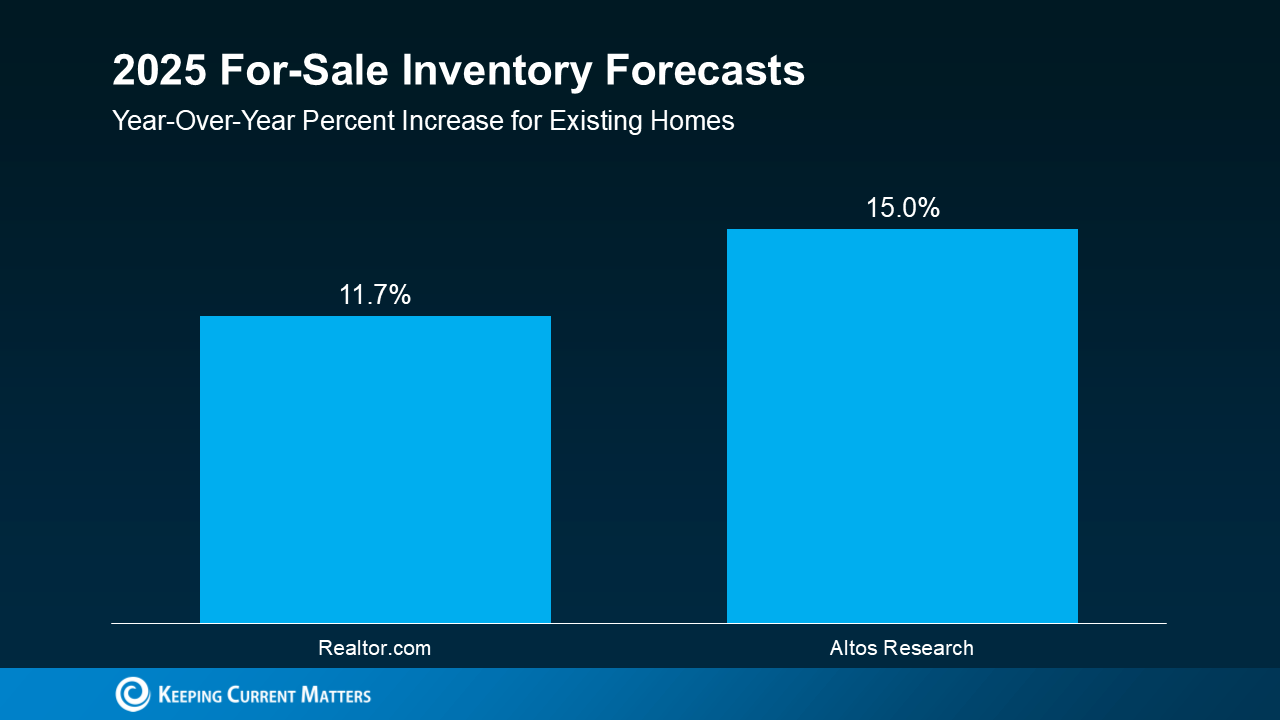
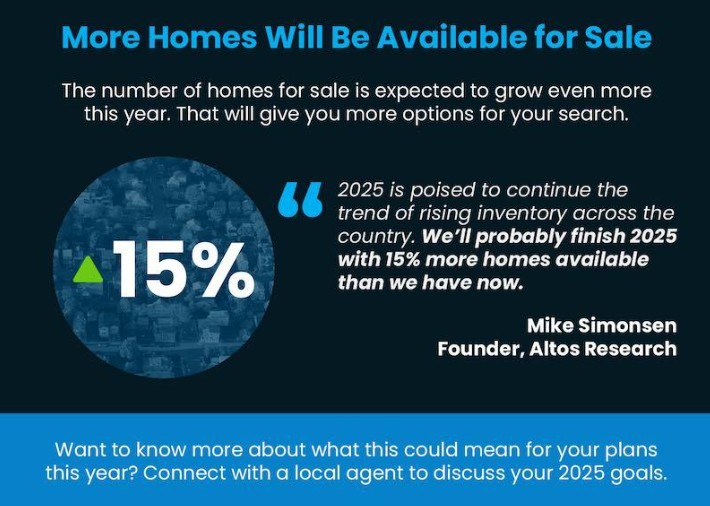
Data from Realtor.com says the number of existing homes for sale improved by an impressive 22% in 2024. And experts say your pool of options is expected to get even better this year. Forecasts show inventory is projected to grow another 11-15% by the end of this year (see graph below):

a graph of sales in inventoryHere’s why this is so good for your search. If you haven’t seen a house with all the features you need, just know that, as the number of homes for sale grows, you’ll have more options to choose from. That means a better chance of finding a home that checks all your boxes. As Ralph McLaughlin, Senior Economist at Realtor.com, says:
It could be a particularly good time to get out into the market . . . you’re going to have more choice. And that’s not something that buyers have really had much over the past several years.”

2. There Are More Newly Built Homes on the Market

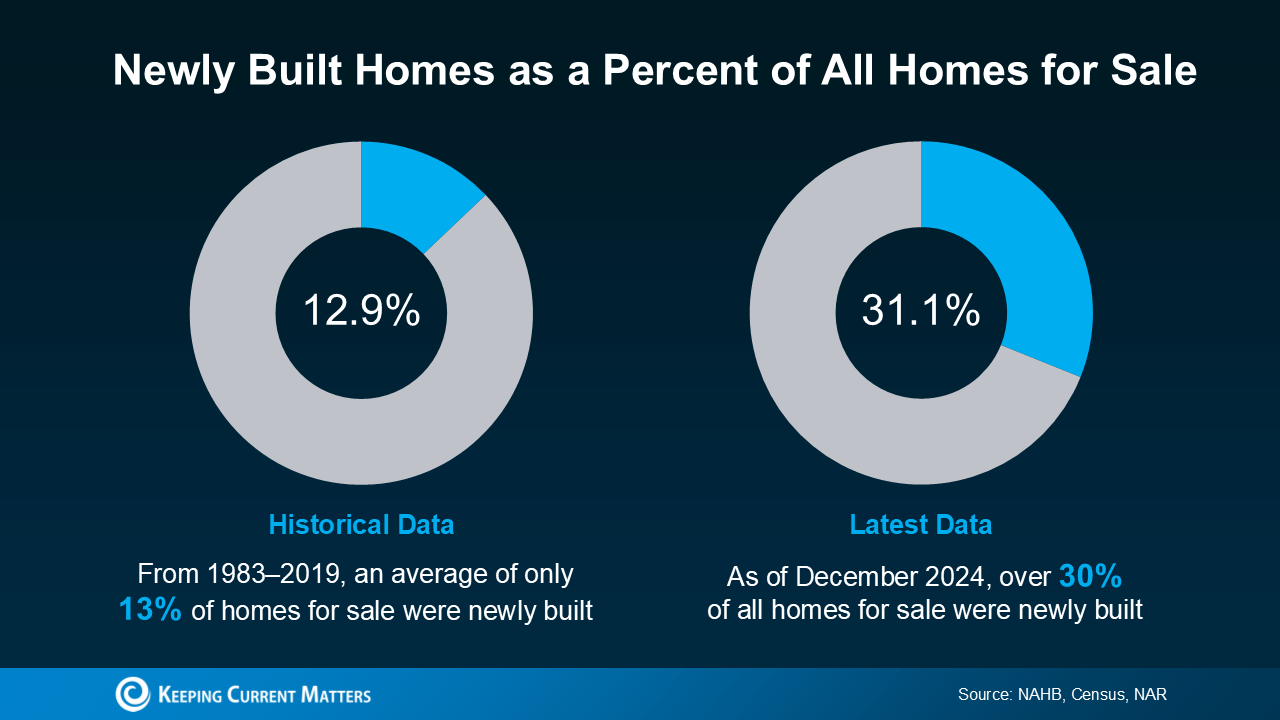
According to data from the Census and the National Association of Realtors (NAR), 31.1%, or roughly 1 in 3, homes on the market right now are newly built homes. That’s more than the norm (see charts below). But don’t worry, that’s not because builders are overdoing it – it’s just that they’re trying to catch up after years of underbuilding.

a graph of a pie chartAnd the best part is, since builders have been focusing on smaller homes with lower price points, you may actually find out new builds are less expensive than you’d expect. So, while a lot of people write off new construction because it’s easy to assume the costs are way higher, lately, that price gap isn’t as big as you’d think. As CNET says:
“If you live in an area where there’s a lot of new construction happening . . . you might be able to purchase a new house for a price similar to or even less than a pre-owned one.”

If you haven’t been able to find a home that’s in your budget, it’s time to ask your agent about new builds. If you don’t, you may have been cutting your pool of options by about a third.

Bottom Line

More choices could be the key to unlocking your homebuying goals in 2025. Talk to a local agent if you want to see what’s available in your area.

What features are you looking for in your next home? Let an agent know so they can put together a list of homes you’d love.

Jan. 29, 2025

Is there a perfect time to move


It’s easy to get caught up in the idea of waiting for the perfect moment to make your move – especially in today’s market. Maybe you’re holding out and hoping mortgage rates will drop, or that home prices will fall. But here’s what you need to realize: trying to time the market rarely works. And here’s why.

There is no perfect market.

No matter when you buy, there’s always some benefit and some sort of trade-off – and that’s not a bad thing. That’s just the reality of it. If you’re not sure you buy into that, think back to the last 5 years in housing.

Just a few years ago, mortgage rates hit a historic low. To take advantage of that, a ton of buyers rushed to buy a home and lock in those lower rates. The side effect? With such a big increase in how many buyers were purchasing, the homes on the market were snapped up fast. And since that resulted in so few homes left for sale, bidding wars became the norm and home prices went through the roof. Those buyers got a great rate, but they had other things to contend with.

Now, with higher rates and higher prices, it’s more expensive to buy. You can’t argue that. But at the same time, the number of homes for sale is at the highest point in several years. That means you have more options to choose from and you’ll be less likely to find yourself in a pull-out-all-the-stops bidding war. Again, there are benefits and trade-offs in any market.

So, if you have a reason to move and can afford to do so, you’ve got to take advantage of the trends that work in your favor and lean on a pro to help you navigate the rest. As Bankrate says:

“The complexities of the current conditions mean that, now more than ever, it’s smart to lean on the guidance of an experienced local real estate agent. If you want to enter the housing market in 2025, whether as a buyer or a seller, let a pro lead the way for you.”

While achieving your goals may feel like an uphill battle in today’s complex market, it is doable. But you’ll need the help of a trusted real estate agent and a lender.

Your agent will help you explore creative solutions – like looking into different housing types (like smaller condos), considering homes that need a little elbow grease, or casting a wider net for your search area. And your lender will walk you through different loan options and down payment assistance programs, so you know what you need to do to make the numbers work for you. As Yahoo Finance says:

“Buying a house at a time when both mortgage rates and home prices are favorable is a challenge. You probably shouldn’t try to time the housing market . . . Buy when it makes sense for you personally.”

Bottom Line

There’s no perfect time to move – every market has its pros and cons. The key is knowing how to make the most of the factors working in your favor. By partnering with a trusted real estate agent and lender, you’ll have the guidance and tools to make a move possible.


KCM - January 2025

Jan. 21, 2025

2025 FORECAST


Some Highlights

  • Wondering what to expect when you buy or sell a home this year? Here’s what the experts say lies ahead.
  • Mortgage rates are projected to come down slightly. Home prices are forecast to rise in most areas. And, there will be more homes available for sale.
  • Want to know more about what this could mean for your plans this year? Connect with a local agent to discuss your 2025 goals. 


KCM - January 2025

Jan. 15, 2025

How much equity do you have


Have you ever stopped to think about how much wealth you’ve built up just from being a homeowner? As home values rise, so does your net worth. And, if you’ve been in your house for a few years (or longer), there’s a good chance you’re sitting on a pile of equity — maybe even more than you realize.

What Is Home Equity?

Home equity is the difference between what your house is worth and what you owe on your mortgage. For example, if your house is worth $500,000 and you still owe $200,000 on your home loan, you have $300,000 in equity. It’s essentially the wealth you’ve built through homeownership. Right now, homeowners across the country are seeing record amounts of equity.

According to Intercontinental Exchange (ICE), the average homeowner with a mortgage has $319,000 in home equity.

Why Have Homeowners Gained So Much Equity?

The rise in home equity over the years can be credited to two key factors:

1. Significant Home Price Growth

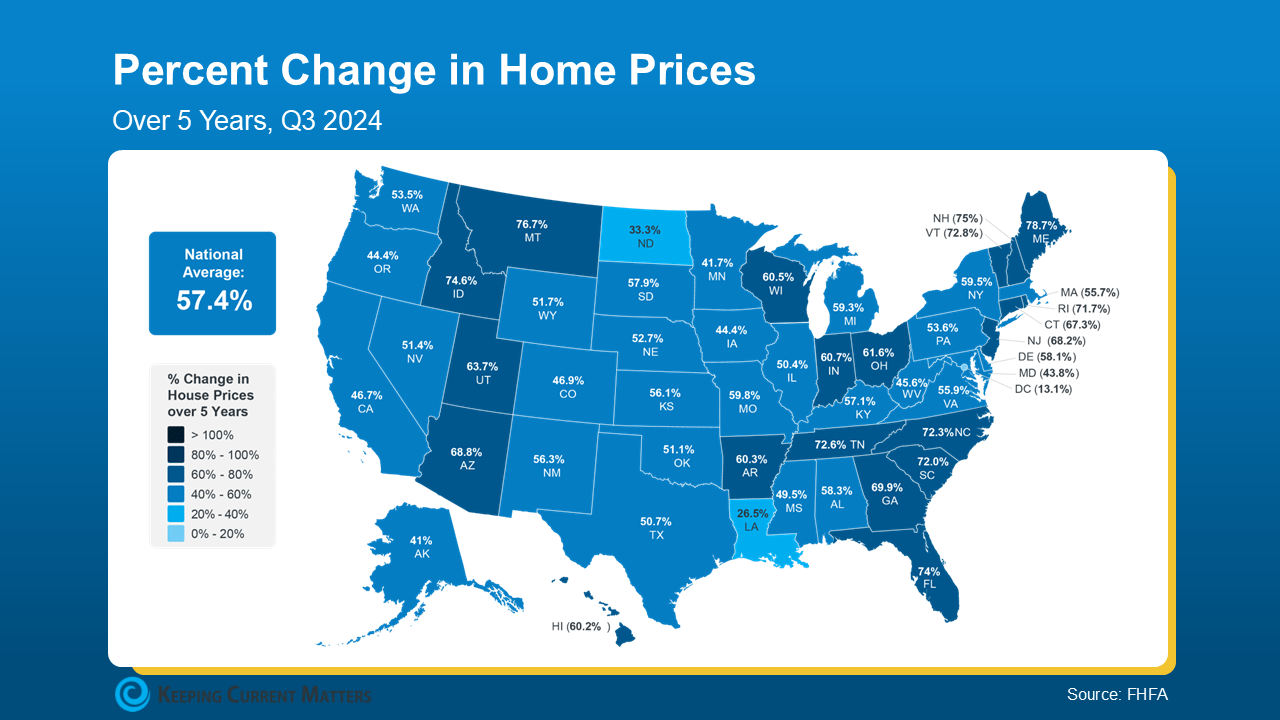
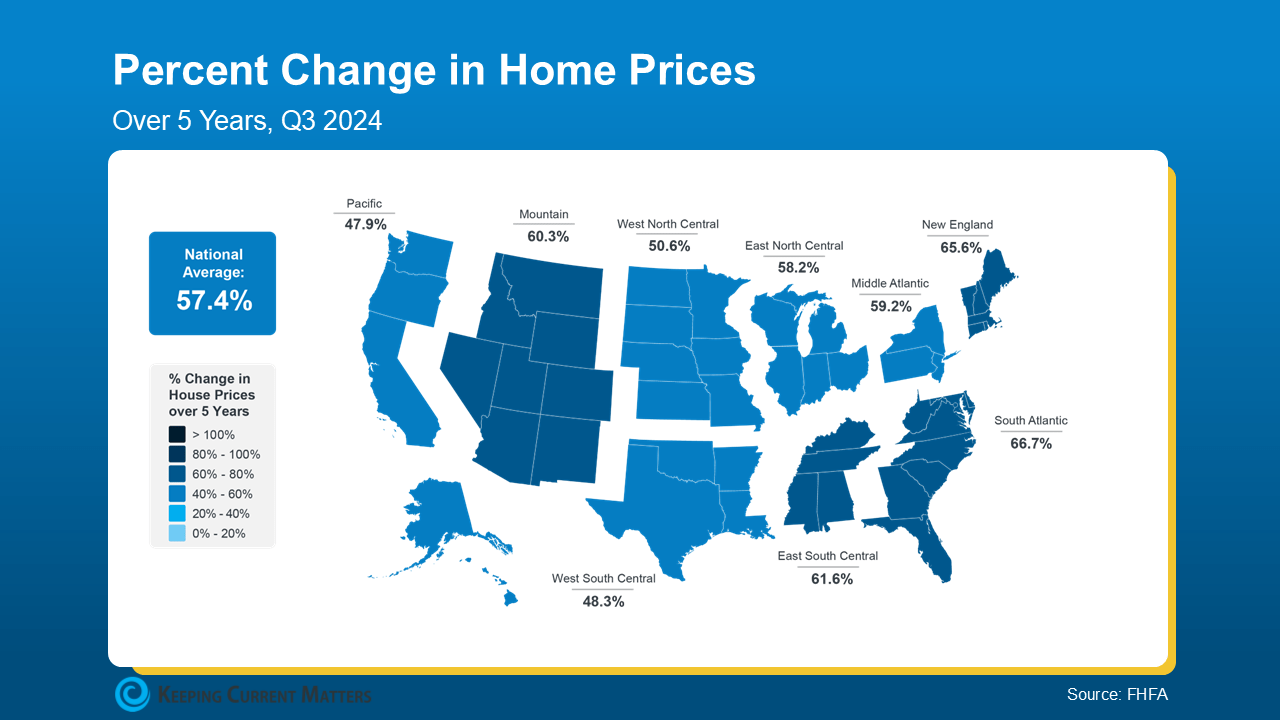
Home prices have climbed dramatically in recent years. In fact, according to the Federal Housing Finance Agency (FHFA), over the past five years, home prices nationwide have risen by 57.4% (see map below):

a map of the united statesThis appreciation means your house is likely worth much more now than when you first bought it.

2. Longer Tenure in Homes

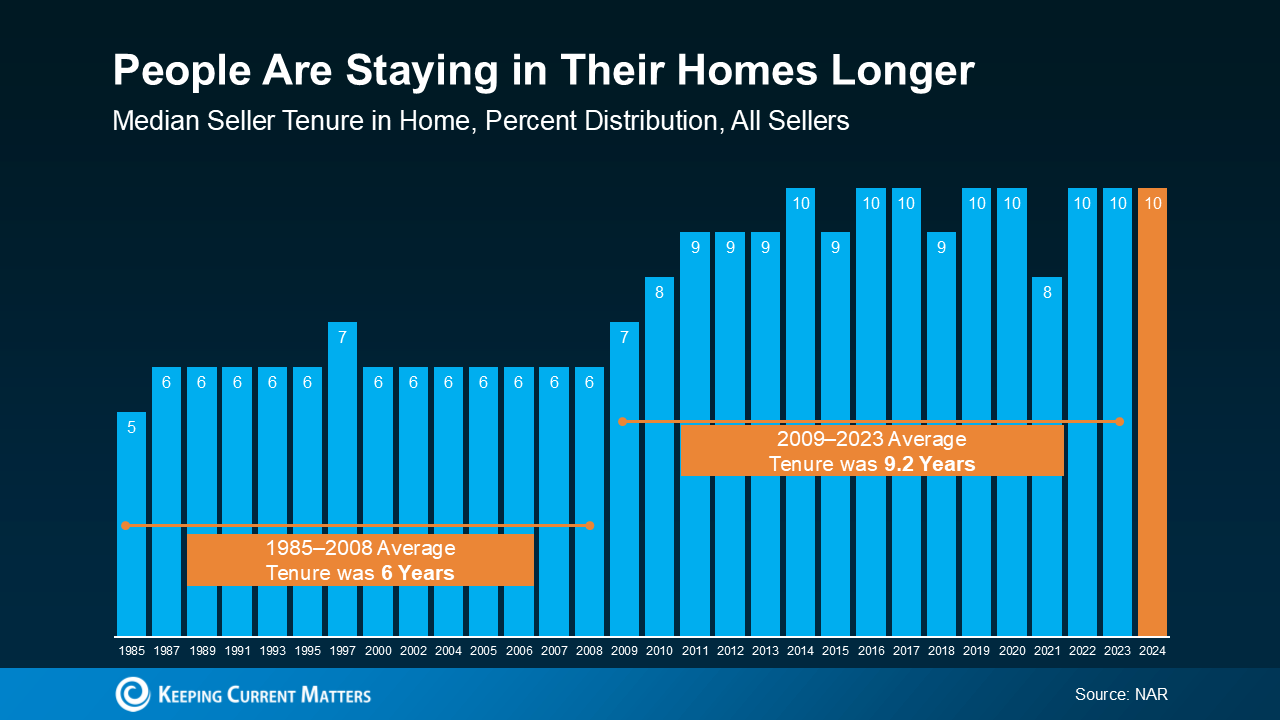
Data from the National Association of Realtors (NAR) shows people are staying in their homes for a decade (see graph below):

a graph of numbers and a number of peopleThis increased tenure means homeowners benefit even more from home values growing over time. That’s because the longer someone has lived in their house, the more that home’s value has grown, which directly increases equity.

And if you’re one of those people who’s been in their home for 10 years or more, know this – according to NAR:

“Over the past decade, the typical homeowner has accumulated $201,600 in wealth solely from price appreciation.”

The Benefits of Having Home Equity

What does that mean for you? It means your house might be your biggest financial asset — and it could open up some exciting opportunities for your future. Let’s break it down.

  • Moving to Your Next Home

Your equity could help you cover the down payment for your next home. In some cases, it might even mean you can buy your next house all cash.

  • Financing Home Improvements

Thinking about upgrading your kitchen, adding a home office, or tackling other projects? Your equity can provide the funds to make those improvements happen, increasing your home’s value and making it more enjoyable to live in too.

  • Getting a Business Going

If you’ve been dreaming about starting your own business, your equity could be the kickstart you need. Whether it’s for startup costs, equipment, or marketing, leveraging your home’s value can help bring your entrepreneurial goals to life.

Bottom Line

Whether you’re thinking about selling, upgrading, or simply want to understand your options, your home equity is a powerful resource. If you’re wondering how much equity you’ve built or how you can use it to meet your goals, connect with a local real estate agent to explore the possibilities.


Jan. 8, 2025

Forecasting 2025


Wondering what’s in store for the housing market this year? And more specifically, what it all means for you if you plan to buy or sell a home? The best way to get that information is to lean on the pros.

Experts are constantly updating and revising their forecasts, so here’s the latest on two of the biggest factors expected to shape the year ahead: mortgage rates and home prices.

Will Mortgage Rates Come Down?

Everyone’s keeping an eye on mortgage rates and waiting for them to come down. So, the question is really: how far and how fast? The good news is they’re projected to ease a bit in 2025. But that doesn’t mean you should expect to see a return of 3-4% mortgage rates. As Lawrence Yun, Chief Economist at the National Association of Realtors (NAR), says:

 “Are we going to go back to 4%? Per my forecast, unfortunately, we will not. It’s more likely that we’ll go back to 6%.”

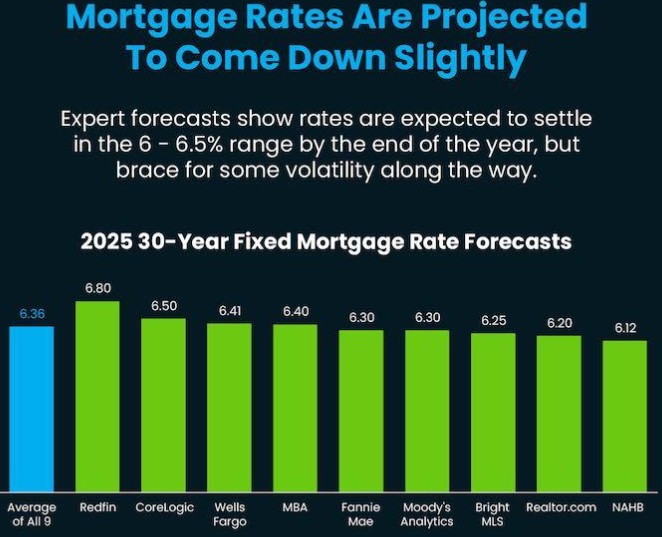
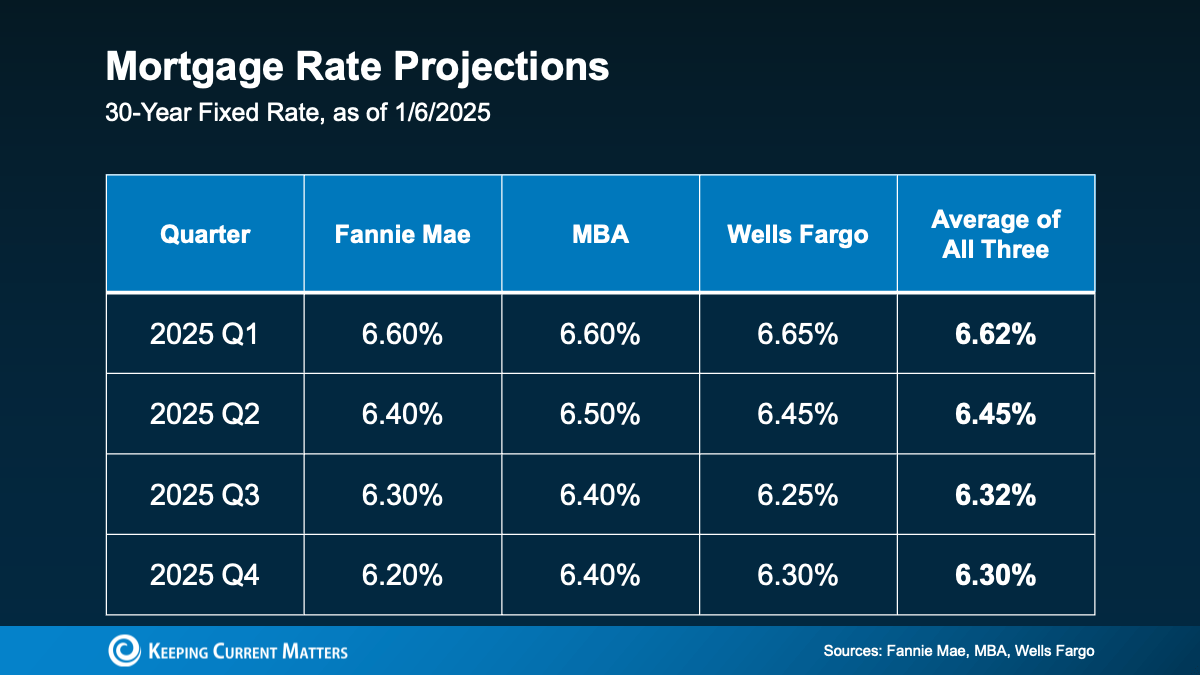
And the other experts agree. They’re forecasting rates could settle in the mid-to-low 6% range by the end of the year (see chart below):

a blue and white graph with numbers and textBut you should remember, this will continue to change as new information becomes available. Expert forecasts are based on what they know right now. And since everything from inflation to economic drivers have an impact on where rates go from here, some ups and downs are still very likely. So, don’t get caught up in the exact numbers here and try to time the market. Instead, focus on the overall trend and on what you can actually control.

A trusted lender and an agent partner will make sure you’ve always got the latest data and the context on what it really means for you and your bottom line. With their help, you’ll see even a small decline can help bring down your future mortgage payment.

Will Home Prices Fall?

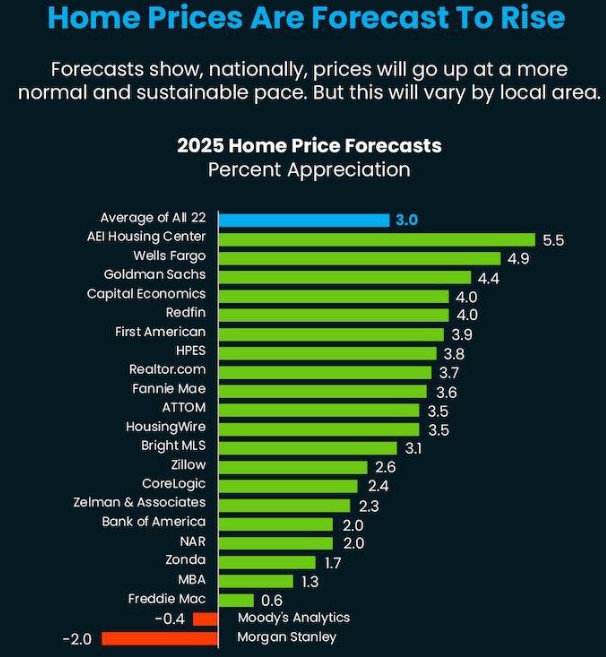
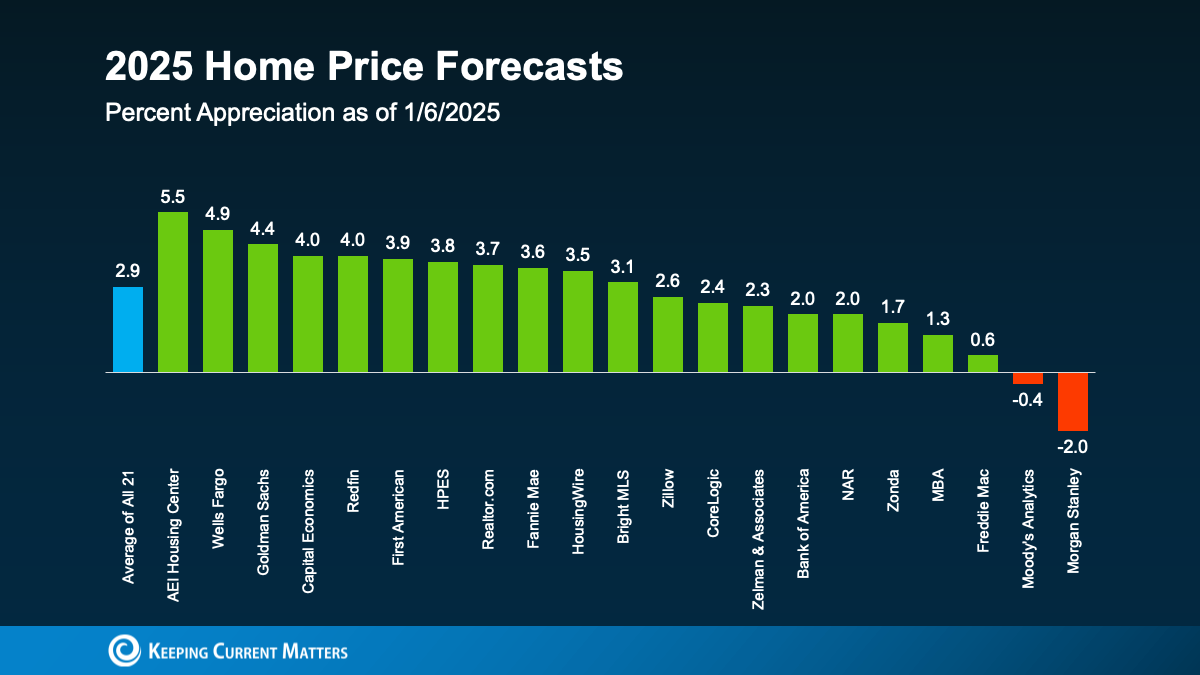
The short answer? Not likely. While mortgage rates are expected to ease, home prices are projected to keep climbing in most areas – just at a slower, more normal pace. If you average the expert forecasts together, you’ll see prices are expected to go up roughly 3% next year, with most of them hitting somewhere in the 3 to 4% range. And that’s a much more typical and sustainable rise in prices (see graph below):

a graph of green and white textSo don’t expect a sudden drop that’ll score you a big deal if you’re thinking of buying this year. While that may sound disappointing if you’re hoping prices will come down, refocus on this. It means you won’t have to deal with the steep increases we saw in recent years, and you’ll also likely see any home you do buy go up in value after you get the keys in hand. And that’s actually a good thing. 

And if you’re wondering how it’s even possible prices are still rising, here’s your answer. It all comes down to supply and demand. Even though there are more homes for sale now than there were a year ago, it’s still not enough to keep up with all the buyers out there. As Redfin explains:

“Prices will rise at a pace similar to that of the second half of 2024 because we don’t expect there to be enough new inventory to meet demand.”

Keep in mind, though, the housing market is hyper-local. So, this will vary by area. Some markets will see even higher prices. And some may see prices level off or even dip a little if inventory is up in that area. In most places though, prices will continue to rise (as they usually do).

If you want to find out what’s happening where you live, you need to lean on an agent who can explain the latest trends and what they mean for your plans.

Bottom Line

The housing market is always shifting, and 2025 will be no different. With rates likely to ease a bit and prices rising at a more normal and sustainable pace, it’s all about staying informed and making a plan that works for you.

Reach out to a local real estate pro to get the scoop on what’s happening in your area and advice on how to make your next move a smart one.


KCM - January 2025

Jan. 1, 2025

ECO options boosts your home value


Selling your house? Or just looking to increase the value and appeal of your home for when you do? Here’s something you should know – homebuyers are increasingly looking for homes with environmentally friendly features.

What Energy Efficient Features Do Buyers Want?

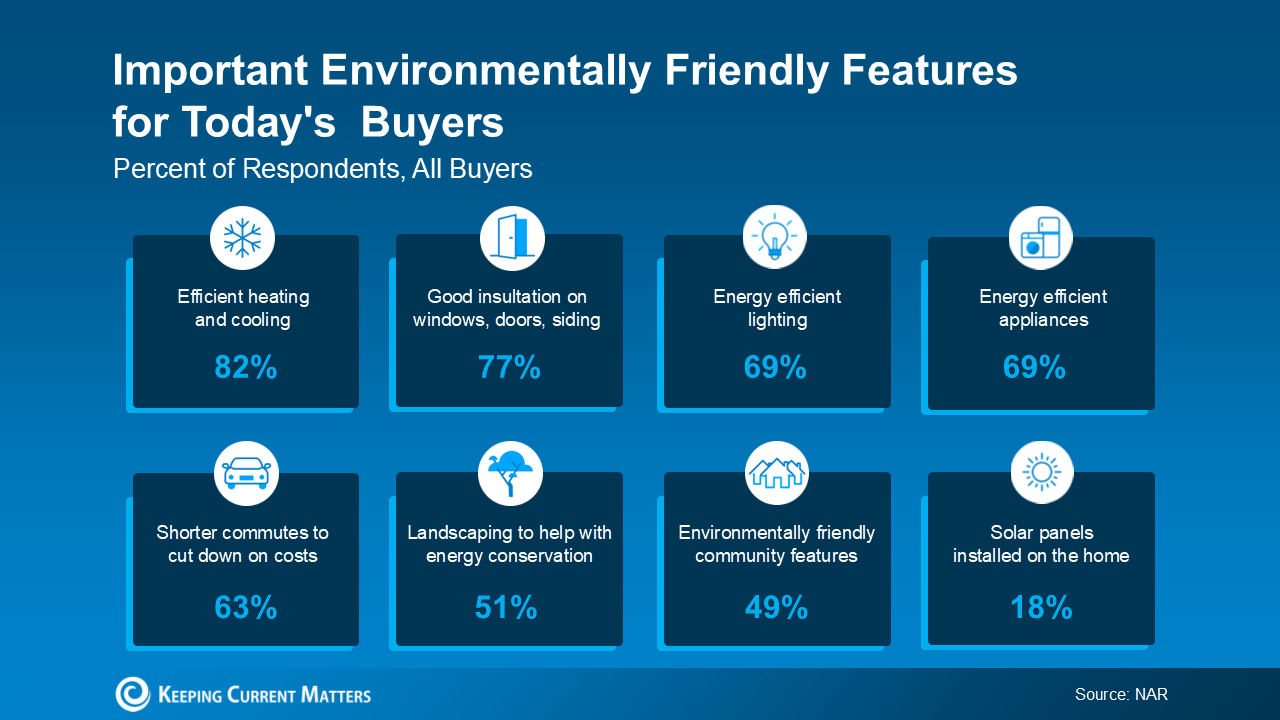
According to recent data from the National Association of Realtors (NAR), when buyers think about eco-friendly features, they’re looking for (see visual below):

a blue and white rectangles with white text

  • Heating and cooling costs: 82% of buyers consider heating and cooling costs to be one of the most important factors when looking for a home. And efficient heating and cooling systems with programmable thermostats can significantly lower monthly energy bills.
  • Windows and doors with proper insulation: These help maintain comfortable indoor temperatures without overworking the HVAC system, which turns into saving on energy bills.
  • Energy-efficient lighting and appliances: These can save money on utility bills and reduce a home’s overall energy use too.
  • Commuting costs and environmentally friendly community features: Living in a community designed with energy-saving amenities and shorter commutes can reduce expenses and environmental impact.
  • Landscaping for energy conservation: Strategically placed trees and shrubs can lower cooling costs in the summer.
  • Solar panels: Solar panels can also provide long-term savings and are an attractive feature for eco-conscious buyers.

The common theme? Environmentally friendly features are popular with buyers because they help them save money and make homes more comfortable to live in. But making some of these updates before you sell your house doesn’t just benefit buyers – it’s worthwhile for you too.

How Green Features Benefit You

If your appliances or systems are aging, upgrading them now means you can enjoy the savings and comfort while you’re still living in the home.

The U.S. Department of Energy has introduced Home Energy Rebates, which can provide households with up to $14,000 in savings on energy-efficient upgrades. This includes insulation, duct sealing, heat pumps, and more. These rebates make it more affordable than ever to improve your home’s efficiency.

Then, when you decide to sell, you’ll reap the rewards again. Energy-efficient homes stand out in a competitive market and appeal to the growing group of environmentally conscious buyers.

Studies also show that homes with energy-efficient upgrades, like those with high-efficiency HVAC systems or modern insulation, are more desirable for buyers- and they generally net a higher price. Research from Freddie Mac found that homes with high energy-efficiency ratings sold for 2.7% more on average than homes without these upgrades.

Work with a Real Estate Agent to Maximize Value

Not sure which upgrades to prioritize? That’s where a local real estate agent comes in. They can help you identify the eco-friendly features that buyers in your area value most. Whether it’s adding Energy Star appliances or improving insulation, they’ll guide you in making the best choices for your house and your budget.

Bottom Line

Making environmentally friendly upgrades can pay off in more ways than one. You can enjoy saving on energy bills and improved comfort now. Additionally, you’ll have the satisfaction of knowing you’re contributing to a more sustainable future while adding value to your home. Ready to learn more about how you can make your house stand out? Contact a local real estate agent today.

Dec. 25, 2024

The #1 Reason People Move: To Be Closer to Family and Friends


Have you ever thought about packing up and moving to be closer to the people who mean the most to you? Maybe you’re tired of long drives to see your family or wish your kids could spend more time with their grandparents. Clearly, a lot of other people feel the same way.

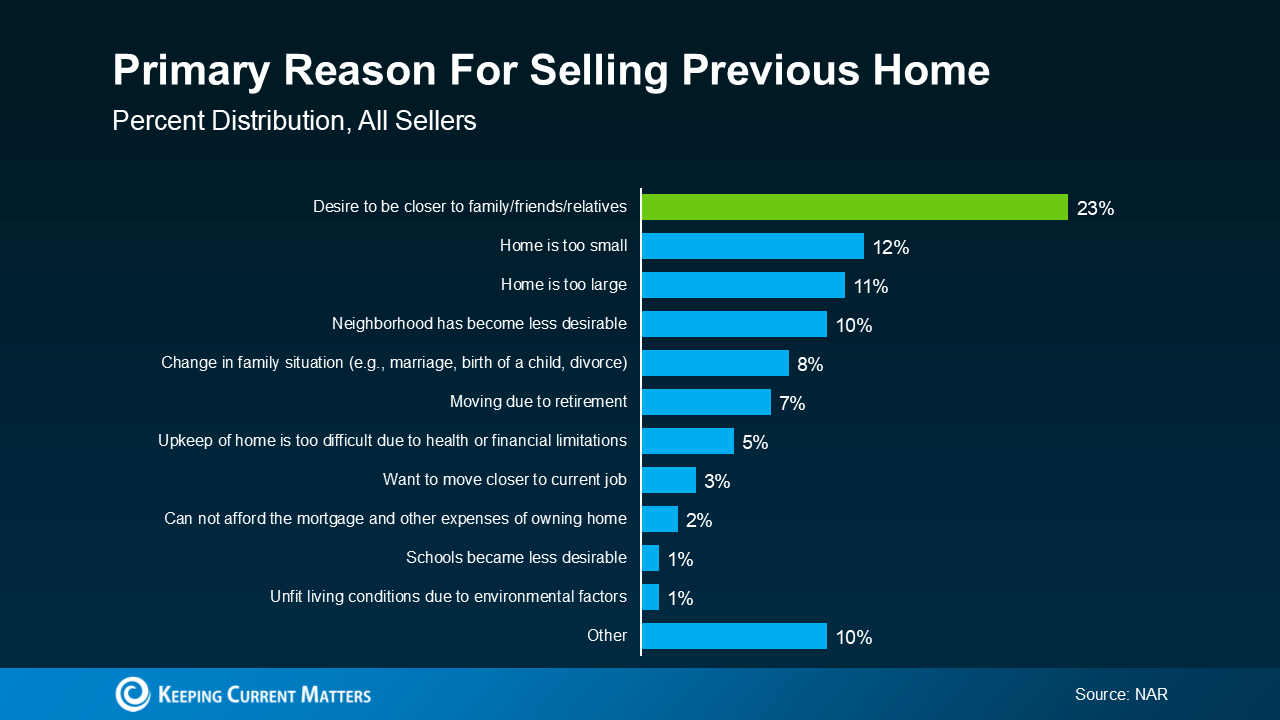
According to recent data from the National Association of Realtors (NAR), the desire to be near family and friends is the #1 reason people move (see graph below):

a screen shot of a graphThat’s because moving isn’t just about finding a new house – it’s about living a life where you’re surrounded by the people who matter most. Whether it’s catching up over weeknight dinners, watching your kids play with their cousins, or just knowing someone’s there when you need them, living near loved ones changes everything.

Let’s dive into why so many people are making this move and how it could be the best decision for you, too.

Why Family Comes First

Living near family and friends is a universal motivator that cuts across all types of buyers, whether you’re buying your first home or making a big lifestyle change.

But it’s especially important to repeat buyers. Unlike first-time homebuyers, who may be more focused on looking in more affordable areas, repeat buyers often have more flexibility on where they live. Many Baby Boomers, for example, have built significant equity in their homes, giving them the freedom to prioritize what matters most – like retiring near their grandkids. As Ali Wolf, Chief Economist at Zondasays:

“25% of Baby Boomer households plan to retire near their children and grandchildren . . .”

Making a move to be closer to friends and family is all about creating a meaningful next chapter in your life where loved ones are just around the corner.

The Benefits of Living Near Loved Ones

But moving closer isn’t just a lifestyle choice – it’s a decision that offers real benefits:

  1. Spending More Time Together Whether it’s joining family dinners, going to weekend activities, or simply having someone nearby to talk to, these moments strengthen relationships and make life more fulfilling.
  2. Sharing Resources Living close to family can provide practical advantages, too – like sharing childcare, tools, or household items.
  3. Cutting Down on Travel Instead of spending hours on the road to spend time together, you can enjoy more spontaneous visits. This not only enhances your quality of life, but it also provides peace of mind in case of emergencies.
  4. Being There for Big Moments It also offers both emotional and practical support during life’s milestones. From graduations to tough times, being close to loved ones helps you feel connected and cared for.

Ready To Make Your Move?

At the end of the day, home isn’t just a place you live – it’s where your people are. Whether you’re looking to spend more quality time with family or enjoy the practical benefits of being closer to loved ones, the decision to move closer to those you care about is a deeply personal one.

Bottom Line

If you’re thinking about making a change, a local real estate agent would love to help. Together, you can explore neighborhoods that brings you closer to the people and places you love most.


Dec. 18, 2024

Perks of buying in the winter


Waiting for perfect market conditions often means missing out. Because what you may not realize is, if you’re ready and able to buy, this time of year could actually give you an edge. Here’s why. As the weather cools down, the housing market can too – and that works in your favor.

You Likely Won’t Feel as Rushed

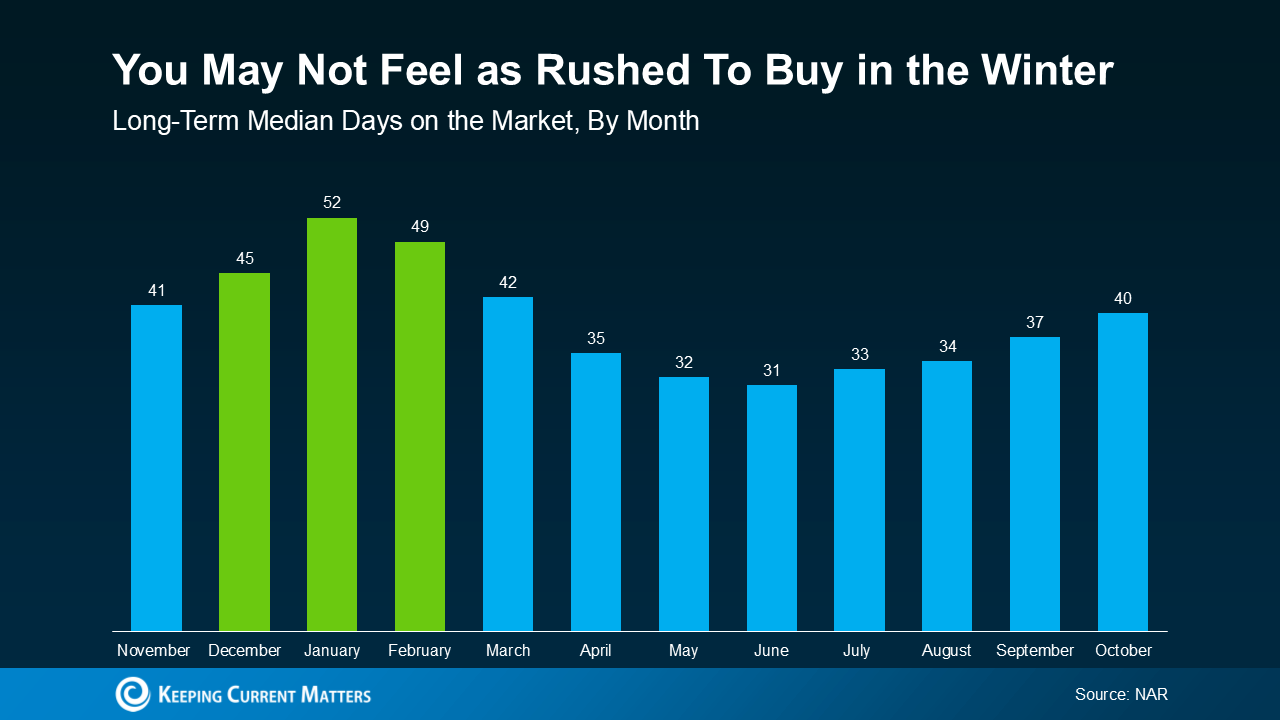
Homes tend to take a little longer to sell during this time of year. Data from the National Association of Realtors (NAR) shows the average time a house sits on the market jumps up during the winter months (see the green bars in the graph below):

a graph of blue and green bars

This is partly because fewer buyers are active at this time of year – and that decrease in buyer competition means the houses that are on the market aren’t going to be snatched up as quickly. So, if you decide to buy a home in the next couple of months, you’ll likely have more time to consider your options and negotiate a deal without feeling as pressured.

Sellers May Be More Willing To Negotiate

And since homes generally take longer to sell during the winter, sellers are often more motivated to close a deal. That can work in your favor, too. According to NAR:

“Less competition can lead to better deals. While homes are not selling as fast as during the summer, sellers may be more willing to negotiate.

Whether it’s compromising on price, covering closing costs or repairs, or including extras like appliances, you have more room to ask for what you need.

Homes Are Less Expensive in the Winter

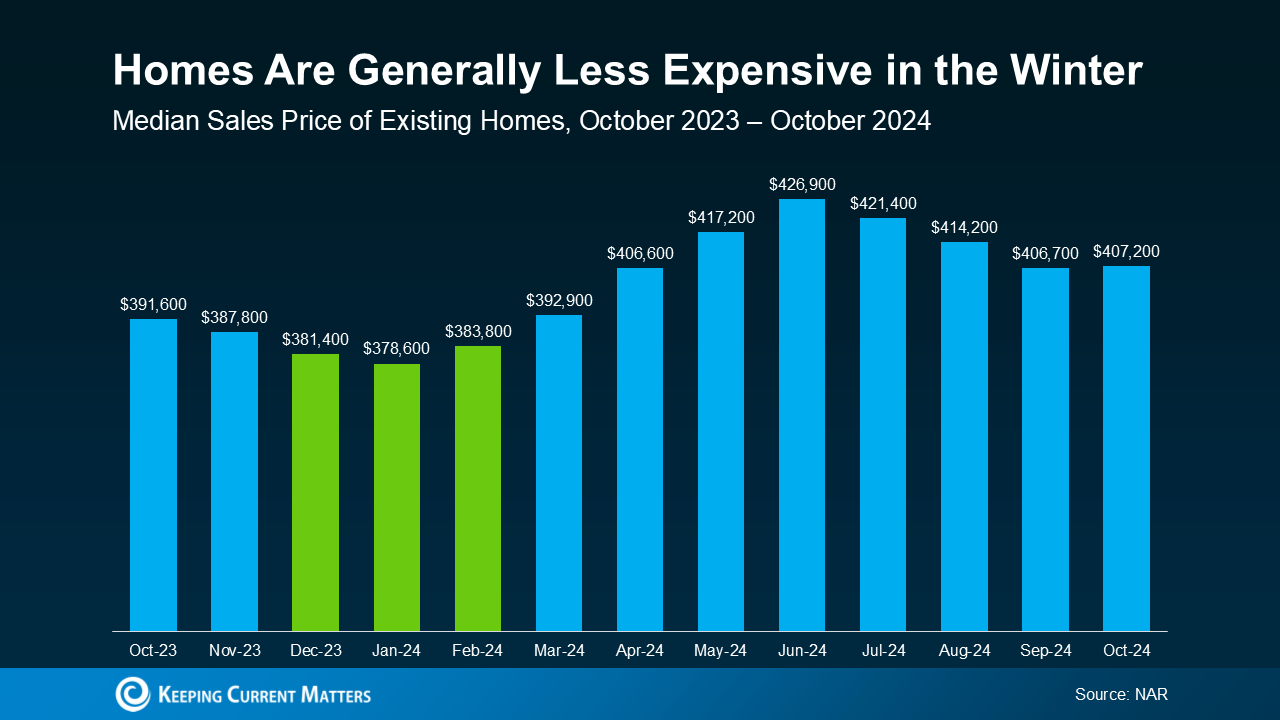
With less competition from other buyers and sellers who are more willing to negotiate, you may see slightly lower prices too. In fact, according to NAR, homes are typically about 5% less expensive now compared to when prices normally peak in the summer.

That might not seem like a huge difference, but on a $400,000 home, it could mean savings of $20,000 on the purchase price.

You can see this expected seasonal shift in home prices taking place this year. Take a look at the graph below showing the median sales price of existing homes (homes that were previously owned) over the past 12 months. You’ll notice in the green bars that prices were lower in the winter months last year, and it seems like that’s going to happen again this year. That gives you the chance to make your budget go further:a graph of a number of people

Bottom Line

Buying a home during the winter means less competition, motivated sellers, and potentially lower prices, too. Work with a local real estate agent to find the right one at the right price for you.


KCM - December 2024

Dec. 11, 2024

Is home ownership worth it


Today’s mortgage rates and home prices may have you second-guessing whether it’s still a good idea to buy a home right now. While market factors are definitely important, there’s also a bigger picture to consider: the long-term benefits of homeownership.

Think of it this way. If you know people who bought a home 5, 10, or even 30 years ago, you’re probably going to have a hard time finding someone who regrets their decision. That’s because over time, home values usually grow – and that means a homeowner’s net worth does too. Here’s a look at how that can really add up over the years.

Home Price Growth over Time

The map below uses data from the Federal Housing Finance Agency (FHFA) to show how much prices have grown over the last five years. Since home prices vary by area, the map is broken out regionally to really showcase larger market trends:

a map of the united states

You can see that nationally, home prices increased by over 57% in just five years.

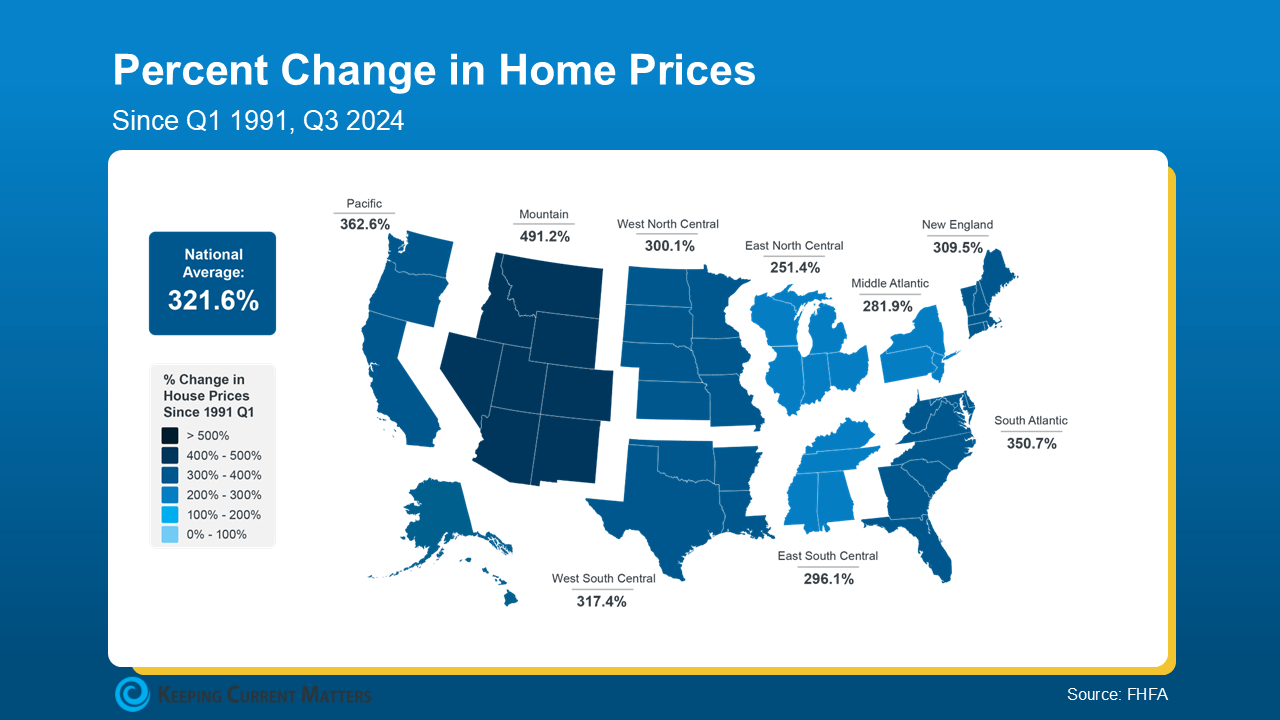
Some regions are slightly above or below that average, but overall, home prices saw a big uptick in a short time. And if you zoom out even more, the benefit of homeownership — and the drastic gains homeowners made over the years — become even more clear (see map below):

The second map shows that, over a roughly 30-year span, home prices appreciated by an average of more than 320% nationally.

So the typical homeowner who bought a house about 30 years ago saw their home triple in value during that time. And that’s a major reason so many homeowners who bought their homes years ago are still happy with their decision today.

Bottom Line

There’s no denying today’s market is complex. But if you’re ready and able to buy right now, get in touch with an agent to talk through how you can still make your move happen. That way you can take advantage of the long-term advantages that come with homeownership, like your ability to build wealth as your home value rises.

Dec. 4, 2024

Is it time to refi?


Mortgage rates dropped to just above 6% in late September, drawing homebuyers from the sidelines and fueling the biggest refinancing boom in recent years. Although rates have since jumped up, they remain lower than the peak levels of October 2023, when they almost hit 8%.

“Proper Rate closed about 10 times more refinancing deals this past fall than we closed throughout 2023,” said Kyle Gillespie, SVP of mortgage lending at Proper Rate, @properties Christie’s International Real Estate’s affiliated mortgage lender.

If you’re considering refinancing your mortgage to take advantage of the lower rate environment, read on for several essential tips.


Calculate Your Home’s Equity

Before you begin the refinancing process, you’ll want to make an estimate of the equity in your home. For most lenders to consider refinancing your home, you’ll need at least 5% – although most lenders recommend having at least 20%.

If you lack sufficient equity, focus on paying down your mortgage or wait for property values to rise. Increasing your equity not only improves refinancing eligibility but also typically results in better loan terms and lower interest rates.

Determine Your Goal for Refinancing

Before you start the refinancing process, clarify your goals. Are you hoping to reduce your monthly mortgage payment? Maybe you’re interested in a shorter pay-off term, i.e. going from a 30-year term to 15 years, or you’ve built up enough equity that you can eliminate your private mortgage insurance (PMI) or cash out the equity for other uses.

Whatever they may be, determining your reason(s) for refinancing before diving into the process with your lender will help you decide which loan is best for you.

Understand the Different Types of Refinances

There are several types of refinancing options to consider, each suited for different needs. According to Gillespie, rate-and-term refinancing is the most common, allowing you to adjust your interest rate, loan term, or both.

Cash-out refinancing is another common type of refinance, which lets borrowers take out a new mortgage for more than they currently owe and pocket the difference. However, it’s crucial to look at your budget to ensure you can handle the increased debt load before making any decisions. And you need to have enough equity in your home to borrow more money. According to Gillespie, a borrower will typically need a loan-to-value (LTV) ratio of 80% after a cash-out refinance. Your LTV can be calculated by dividing your loan amount by your home’s appraised value.

Keep in Mind the Total Cost of Refinancing

Refinancing isn’t free. You’ll encounter several expenses along the way, including lender, appraisal and title fees. In some states, you’ll also need to pay for an attorney to review and file the paperwork for you. Remember to ask your lender for a detailed estimate of all fees involved, allowing you to budget accordingly.

Find Your Break-Even Point

Determining your break-even point is crucial when refinancing. This calculation helps you understand how long it will take to recoup the costs of refinancing through monthly savings. For instance, if you save $200 per month and refinancing costs total $2,000, it will take ten months to break even.

“Buyers should consider their plans for the future when making their calculations. If they plan to stay in the home for several years, refinancing is likely worthwhile. Conversely, if they anticipate moving soon, the costs might not justify the savings,” said Gillespie.

Bottom Line

With careful planning and research, refinancing can be a valuable tool in achieving your long-term financial goals. If you have any questions, ask your @properties Christie’s International Real Estate agent to put you in touch with a trusted Proper Rate loan officer.