Chicago Real Estate News


Dec. 4, 2025

How to find a deal in this market


Want to know how to find the best deal possible in today’s housing market? Here’s the secret. Focus on homes that have been sitting on the market for a while.

Because when a listing lingers, sellers tend to get more realistic – and, more willing to negotiate. And that’s where the savviest buyers are finding homes other buyers overlook.

The Opportunity: 1 in 5 Homes Has Had a Price Cut This Year

According to Realtor.com, about 1 in every 5 listings (20.2%) have dropped their asking price at least once. And while so many things in today’s housing market vary by region, that number is consistent throughout the country. That tells you one thing…

No matter where you live, there’s a chance to score a better deal. You just need to know where to look. And that’s where your agent comes in.

The Tactic: Target Homes That Have Been Sitting the Longest

Your agent can help you identify which homes have been on the market the longest. Those are the ones where you’re more likely to get a discount. That’s because the seller may be getting frustrated their house hasn’t sold yet, so they’re more willing to play ball.

And since a lot of buyers steer clear of homes that aren’t selling, you may be the only offer they get. So, you can lean in and push for a better deal. As Realtor.com explains:

“Less competition means fewer bidding wars and more power to negotiate the extras that add up: closing cost credits, home warranties, even repair concessions . . . these concessions can end up knocking thousands of dollars off the price of a home.”

And they’re not the only ones calling out the opportunity you have right now. Bankrate also says:

“During the quieter fall and winter months, when fewer prospective buyers are shopping, home sellers may be more willing to lower their prices, or offer concessions, to attract those prospective buyers who are still looking.

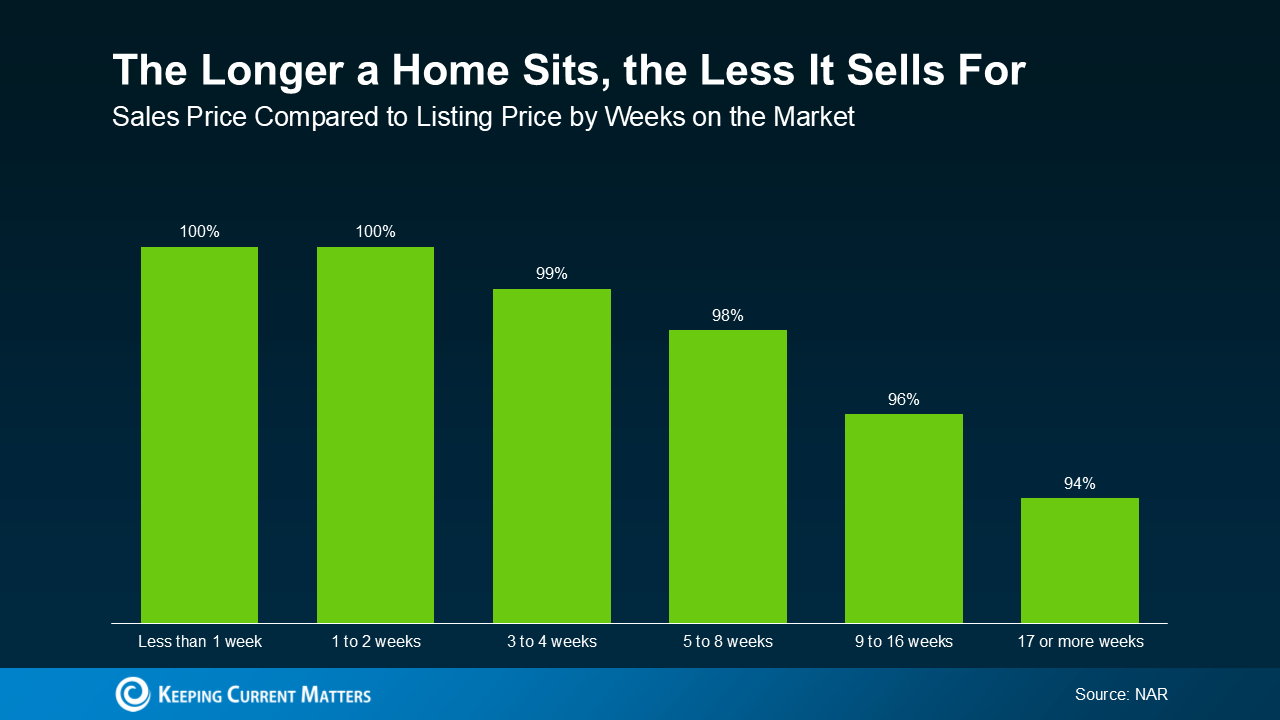
And the proof is in the data. The National Association of Realtors (NAR) shows a clear pattern: the longer a home stays on the market, the lower it tends to sell for compared to the original asking price.

a graph of green rectangular objectsSo, if you’re serious about getting as much as you can for your money, focusing on these listings could be your best strategy yet.
Even a Small Discount Can Go a Long Way

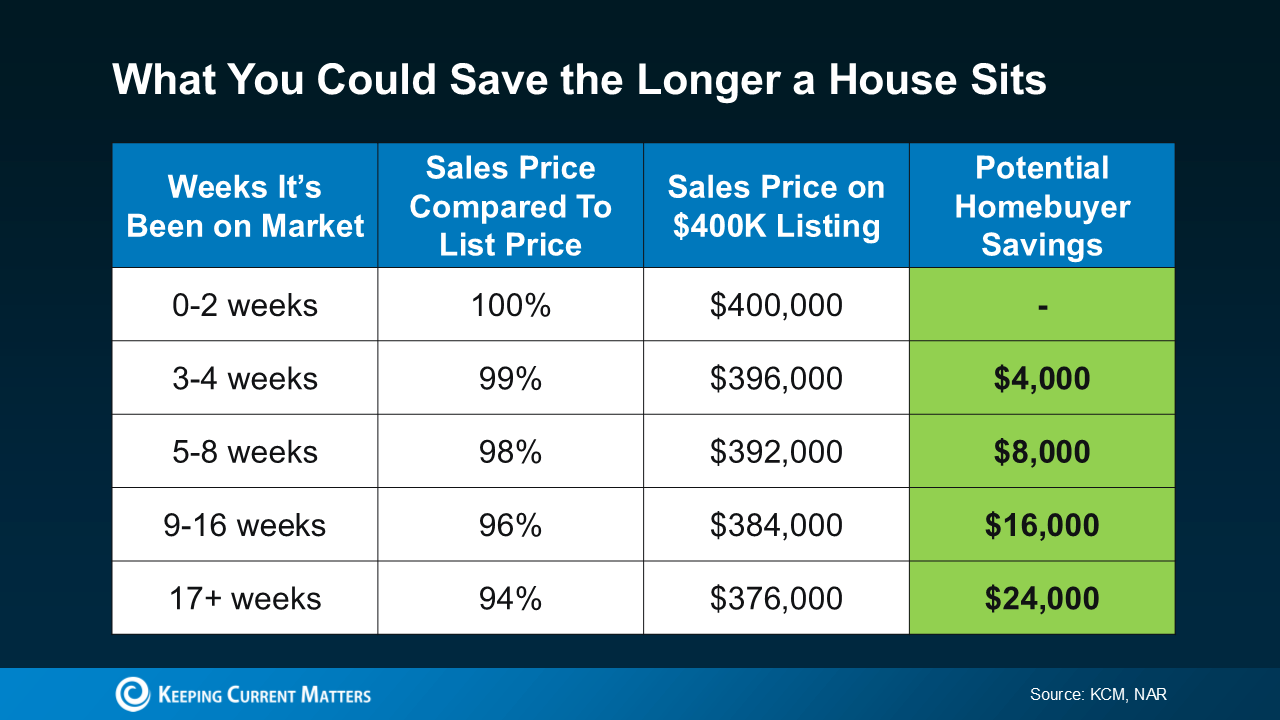
And while paying 94% of the original asking price may not sound like much of a deal, the savings add up. That’s roughly $24,000 in savings on the median priced home (see chart below):
Zillow sums it up best:

If you’re a buyer who is hoping to strike a deal, look for homes that have been on the market for a while and that may already have lowered prices to entice buyers. You may find a motivated seller who is more willing to negotiate.”

Bottom Line

If you want to find the best deal possible on a home right now, start by looking where others aren’t.

With 1 in 5 sellers cutting prices and many growing more flexible by the week, the homes that have been sitting a little longer could be your best opportunity to save.

Talk to a local agent about where to find them in your area.


KCM - December 2025

Nov. 26, 2025

The holiday window of opportunity


When the holidays roll around, travel plans, family gatherings, and all the chaos of the season may make you think it’s better to pull your listing off the market or to wait until 2026 to sell your house. But here’s the thing.

Waiting could mean missing out on a great window of opportunity. Because while other sellers are stepping away, you can lean in – and that might actually give you the edge. Here are 4 reasons selling now may be the better bet. 

1. Buyers This Time of Year Are Serious

Don’t let the season fool you. While casual browsers tend to step back around the holidays, serious buyers stay in the game. The people looking for homes right now usually aren’t just browsing. They’re ready to make a move and they usually want to close before the new year. As Zillow says:

“While more buyers have tended to shop in the spring and summer months, those shopping in the winter are likely to be motivated — often moving because of a job relocation, change in financial situation, or change in family needs.”

Their timelines are real and missing them would create a hassle for the buyer, so they’re eager to get the deal done. And that’s exactly the kind of buyer you want to work with.

2. You Have Control Over Your Schedule (and Showings)

Some homeowners decide not to sell this time of year because they don’t want to juggle showings during the holiday rush. They’re anticipating traveling to see family and thinking about buyers in their home only adds another layer of complexity. 

But here’s what no one’s reminded them. You can control your showings and can set times that work for your schedule. You don’t have to stop your plans to keep your sale on track. The right agent can help you manage your calendar, your showings, and your stress level.

3. Other Sellers May Step Back, Which Means Less Competition

Because fewer sellers tend to list this time of year, the number of homes for sale usually falls a bit. Lisa Sturtevant, Chief Economist at Bright MLS, explains:

“As we approach the end of the year, listing activity tends to slow and would-be sellers decide to wait until after the new year to list . . .”

And in a year when inventory has been steadily rising, that seasonal slowdown works in your favor. With the potential for fewer sellers on the market, your house will stand out. So, a seasonal dip in listings could help you get noticed, especially if your home is priced right and presented well.

4. Homes Decorated for the Holidays Can Feel More Inviting

You may not realize it, but seasonal decor can actually help you appeal to buyers. Maybe it’s that they have an easier time picturing themselves making memories in the home. Maybe it just feels cozier and more inviting. Whatever the reason, it works. Sometimes tasteful seasonal touches can make it easier to sell your house.

But don’t go overboard. Keep your choices simple to let your home’s charm shine through.

Bottom Line

There are plenty of good reasons to put (or keep) your house on the market during this time of year.

If you want to talk strategy for how to make the most of this season in your market, connect with a local agent.


KCM - November 2025

Nov. 11, 2025

The VA home loan advantage


If you’ve served in the military (or if your spouse has), you have access to one of the most powerful homebuying tools out there. The chance to buy a home without having a down payment.

Unfortunately, 70% of Veterans (that’s 7 out of every 10) don’t know about this benefit, according to Veterans United.

a group of people in circlesAnd that’s a big missed opportunity for those who’ve earned this benefit through service. So, let’s break down what you really need to know about Veterans Affairs (VA) home loans right now.

Why VA Home Loans Can Be a Great Option

For nearly 80 years, VA loans have made homeownership possible for millions of Veterans and active-duty service members. Here are just a few of the top perks according to the Department of Veteran Affairs:

  • Options for $0 Down Payment: Many Veterans can buy a home without spending years saving up.
  • Fewer Upfront Costs: The VA limits which types of closing costs Veterans have to pay, helping you keep more cash on hand when you’re finalizing your purchase.
  • No Private Mortgage Insurance (PMI): Unlike many other loan types, VA loans don’t require PMI, lowering your monthly costs.

These features make VA loans a great way for service members (or their family) to build stability, save money, and start creating long-term wealth through homeownership.

Can You Still Get a VA Loan with the Government Shutdown?

But lately, there’s been some confusion about whether VA loans are still available due to the government shutdown. And that uncertainty has kept some Veterans from taking the next step.

While there may be processing delays, Veterans United explains you can still get a loan:

“There’s been a lot of confusion and uncertainty about how a government shutdown will affect VA home loans . . . The good news is that the shutdown has minimal impacts on VA lending. Lenders are still able to order appraisals, obtain a borrower’s Certificate of Eligibility, submit the VA Funding Fee and more. In short, Veterans are still able to use their home loan benefit to buy a home or refinance an existing mortgage.”

So, despite the headlines, you can still use your VA home loan benefits today. The process is ready when you are. It just may take more time to go through.

Why the Right Agent and Lender Matter

Just remember, using your VA home loan is easier (and smoother) when you have the right team behind you. As VA News puts it:

“Choosing a military-friendly broker or agent who understands the VA home loan application process can make all the difference in the homebuying experience. Finding the right agency or brokerage is just as important as locking in a good VA mortgage lender. Communication is key to getting to the loan closing table.”

A knowledgeable agent and an experienced lender can help you navigate every step, all the way from qualifying to closing. With their help, you can make sure you’re getting the most out of your benefits.

Bottom Line

If you’re a Veteran, a VA home loan is one of the most valuable benefits you’ve earned through your service. It offers options for no down payment, limited closing costs, and more.

Want to learn more? Talk to a lender so you can take full advantage of the benefits you’ve earned.

Nov. 5, 2025

Home prices and your equity


If you’ve seen headlines about home prices dropping, it’s easy to wonder what that means for the value of your home too. Here’s what you really need to know.

Even with small price declines in some markets, data shows you’re likely still way ahead. And that’s thanks to your home equity.

The Relationship Between Home Prices and Equity

Home equity moves in sync with home prices. When prices rise, equity builds. When prices cool (even just slightly), equity growth does too. Here’s how that’s played out lately.

After the record-setting home price surge of 2020 and 2021, a little cooling was inevitable.

Back then, the number of homes for sale hit a record low. That caused home values (and your equity) to shoot up significantly as buyers fought over limited inventory.

But prices couldn’t continue to rise at that intense pace forever. The market had to moderate at some point, and that’s exactly what we’re seeing right now. 

As more homes have come on the market this year, price growth slowed – so, equity gains did too. And that doesn’t mean you’ve lost ground.

Putting it into Perspective

You probably still have far more equity than you did just a few years ago. And that puts you in a strong position if you want to sell. Here’s the data to prove it.

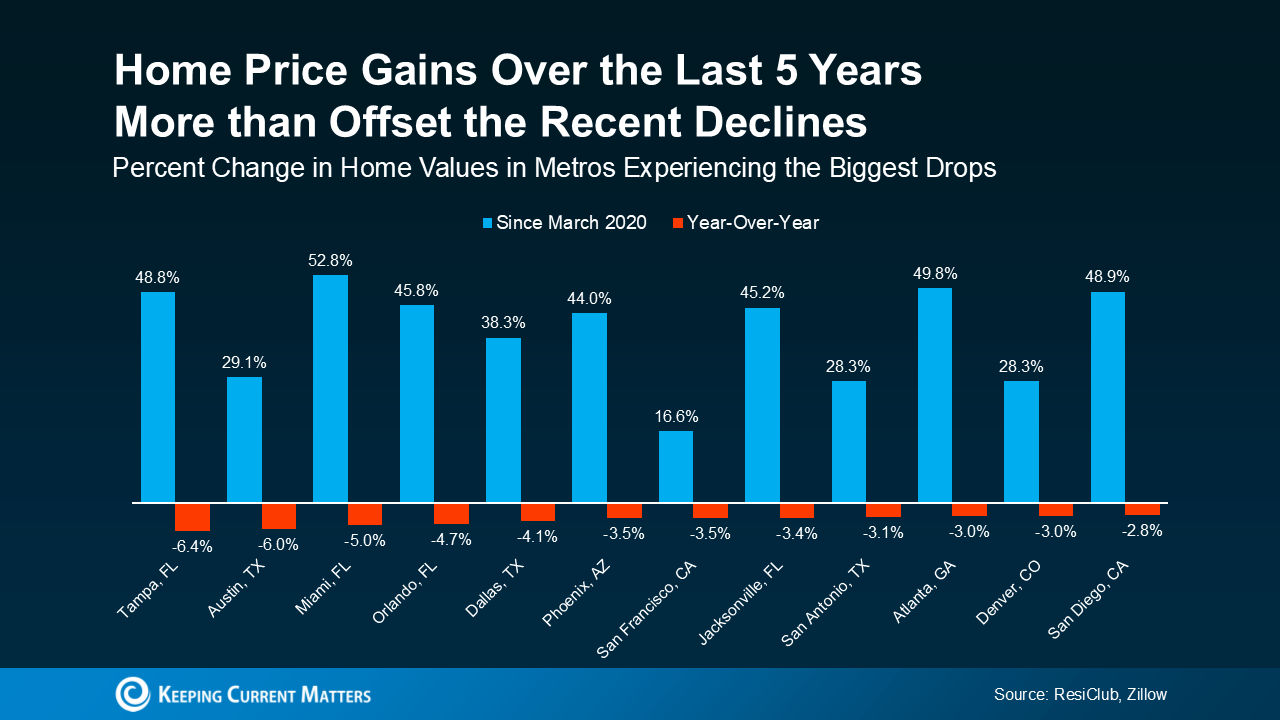
According to research from Zillow, home prices have risen a staggering 45% nationwide since March of 2020. That’s a big jump.

And in the majority of markets, prices are still rising, just at a much slower pace. But even in the metros where prices are experiencing the biggest declines (the ones making the headlines), the average drop is only about -4%.

So, what’s that really mean? In most places, prices are on the rise, so this isn’t even a concern. But in the few metros where prices are cooling off a bit, the 5-year gains more than offset those small dips.

a graph of a number of peopleIn other words, these modest declines can’t erase years of growth. Homeowners who’ve been in their houses for several years are still way ahead. Big time. And that’s true pretty much everywhere.

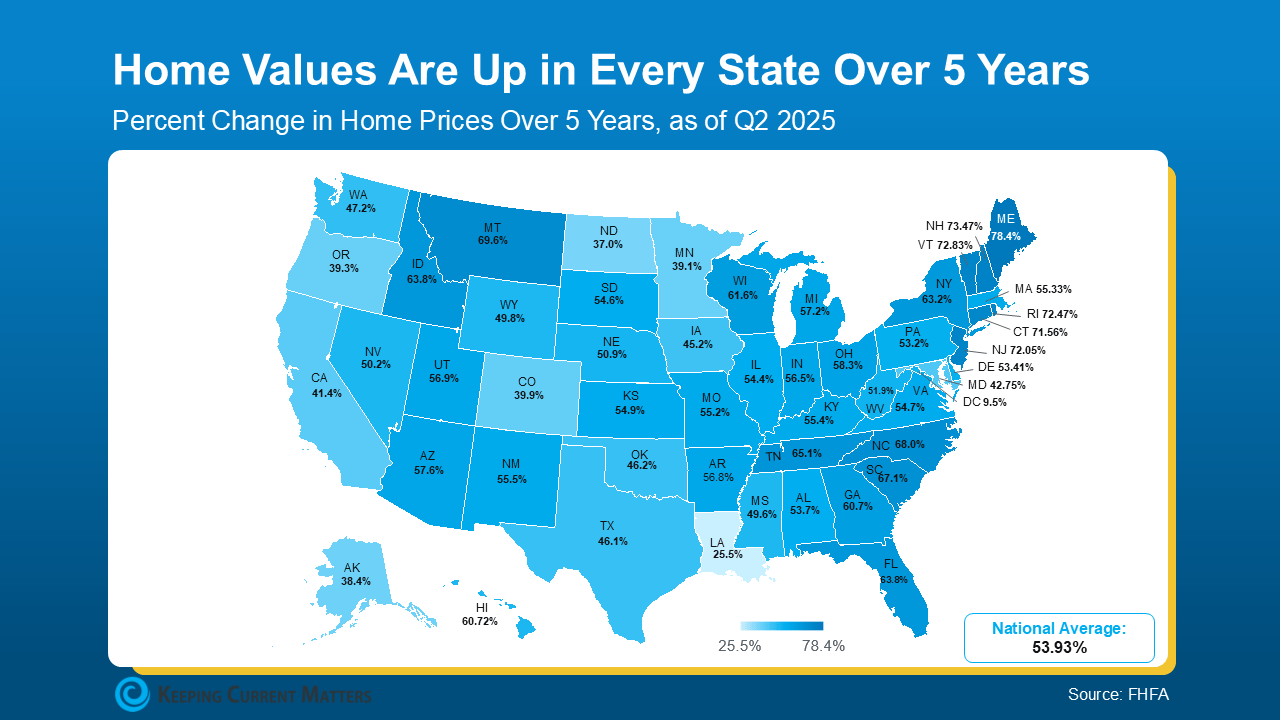
Data from the Federal Housing Finance Agency (FHFA) helps paint this picture. Let’s cast a slightly wider net and look at a state-by-state level this time. Every single state has seen prices go up over the last 5 years. And that means homeowners in each state have much more equity than they did just 5 years ago (see graph below):

a map of the united statesOdds are, in most places, if you’ve owned your home for more than a few years, you’ve already built the kind of equity many people could only dream about before the pandemic. And if you sell, you can use it to help you downsize, or move up.

And just in case you’re worried prices will crash and your equity will take a bigger hit in the near future, here’s what Jake Krimmel, Senior Economist at Realtor.com, has to say:

“The slight recent declines in aggregate value and total home equity are not cause for concern . . . Although the market is coming into better balance, large price declines nationally are extremely unlikely in the near term . . .”

The price moderation we’ve seen lately isn’t a cause for concern. It’s a signal of a market that’s finding its balance again after several years of unsustainable price growth. And after several years of major price appreciation, most homeowners are still in an incredibly strong position.

Bottom Line

Even with prices coming down in some markets, today’s homeowners are still sitting on near record amounts of equity.

If you’re wondering how much equity you have (or how far ahead you really are), connect with a local agent.

You might be surprised by what your home is actually worth today.

Oct. 23, 2025

Why do homes feel like they cost so much


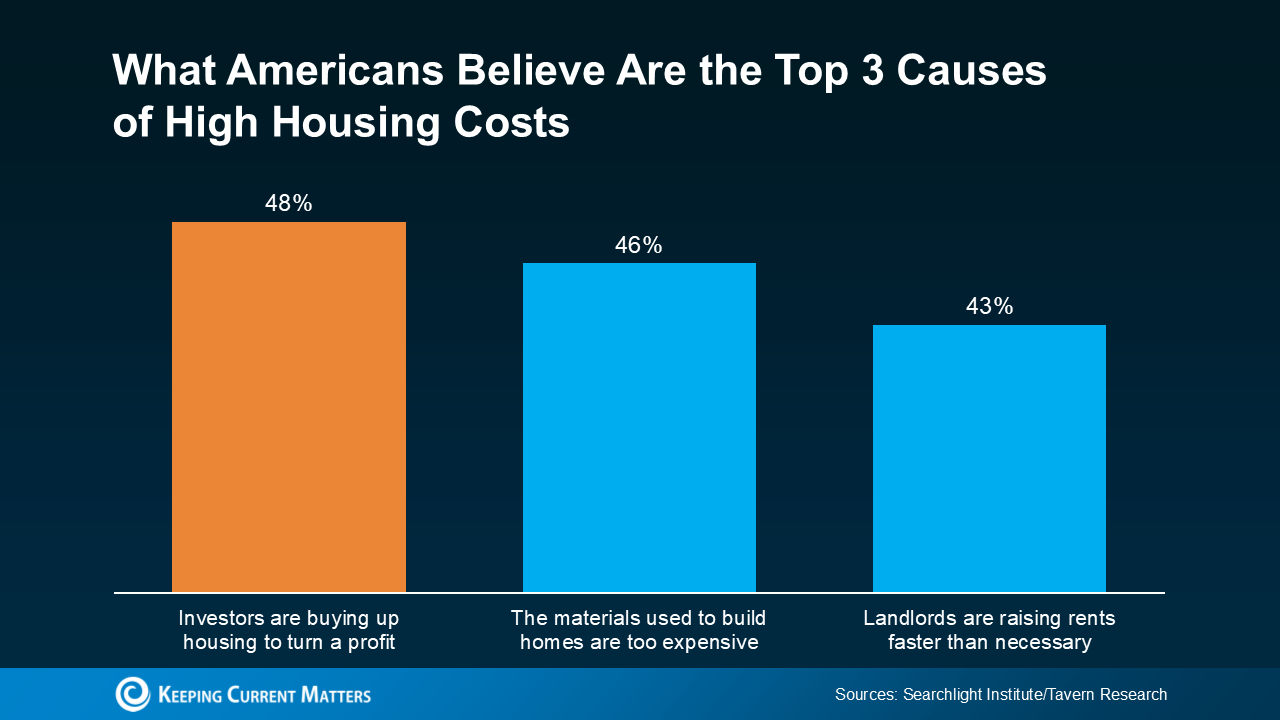
Scroll through your feed and you’ll see plenty of finger-pointing about why homes cost so much. And according to a national survey, a lot of people believe big investors are to blame.

Even though data shows that’s not true, nearly half of Americans surveyed (48%) think investors are the top reason housing feels so expensive (see graph below):

But that theory doesn’t actually hold up once you look at the data.
The Truth About Investors

Investors do play a role in the housing market, especially in certain areas. But they’re not buying up all the homes like so many people on social media say.

Nationwide, Realtor.com found only 2.8% of all home purchases last year were made by big investors (who own more than 50 properties). That means roughly 97% of homes were bought and sold by regular people, not corporate giants. Danielle Hale, Chief Economist at Realtor.com, explains:

“Investors do own significant shares of the housing stock in some neighborhoods, but nationwide, the share of investor-owned housing is not a major concern.

So, if it’s not investors, why are home prices so high?

What’s Really Behind Today’s Home Prices

The real story behind rising prices has less to do with who’s buying and more to do with what’s missing: enough homes. Robert Dietz, Chief Economist at the National Association of Home Builders (NAHB), says:

It’s been popular among some to blame investors, but with housing, the economics of that don’t make a lot of sense. The fundamental driver of housing costs is the shortage itself—it’s driven by the fact that there’s a mismatch between the number of households and the actual size of the housing stock.”

There simply haven’t been enough homes for sale to meet buyer demand. And that shortage, not investor activity, is what’s pushed prices higher just about everywhere.

Bottom Line

It’s easy to believe investors caused today’s housing challenges. But the truth is, the market just needs more homes, and that’s finally starting to happen.

As more options hit the market, buying may feel a little more realistic again.

Connect with a local real estate agent and talk about what’s happening in your market.


KCM 2025

Oct. 15, 2025

2026 Market Outlook


After a couple of years where the housing market felt stuck in neutral, 2026 may be the year things shift back into gear. Expert forecasts show more people are expected to move – and that could open the door for you to do the same.

More Homes Will Sell

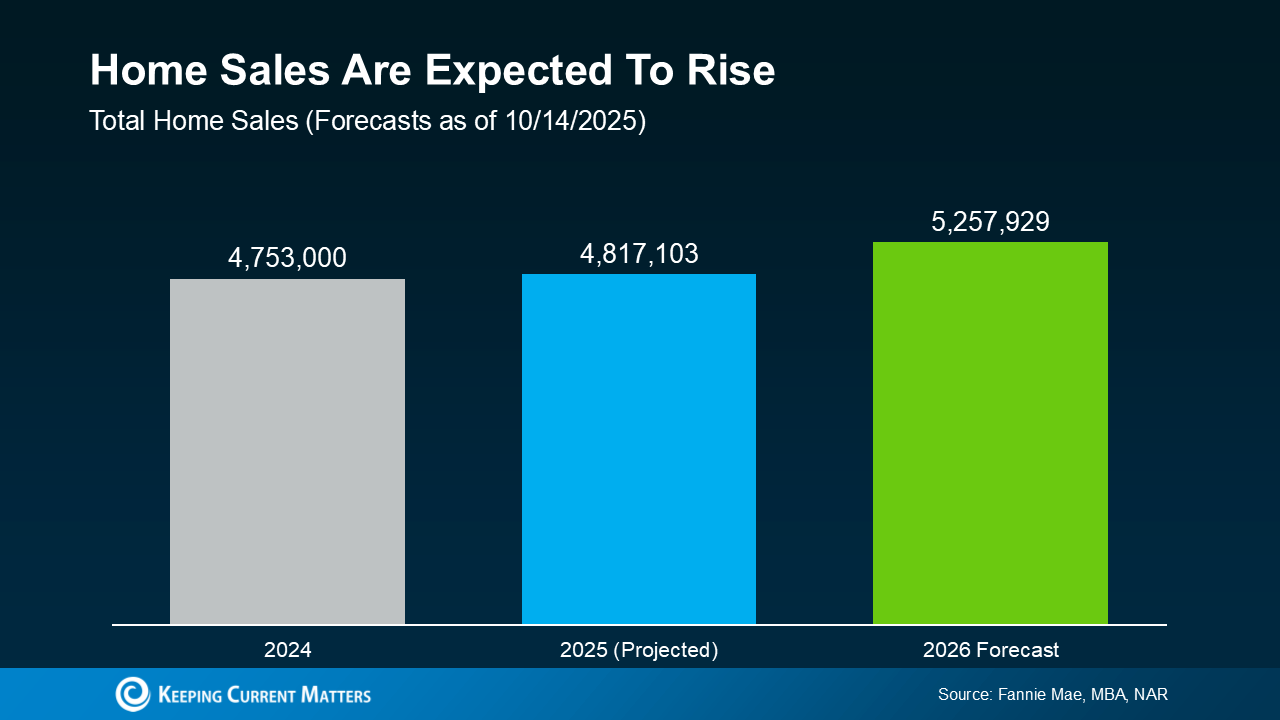
With all of the affordability challenges at play over the past few years, many would-be movers pressed pause. But that pause button isn’t going to last forever. There are always people who need to move. And experts think more of them will start to act in 2026 (see graph below):

a graph of a graph showing the number of the company's salesWhat’s behind the change? Two key factors: mortgage rates and home prices. Let’s dive into the latest expert forecasts for both, so you can see why more people are expected to move next year.

Mortgage Rates Could Continue To Ease

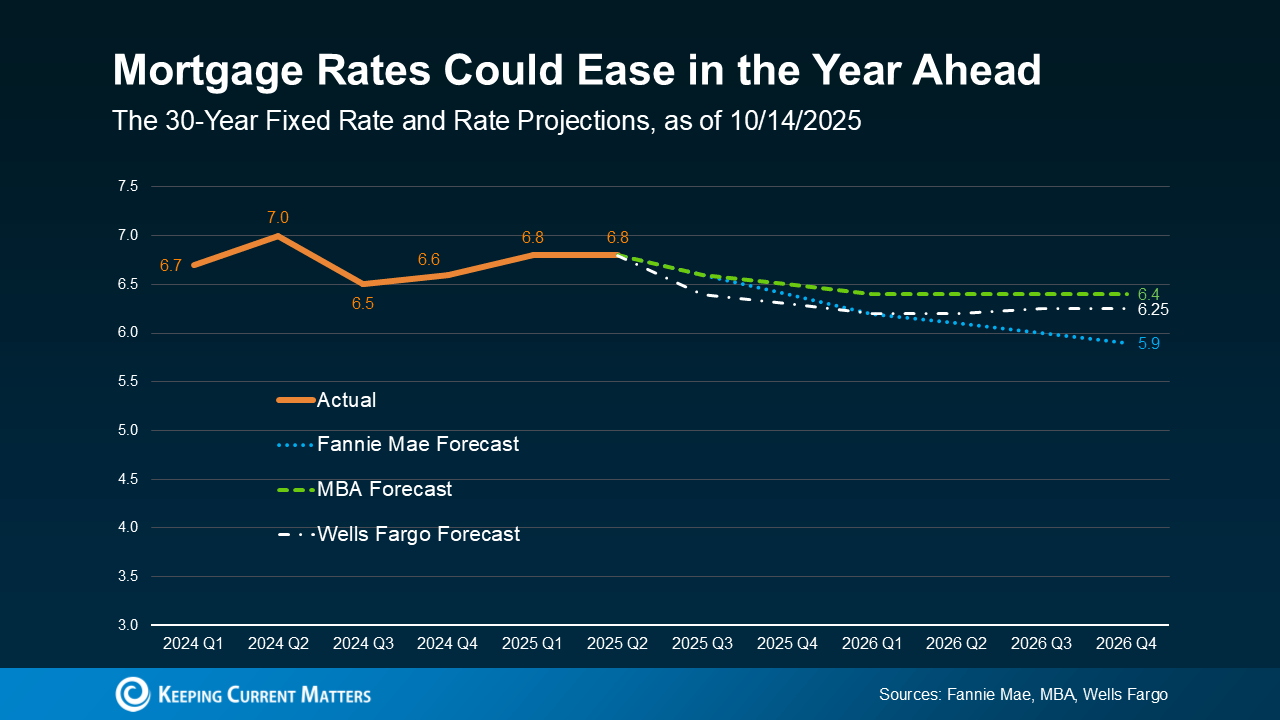
The #1 thing just about every buyer has been looking for is lower mortgage rates. And after peaking near 7% earlier this year, rates have started to ease.

The latest forecasts show that could continue throughout 2026, but it won’t be a straight line down (see graph below):

a graph with numbers and linesThere’s a saying: when rates go up, they take the escalator. But when they come down, they take the stairs. And that’s an important thing to remember. It’ll be a slow and bumpy process.

Expect modest improvement in mortgage rates over the next year but be ready for some volatility. There will be volatility along the way as new economic data comes out. Just don’t let it distract you from the bigger picture: the overall trend will be a slight decline. Forecasts say we could hit the low 6s, or maybe even the high 5s.

And remember, there doesn’t have to be a big drop for you to feel a change. Even a smaller dip helps your bottom line.

If you compare where rates are now to when they were at 7% earlier this year, you’re already saving hundreds on your future mortgage payment. And that’s a really good thing. It’s enough to make a real difference in affordability for some buyers.

Home Price Growth Will Be Moderate

What about prices? On a national scale, forecasts say they’re still going to rise, just not by a lot. With rates down from their peak earlier this year, more buyers will re-enter the market. And that increased demand will keep some upward pressure on prices nationally – and prevent prices from tumbling down.

So, even though some markets are already seeing slight price declines, you can rest easy that a big crash just isn’t in the cards. Thanks to how much prices rose over the last 5 years, even the markets seeing declines right now are still up compared to just a few years ago.

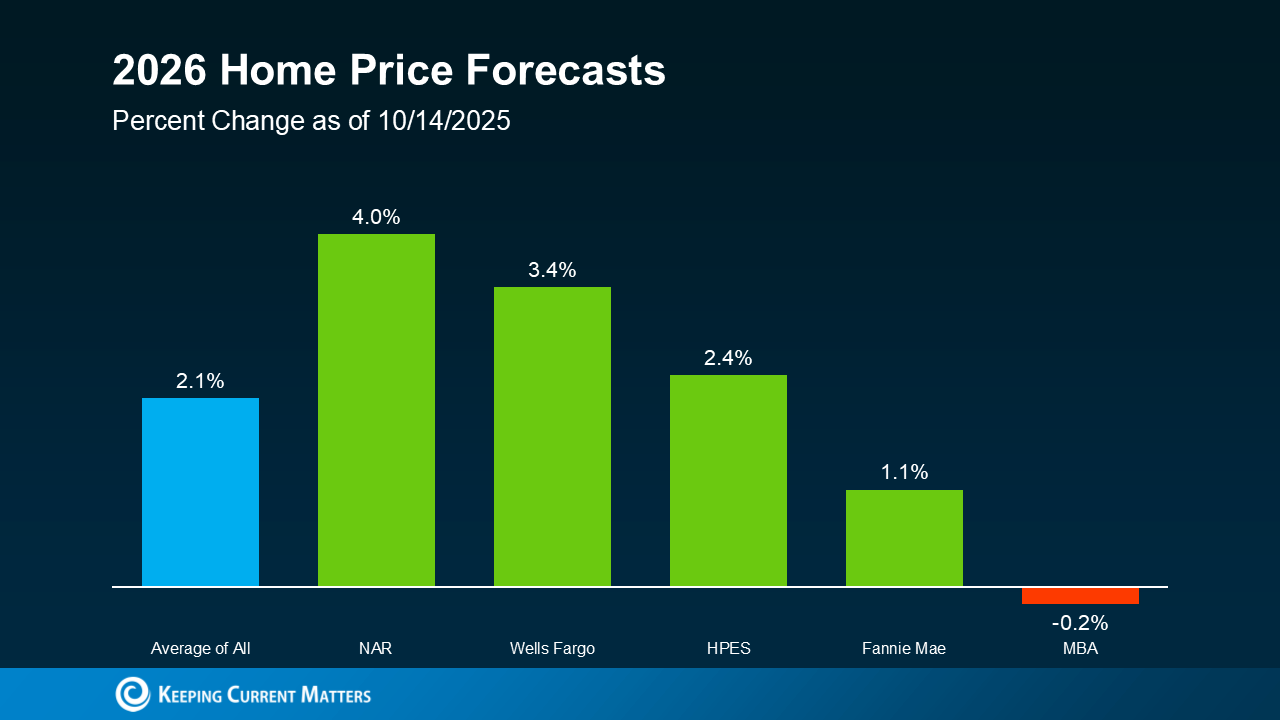
Of course, price trends will depend on where you are and what’s happening in your local market. Inventory is a big driver in why some places are going to see varying levels of appreciation going forward. But experts agree we’ll see prices grow at the national level (see graph below): 

a graph of green rectangular objectsThis is yet another good sign for buyers and overall affordability. While prices will still go up nationally, it’ll be at a much more sustainable pace. And that predictability makes it easier to plan your budget. It also gives you peace of mind that prices won’t suddenly skyrocket overnight.

Bottom Line

After a quieter couple of years, 2026 is expected to bring more movement – and more opportunity. With sales projected to rise, mortgage rates trending lower, and price growth slowing down, the stage is set for a healthier, more active market.

So, the big question: will you be one of the movers making 2026 your year?

Connect with an agent if you want to get ready.

Oct. 8, 2025

Mortgage rates should decrease over the next year


You want mortgage rates to fall – and they’ve started to. But is it going to last? And how low will they go?

Experts say there’s room for rates to come down even more over the next year. And one of the leading indicators to watch is the 10-year treasury yield. Here’s why.

The Link Between Mortgage Rates and the 10-Year Treasury Yield

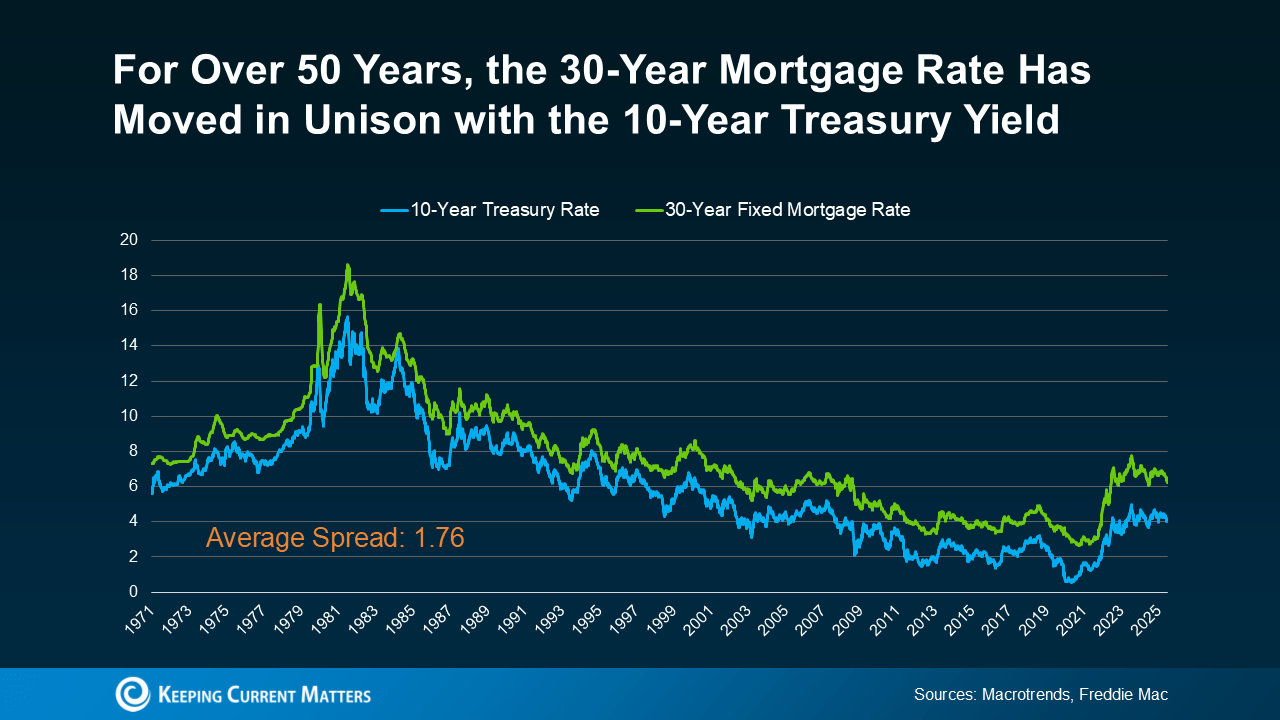
For over 50 years, the 30-year fixed mortgage rate has closely followed the movement of the 10-year treasury yield, which is a widely watched benchmark for long-term interest rates (see graph below):

a graph of a graph showing the rise of a mortgage rateWhen the treasury yield climbs, mortgage rates tend to follow. And when the yield falls, mortgage rates typically come down.

It’s been a predictable pattern for over 50 years. So predictable, that there’s a number experts consider normal for the gap between the two. It’s known as the spread, and it usually averages about 1.76 percentage points, or what you sometimes hear as 176 basis points.

The Spread Is Shrinking

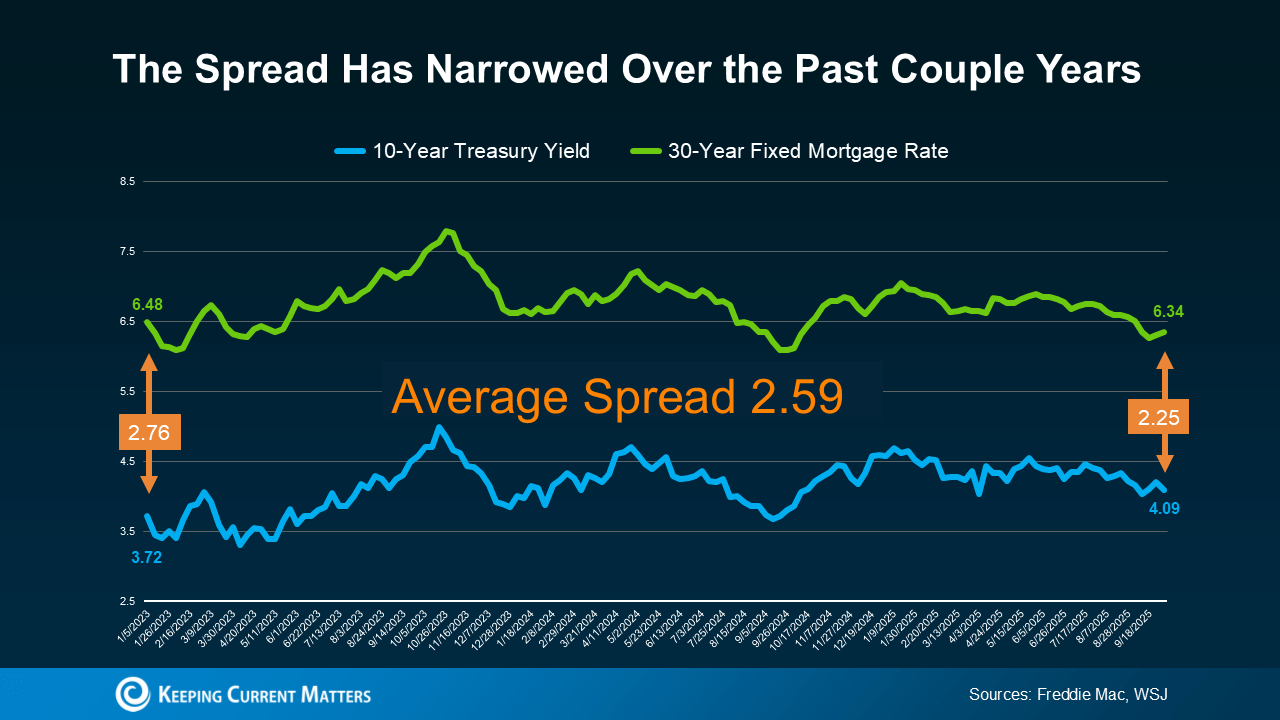
Over the past couple of years, though, that spread has been much wider than normal. Why? Think of the spread as a measure of fear in the market. When there’s lingering uncertainty in the economy, the gap widens beyond its usual norm. That’s one of the reasons why mortgage rates have been unusually high over the past few years.

But here’s a sign for optimism. Even though there’s still some lingering uncertainty related to the economy, that spread is starting to shrink as the path forward is becoming clearer (see graph below):

a graph of a chartAnd that opens the door for mortgage rates to come down even more. As a recent article from Redfin explains:

“A lower mortgage spread equals lower mortgage rates. If the spread continues to decline, mortgage rates could fall more than they already have.”

The 10-Year Treasury Yield Is Expected To Decline

It’s not just the spread, though. The 10-year treasury yield itself is also forecast to come down in the months ahead. So, when you combine a lower yield with a narrowing spread, you have two key forces potentially pushing mortgage rates down going into next year.

This long-term relationship is a big reason why you see experts currently projecting mortgage rates will ease, with a fringe possibility they’ll hit the upper 5s toward the end of next year.

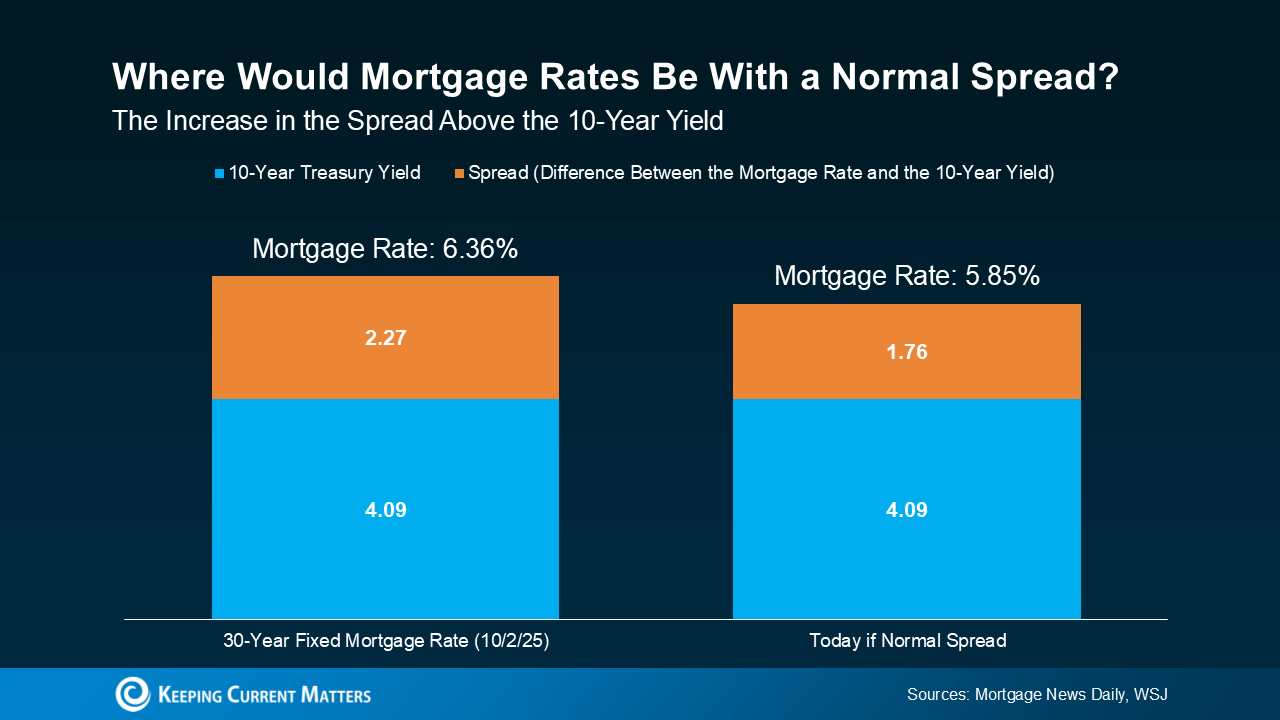
Here’s how it works. Take the 10-year treasury yield, which is sitting at about 4.09% at the time this article is being written, and then add the average spread of 1.76%. From there, you’d expect mortgage rates to be around 5.85% (see graph below):

a graph of a chartBut remember, all of that can change as the economy shifts. And know for certain that there will be ups and downs along the way. 

How these dynamics play out will depend on where the economy, the job market, inflation, and more go from here. But the 2026 outlook is currently expected to be a gradual mortgage rate decline. And as of now, things are starting to move in the right direction.

Bottom Line

Keeping up with all of these shifts can feel overwhelming. That’s why having an experienced agent or lender on your side matters. They’ll do the heavy lifting for you.

If you want real-time updates on mortgage rates, reach out to a trusted agent or lender who can keep you in the loop and help you plan your next move.

Oct. 2, 2025

Downsizing without the debt


If you’ve been thinking about downsizing to lower your expenses, be closer to family, or just make life easier, here’s a trend worth paying attention to:

More homeowners are buying their next house outright, without taking on a new mortgage. And, if you’ve owned your home for a while, you may be able to do the same. No mortgage. No monthly housing payments.

A Record Share of Homeowners Are Mortgage-Free

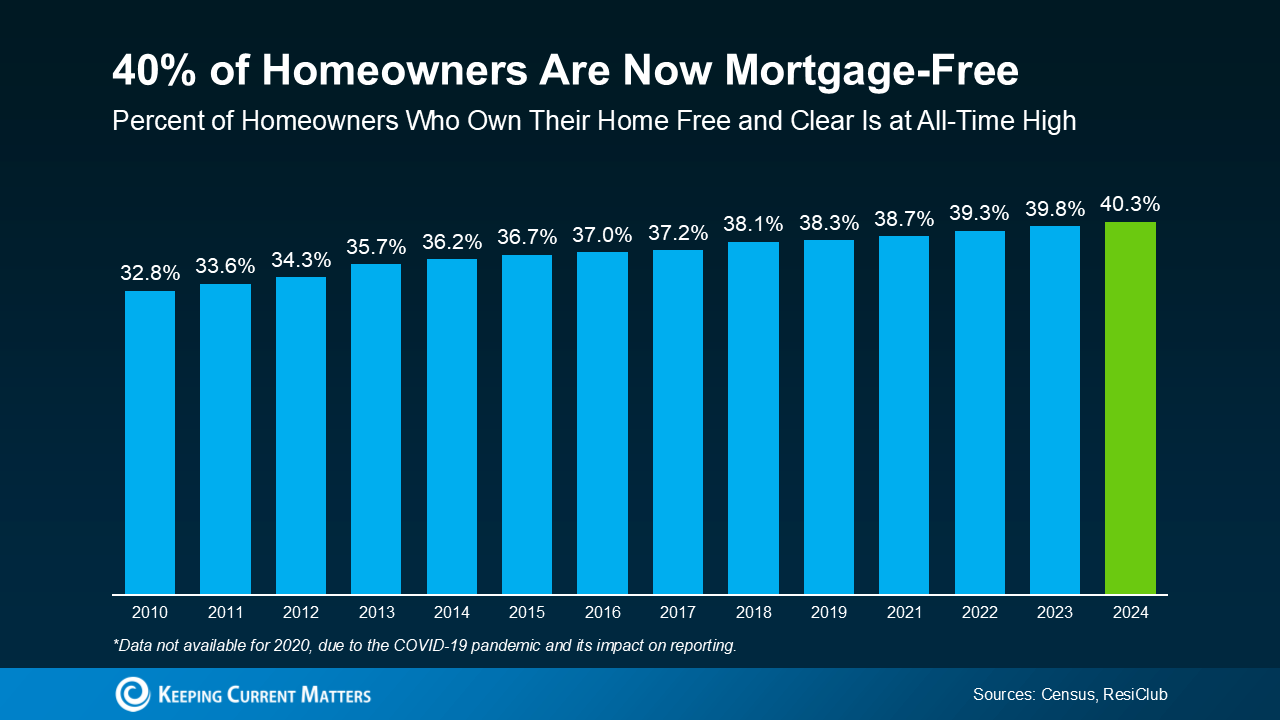
According to analysis from ResiClub of Census data, more than 40% of U.S. owner-occupied homes are mortgage-free  an all-time high for this data series. That means 4 in 10 homeowners own their homes free and clear (see graph below):

a graph of a number of blue barsOne big reason for this trend? Demographics. As Baby Boomers age and stay in their homes longer, many have had the time to fully pay off their mortgages. You might be in that group too and not even realize just how much buying power you now have. It’s time to change that.

How Downsizers Are Turning Equity into Buying Power

As a homeowner, your equity is your biggest advantage in today’s market. If you’re mortgage-free (or close to it), it could give you the power to buy your next home in cash. That means you’d still have no mortgage payment in retirement, plus:

  • Less financial stress as you age
  • More cash flow, if you purchase a less expensive home
  • And it would likely be a faster, simpler transaction

Here’s how it works. You’d sell your current house and use the proceeds to buy your next house in cash. And while that may sound like something you thought would never be possible for you, it’s more realistic than you may think.

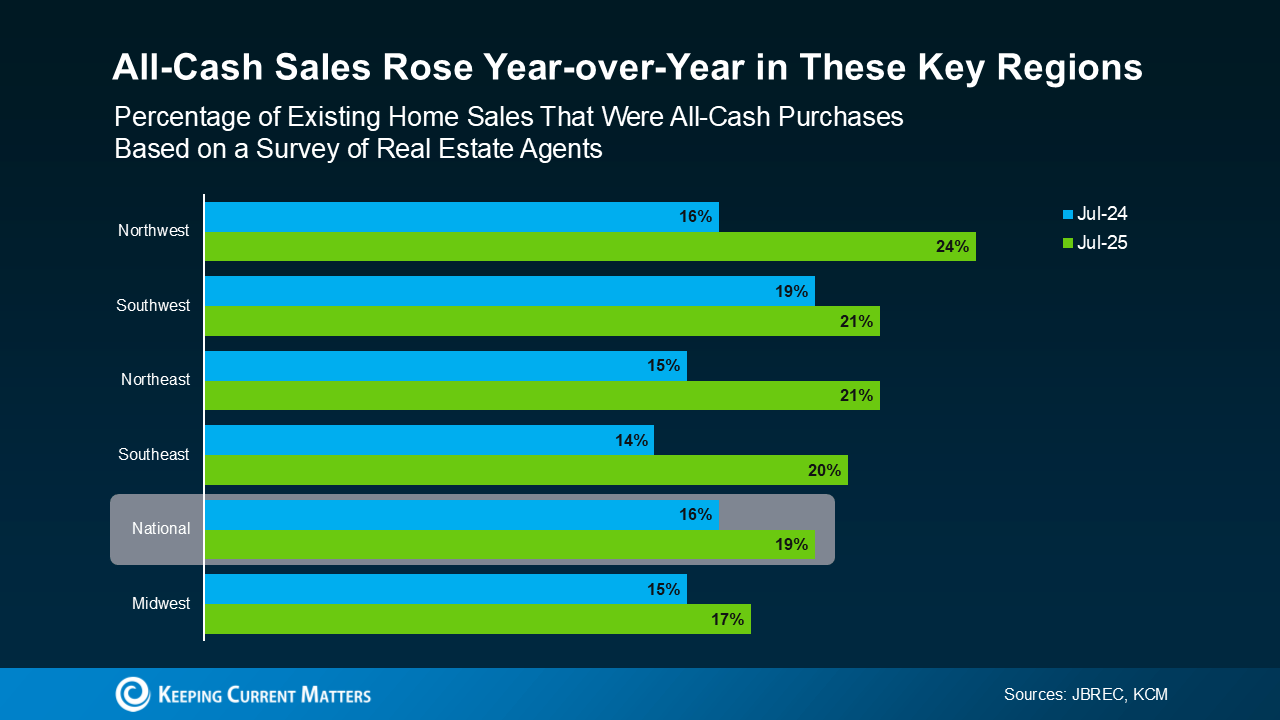
In the latest survey from John Burns Research and Consulting (JBREC) and Keeping Current Matters (KCM), agents reported the share of purchases with all-cash buyers is climbing nationally. And those agents are seeing increases in almost every region of the country (see graph below):

a graph of salesFor Baby Boomers especially, buying in cash gives you more control over your next chapter. You could buy a smaller, less expensive home and have lower costs, less upkeep, and more flexibility to enjoy what matters most. All while staying debt and stress free.

Because downsizing isn’t about downgrading your home. It’s about upgrading your quality of life. And that’s something worth exploring.

Bottom Line

You’ve worked hard for your house. Now it might be time for it to work hard for you.

Talk to your agent about what your house is worth, and what it could unlock for you today. What would your ideal home look like if you were to downsize right now?

Sept. 24, 2025

Affordability may finally be showing signs of improvement this fall


For the past couple of years, it’s been tough for a lot of homebuyers to make the numbers work. Home prices shot up. Mortgage rates too. And a number of people hit pause because it just didn’t feel possible. Maybe you were one of them.

But there’s some encouraging news. If you’ve been waiting for a better time to jump back in, affordability may finally be showing signs of improvement this fall.

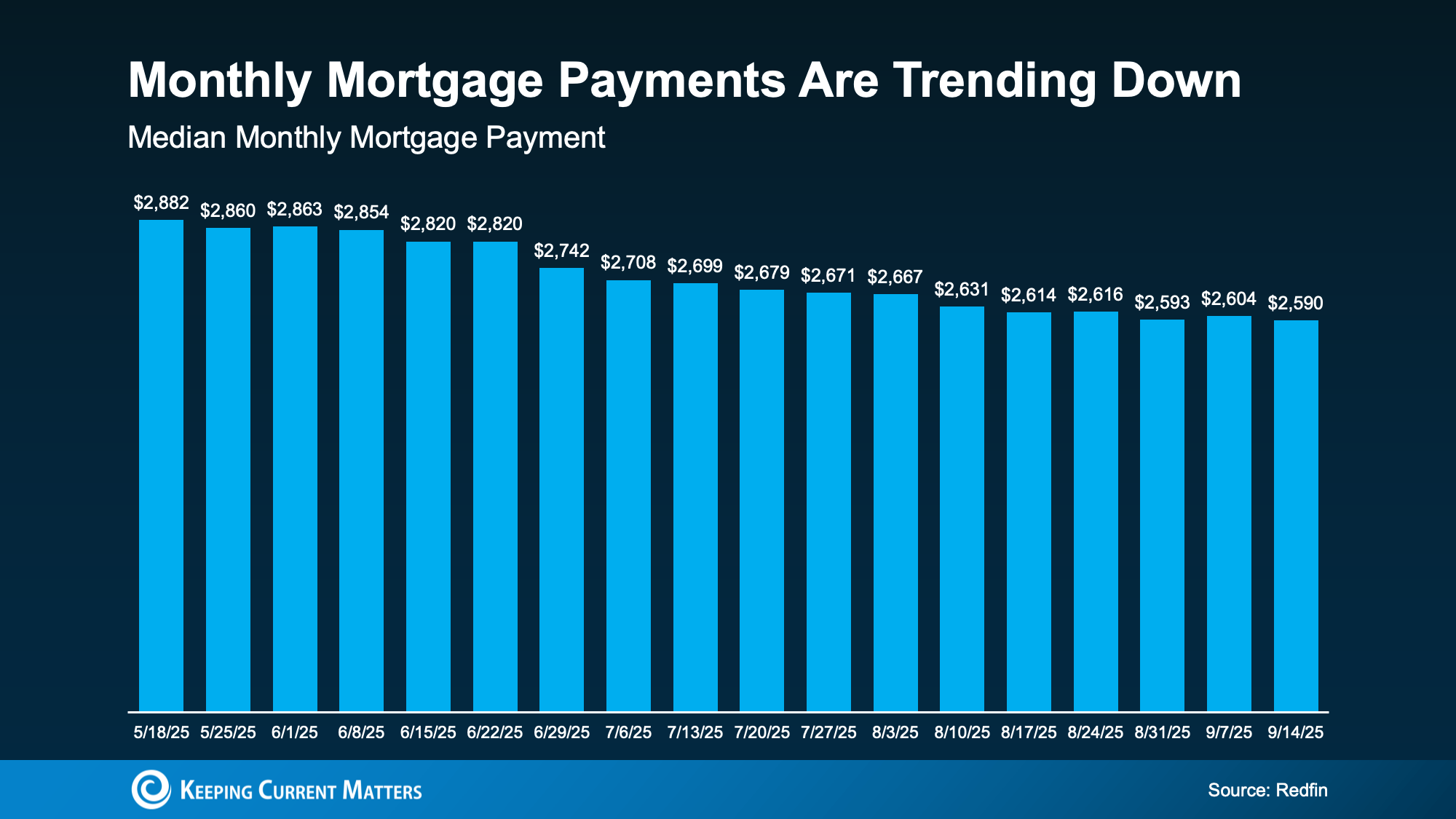
The latest data from Redfin shows the typical monthly mortgage payment has been coming down, and is now about $290 lower than it was just a few months ago (see graph below):

a graph of a graph of a mortgage paymentAnd here’s why this is happening. The cost of buying a home really comes down to three things:

  • Mortgage rates
  • Home prices
  • Your wages

Right now, all three are finally moving in a better direction for you. While that doesn’t mean it’s suddenly easy to buy at today’s rates and prices, it does mean it’s not as challenging.

1. Mortgage Rates

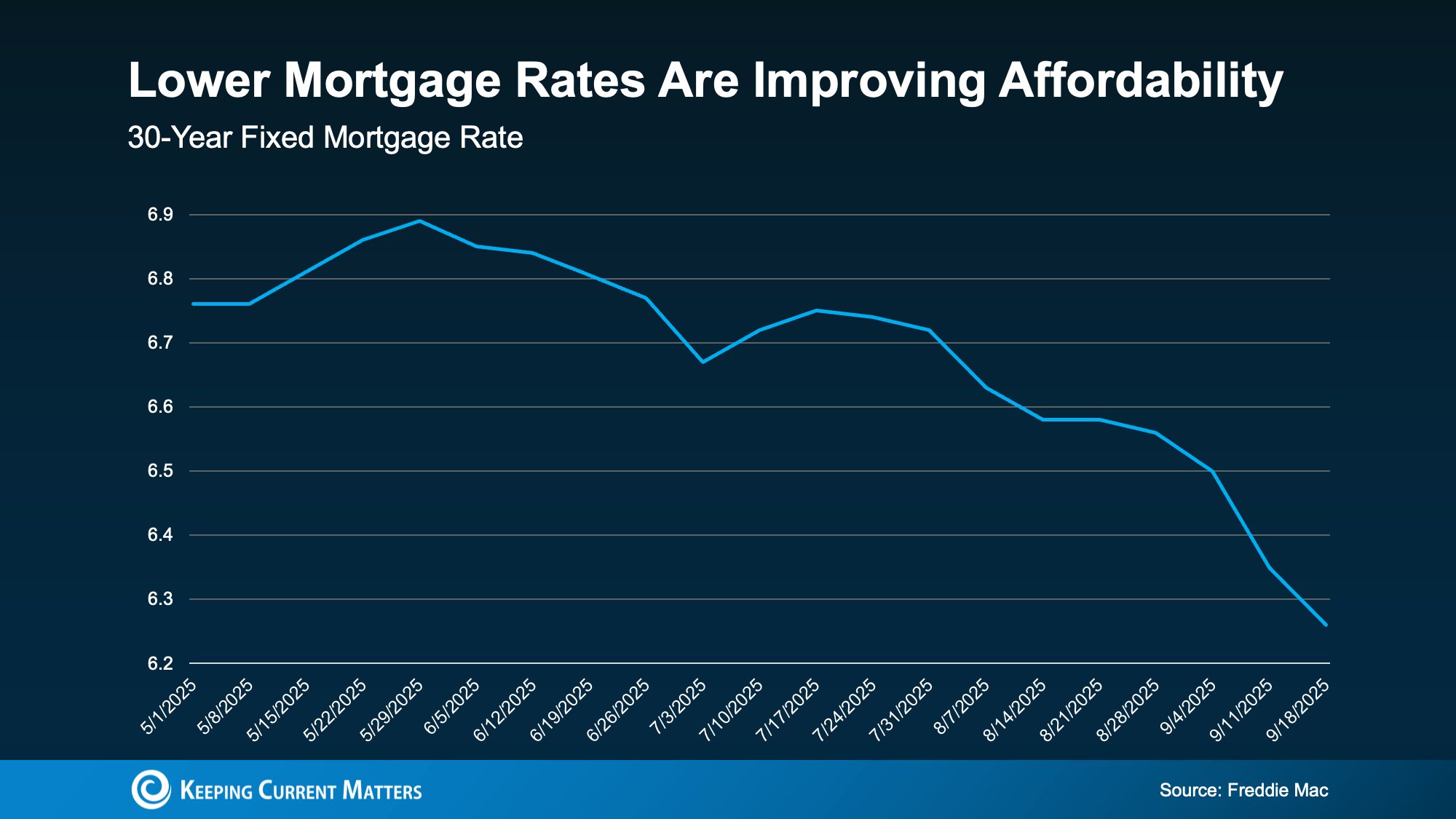
Mortgage rates have come down compared to earlier this year. In May, they were roughly 7%. And now, they’re closer to 6.3% (see graph below):

a graph showing a line of interestThat may not sound like a big deal, but it does matter. Even small changes in rates can make a difference in your future monthly payment. Compared to when rates were 7%, if you take out an average $400K mortgage now at 6.3%, it’ll cost about $190 less a month based on just rates alone.

And for some people, that’s been enough to make buying a home possible again. As Joel Kan, VP and Deputy Chief Economist at the Mortgage Bankers Association (MBA), explained on September 10th:

The downward rate movement spurred the strongest week of borrower demand since 2022 . . . Purchase applications increased to the highest level since July and continued to run more than 20 percent ahead of last year’s pace.”

2. Home Prices

After several years of prices rising very rapidly, price growth has finally slowed. As Odeta Kushi, Deputy Chief Economist at First Americanputs it:

“National home price growth remains positive, but muted — low single digits — and we expect this trend to continue in the second half of the year.

For buyers, that’s actually a big relief. That moderation makes it easier to plan your budget. And in some markets, prices have even dipped slightly. If you’re in one of the markets, you may be able to find something that’s more affordable than you’d expect.

3. Wages

According to the Bureau of Labor Statistics (BLS), wages are up near 4% annually. Lawrence Yun, Chief Economist at NAR, explains why that number is so important right now:

“Wage growth is now comfortably outpacing home price growth, and buyers have more choices.”

In other words, the typical paycheck is rising faster than home prices right now, which helps make buying a little more affordable. Now, it’s not a big difference, but in a market like this, every bit counts.

What This Means for You

Lower rates, slower price growth, and stronger wages might be enough to make the numbers finally work for you this fall. 

While affordability is still tight, it’s a little easier on your wallet to buy now than it was just few months ago. Remember, data from Redfin shows the typical monthly mortgage payment is already around $290 lower than it was earlier this year.

Bottom Line

Have you been wondering if it’s worth taking another look at buying?

Work with a professional to re-run the numbers. Together you can go over your budget, see what’s changed, and figure out if this fall is the time to turn window-shopping into key-turning.

Sept. 17, 2025

A perfect storm. Lower rates, buyers react


Mortgage rates are finally heading in the right direction – and buyers are starting to jump back in.

According to the data, buyer demand picked up considerably once mortgage rates hit a new low for 2025. The Mortgage Bankers Association (MBA) reports that applications for home loans were up 23% compared to the first week of September last year.

If you’ve been waiting to sell, or your listing recently expired because the market was slower than you hoped it would be, now’s the time to reconsider your move. Buyer demand is the highest it’s been since July  and you don’t want to miss this window.

When Rates Drop, Buyers React

Here’s what’s happening. The 30-year mortgage rate dropped to 6.13% earlier this week. And that’s the lowest it had been since October 2024. That decline followed weak job growth and other economic indicators that are fueling speculation the Federal Reserve may cut the Federal Funds Rate multiple times this year. Mortgage rates started dropping because financial markets are anticipating those Fed decisions. And that opens the door for more buyers to act.

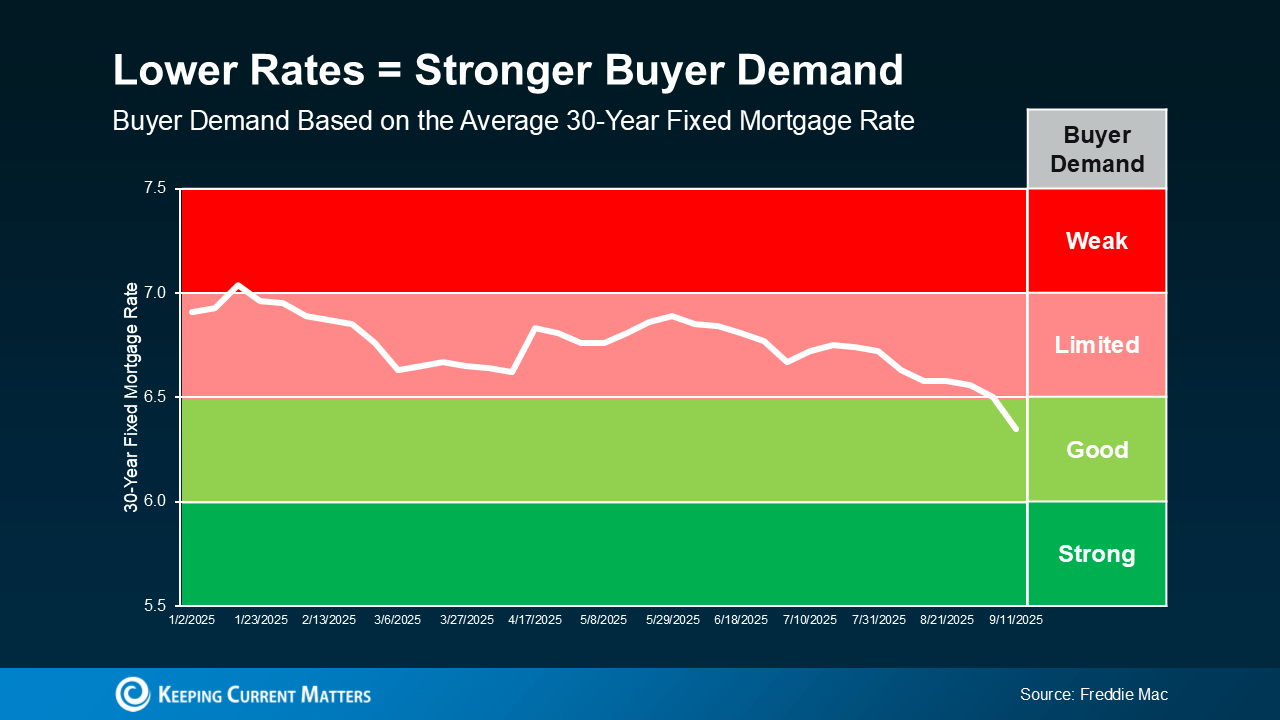
Since today’s buyers are looking at every angle to make home purchases more affordable, they’re much more sensitive to even the slightest movement in mortgage rates. Basically, it boils down to this. As affordability improves, so does buyer demand (see graph below):

a graph of a graph showing a rise in mortgage rateAnd that’s a change you’re going to feel – in a good way. Since about this time last year, we’ve been in a plateau of “limited” buyer demand. But now that rates are coming down, buyer demand is getting better.

What This Means for You

If you’re looking to move, it’s time to get serious about what’s happening in the market, and how you can use these key moments to your advantage. Maybe you have an expired listing that sat without offers earlier this year, or you held off on selling altogether, thinking buyers weren’t out there. This is your signal – they’re coming back. Now, it’s not in the big surge the market saw a few years ago, but this could be your window.

Here’s the opportunity. You can list, while buyer activity is rising and before more sellers in your neighborhood do too. Other homeowners may not see this shift for a while, so you can get a leg up on your competition if you act now.

On the flip side, if you wait, sure there may be more buyers if rates continue to inch down. But there are also going to be more sellers too. So, why take that risk?

A trusted local agent can help you assess your home’s value, fine-tune your pricing strategy, and make sure it stands out to the serious buyers who are taking action today.

Bottom Line

Buyers are watching rates, weighing their options, and starting to get off the sidelines. If you’re thinking about selling, this may be your chance to get ahead.

Want to make sure your house shows up for the right buyers, at the right time?

Connect with an agent to walk through the steps together so you can make the most of this moment.